-

Detailed Explanation of Main Pest and Disease Control Methods for Loquat
Loquat is evergreen year-round, blooms in autumn and winter, sets fruit the same year, and is harvested the following year. It begins blooming in September, and the flowering period lasts 2-3 months. If the flowers and fruit are protected through the winter (more than 10% of flowers and fruit), a bumper harvest can be achieved. However, from the time loquat is harvested in the current year (May-June) until the fruit is harvested the following year, various pests and diseases occur and cause damage,...
-
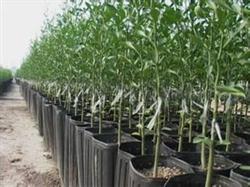
What are the common bud grafting methods for citrus? How are they done?
Citrus grafting methods can be broadly divided into three types: bud grafting, side grafting and cut grafting. In the warmer southern subtropical zone, spring cut grafting is mostly used, while in the mid-subtropical zone and further north, autumn bud grafting or re-grafting is mostly used. Citrus bud grafting includes "T" bud grafting and inverted "⊥" bud grafting, both methods are used in various regions, and the suitable grafting period...
-
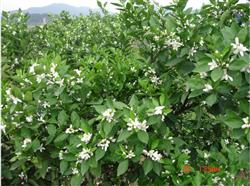
New Methods for Preserving Citrus Flowers and Fruits Without Hormones
Preserving citrus flowers and fruits is one of the important measures for high-quality, high-yield and stable-yield cultivation of citrus, especially for citrus that suffered light frost damage in winter, flower and fruit preservation is even more important. In view of the fact that spraying "920" and 2,4-D to preserve fruits easily causes deformed fruits and pollutes the fruit, affecting citrus quality, the following introduces several...
-
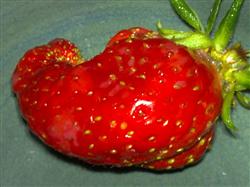
How to scientifically prevent and control strawberry pests and diseases? A full analysis of methods and techniques
Under normal growth management of greenhouse-cultivated strawberries, deformed fruit accounts for 10%-20%. However, when varieties are improperly selected or the ecological environment does not meet the growth needs of strawberries, the proportion of deformed fruit often increases, sometimes reaching as high as about 50%, resulting in reduced yield and low returns. Common deformed fruits include crooked and flat fruit, plump fruit, aggregate fruit, protruding...
-
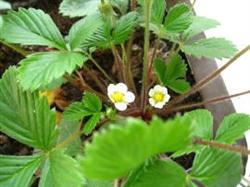
Key Technical Points and Methods for Promoting Flowering in Greenhouse Strawberries
The purpose of facility forcing cultivation of strawberries is to achieve early fruiting and early marketing. The key measures are promoting flower bud differentiation and promoting flowering. Measures to promote flower bud differentiation are implemented during the seedling stage, while after transplanting, flowering must be promoted. The methods for promoting flowering include the following: 1. Temperature and humidity management in the greenhouse. The air temperature inside the greenhouse should be 30 degrees during the day and above 10 degrees at night...
-
How to prevent and control strawberry snake-eye leaf spot? Detailed introduction to prevention and control methods
It mainly damages the leaves, and also damages the petioles and fruit stalks, making it a common disease of strawberries. 1. Symptoms. In the early stage of the disease, small dark purple spots form, which then expand into nearly round or oval lesions. The edges of the lesions are purplish red, and the centers are grayish white or grayish brown, with slight concentric rings, making the entire lesion resemble a snake eye. On the...
-
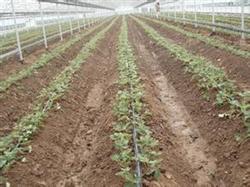
Detailed Explanation of Strawberry Seedling Planting Methods and Key Technical Points
1. Soil disinfection using the solar heat disinfection method. Specific operation steps: apply the farmyard manure from the base fertilizer into the soil, deep plow, irrigate thoroughly, and cover the soil surface with plastic film or old greenhouse film. To improve the disinfection effect, it is recommended to install the greenhouse film at the same time as covering with plastic film or old greenhouse film for soil disinfection in the greenhouse, and seal the greenhouse. Soil...
-
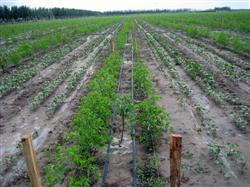
Control methods for pests that feed at the door in spring on jujube trees
Autumn management of young jujube orchards mainly involves controlling fertilizer and water, strengthening loosening of the soil, promoting continuous thickening and lignification of the trunk, and creating good conditions for young trees to overwinter. The key technical points for autumn management of young trees are summarized as follows: Control irrigation. Jujube trees are drought-tolerant, prefer warmth, sprout late, and shed leaves early. Young trees should be watered appropriately, with the basic principle...
-
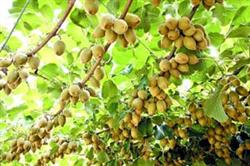
How to Remove Kiwifruit Fruit Rust? A Detailed Guide to Practical Methods
1. Site selection: Choose a light hilly area that is sheltered from the wind and faces the sun, with abundant water sources, convenient drainage and irrigation, deep soil layers, and rich humus. Prepare the land with large planting holes 1 m square, applying 50 kg of farmyard manure and 2 kg of decomposed cake fertilizer per hole. 2. Planting technique: Use one-year-old grafted strong seedlings, with a plant-to-row spacing of 3 m...
-
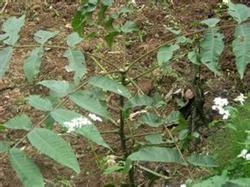
A Detailed Guide to Walnut Cultivation Techniques and Management Methods
Cultivation Value Walnut is an important oilseed fruit tree with high economic value. Besides being rich in fat, walnut kernels are also high in protein, vitamins and various minerals, and are often used as a premium tonic food with certain medicinal effects. China's walnut kernels are of good quality and high oil content, and are well received on the international market...
条件筛选