A Detailed Guide to Walnut Cultivation Techniques and Management Methods
Cultivation Value Walnut is an important oilseed fruit tree with high economic value. Besides being rich in fat, walnut kernels are also high in protein, vitamins and various minerals, and are often used as a premium tonic food with certain medicinal effects. China's walnut kernels are of good quality and high oil content, and are well received on the international market...
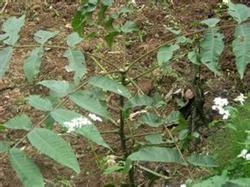
Cultivation Value
Walnut is an important oilseed fruit tree with high economic value. Besides being rich in fat, walnut kernels are also high in protein, vitamins and various minerals, and are often used as a premium tonic food with certain medicinal effects. China's walnut kernels are of good quality and high oil content, and are well received on the international market. Both walnuts and walnut kernels are important traditional export commodities.
The walnut tree is vigorous, highly adaptable, has few pests and diseases, requires little labor for management, its fruit is easy to store and transport, and it has a long lifespan, making it a very suitable fruit tree for mountain area development. However, the commonly cultivated common walnut (Juglans regia) requires dry, cool climatic conditions and cannot tolerate high temperature and high humidity. After being introduced and cultivated in the middle and lower reaches of the Yangtze River, the tree tends to grow excessively, flower buds often form poorly, and diseases occur severely, making it difficult to obtain high yields.
Main Species and Varieties
Walnut belongs to the genus Juglans. The two main species cultivated economically are the common walnut (Juglans regia) and the iron walnut (Juglans sigillata). Most varieties cultivated in both northern and southern China belong to the common walnut. The iron walnut, also known as Yangbi walnut, is mainly distributed in Yunnan, Sichuan and Guizhou, and this species prefers hot and humid conditions and cannot tolerate cold, being a different ecotype from the common walnut. In addition, there are wild Manchurian walnut (Juglans mandshurica) and wild walnut, which are all plants of the same genus.
It is worth mentioning that in another genus of the same family Juglandaceae - the genus Carya - there is also a nut-producing fruit tree called pecan (Carya illinoinensis), also known as American pecan or long pecan, which was introduced to China at the end of the 19th century. It is currently sporadically cultivated in Jiangsu, Zhejiang, Fujian, Jiangxi and other provinces. It prefers warm and humid conditions; the nut is large, long-elliptical, with a thin shell and large kernel, delicious and of high quality. It has considerable development value in the Yangtze River basin and areas to its south.
Walnuts have traditionally been propagated by seed, and most cultivated types are local seedling types, with very few varieties formed by vegetative propagation. According to the earliness of fruiting and the thickness of the shell, walnuts can first be divided into two major groups: early-fruiting walnuts (fruiting 2-4 years after sowing) and late-fruiting walnuts (fruiting 5-10 years after sowing). Both groups contain thin-shelled and thick-shelled types. Famous varieties include **Gennian walnut, Shandong Yuanfeng, Beijing Baoke Xiang, etc. (the above are early-fruiting walnuts); famous late-fruiting varieties include Hebei Shimen walnut, Shanxi Fenyang Guangpi Mian walnut, Shaanxi Mianren walnut, Shandong Jizhua Mian walnut and Liaoning Lüda Xin Zhipi walnut, etc. In recent years, the Shandong Institute of Pomology and other institutions, based on standards of early fruiting, high yield, high quality and disease resistance, have successively bred new improved varieties such as Xiangling, Fenghui and Luguang, which can be selected for trial planting in the Huaibei region.
Growth and Fruiting Habits
Walnut is a tall deciduous tree with a deep and extensive root system and strong apical dominance. The apical dominance of branches is particularly pronounced; the lateral buds in the middle and lower parts mostly remain dormant or dry up and drop off after sprouting, so the branches in the canopy are relatively sparse.
According to the types of buds borne, one-year-old branches during the dormant period can be divided into growth branches, fruiting mother branches and male flower branches. Those bearing only leaf buds (occasionally also male flower buds) are growth branches. Among them, those located on the periphery of the canopy and growing vigorously are the basis for expanding the canopy and forming fruiting mother branches. Those with mixed buds (female flower buds) borne on the top 1-3 nodes (some varieties may have more) that can sprout new fruiting shoots and bear fruit the following year are fruiting mother branches. Besides mixed buds, fruiting mother branches also bear leaf buds and male flower buds below. Those bearing only male flower buds and leaf buds on the branch, producing only male inflorescences and no fruit the following year, are called male flower branches. Such branches are generally short and weak in growth and mostly occur on old, weak trees and in shaded, congested areas inside the canopy. After the male inflorescences drop, the area below the terminal bud becomes bare.
The lateral buds in the middle and upper parts of walnut branches are often compound buds arranged in superimposed pairs. There are various forms such as female flower bud and leaf bud superimposed, leaf bud and male flower bud superimposed, male and female flower buds superimposed, double male flower buds superimposed, and double leaf buds superimposed. The buds at the base of the branch are often latent buds.
Branches can have two growth peaks in a year, forming spring shoots and autumn shoots. The branching angle is relatively large, and the canopy is open. On mature trees, weak lower branches tend to grow horizontally, forming vigorous back branches that disrupt the tree shape.
The age at which walnut begins to bear fruit is related to the variety and the propagation method. Grafted early-fruiting walnuts can bear fruit 2-3 years after planting, while seedling-propagated late-fruiting walnuts need 5-10 years to begin bearing fruit; grafting can advance the fruiting age. Generally, they enter full fruiting at 20-30 years, and the economic lifespan is very long.
Walnut is monoecious with unisexual flowers. Wind-pollinated. Female flowers are borne at the tip of new fruiting shoots, solitary or in clusters of 2-3. Male flowers are gathered into catkins. On the same plant, the flowering periods of female and male flowers are often not synchronized, showing dichogamy, which affects pollination. Pollen viability is often low, and the effective pollination period is short, which is one of the causes of low yield. The fruit growth period is relatively long; in the early stage it mainly increases in volume, and in the middle and late stages the shell hardens and the kernel fills out. The fruit is enclosed in a fleshy husk that splits open naturally when mature. A few varieties have some capacity for parthenogenesis.
Most varieties have relatively severe physiological fruit drop, beginning 10-15 days after flowering and basically ending at the shell-hardening stage. Fruit shoots sprouting from the terminal buds of vigorous fruiting mother branches have a high fruit-setting rate and can bear fruit continuously for many years; fruit shoots sprouting from short, weak fruiting mother branches or lateral mixed buds have a lower fruit-setting rate. However, China has now bred varieties with a lateral-bud fruiting rate as high as over 60%.
Key Points of Cultivation Techniques
1. Propagation and planting Seedling propagation by seed is simple and easy, but fruiting is late and variation easily occurs, affecting the commercialization of the fruit. Grafting propagation should be gradually promoted in the future.
Grafting propagation commonly uses common walnut rootstock or wild walnut. Seeds are sown in autumn or after stratification in spring. The stratification period needs 60-90 days. If seeds are dry-stored and sown in spring, they need to be soaked in warm water for 5-7 days before sowing, changing the water once a day, to promote seed swelling and shell cracking and improve the emergence rate. The grafting method is mainly spring branch grafting (bark grafting or cleft grafting). Walnut trees have a bleeding phenomenon during the dormant period, so the suitable phenological period for grafting should be delayed compared with other fruit trees, otherwise survival is affected. Usually, about 10 days from rootstock bud break to leaf expansion is observed. However, scions should be cut in advance and stored moist at a low temperature of 0°C-5°C. Bud grafting is carried out from July to September, mostly using the patch bud grafting method. Walnut bark contains relatively much tannin, which easily forms an isolation layer at the graft union. Therefore, rapid grafting operation and smooth cut surfaces help improve the grafting survival rate.
In recent years, indoor grafting has been advocated, which allows control of the temperature and humidity conditions for wound healing. Rootstock seedlings are dug out and heeled in after leaf fall, and scions are also collected and stored for later use near leaf fall. 10-15 days before grafting, place both rootstock and scion in storage boxes filled with moist sawdust and keep them indoors at 25°C-30°C for 2-3 days to promote recovery. Then carry out tongue grafting, tying, and waxing to retain moisture, and place them back in the storage box to promote wound healing. Once callus tissue has formed, move them to the field for heeling in, and after temperatures rise, plant them in the nursery. If grafting is done indoors after spring warmth, the "recovery" step is not necessary.
The planting spacing depends on variety characteristics and soil fertility. For block planting, (4-5) m x (5-8) m; for fruit-grain intercropping, the row spacing can be expanded to 25 m-30 m. The planting site requires deep soil; overly barren land easily produces "small old trees" and is not suitable for planting. When planting, attention should also be paid to configuring pollinizer trees. Walnut seedlings have few lateral roots and do not tolerate transplanting, so they should be planted promptly after being lifted, and the roots must not be exposed for too long; attention should be paid to moisture retention before and after planting.
In the Jianghuai region, walnuts can be planted in either autumn or spring. For block planting, attention should be paid to configuring pollinizer varieties.
2. Training and pruning Walnut is a light-demanding tree species, and especially after entering the fruiting stage, it needs sufficient light. The tree form generally adopts either the delayed open-center form or the natural open-center form. Varieties with strong apical dominance and good site conditions use the delayed open-center form, and its specific requirements and operation process can refer to apple. However, walnut has the characteristics of later branching, a relatively vigorous tree, and back branches that easily become vigorous, so in training one should also grasp the requirements of a higher trunk height (1 m-1.5 m) and a later trunk-setting time, appropriately enlarged layer spacing and distance from the first secondary scaffold branch (i.e., lateral branch) on the main branch to the central leader, and it is not advisable to select back branches as secondary scaffold branches. In cases of open canopy, weak apical dominance varieties and poor site conditions, the natural open-center tree form can be used, selecting and retaining 2-3 main branches per tree, and then selecting and retaining 3-4 secondary scaffold branches from each main branch to fill the space.
Pruning of young trees mainly deals with some branches that interfere with the tree form. For example, early-fruiting walnuts easily produce large numbers of secondary shoots and male flower branches, and sometimes also easily produce water sprouts. Secondary shoots and water sprouts that need to be retained should be promptly pinched or cut back to cultivate fruiting branch groups; the rest should be removed early. For back branches that tend to overshadow the main branches, those located on the first layer of main branches and secondary scaffold branches should all be removed from the base; those located on the second and third layers of main branches and secondary scaffold branches should be kept or removed according to need and vigor, and retained back branches that are vigorous can be pinched or heavily cut back to transform them into branch groups.
For mature large trees, peripheral overly dense branches and drooping branches should be promptly thinned out, and auxiliary nurturing branches that occupy too much space should be cut back and transformed to improve light conditions within the canopy. When the proportion of short branches and male flower branches in the canopy increases, it indicates that the tree has gradually weakened and should be promptly renewed and rejuvenated. For fruiting branch groups, remove weak ones and retain strong ones, cut back for renewal, and make full use of water sprouts occurring in the canopy by transforming and utilizing them to increase the proportion of vigorous branches. When scorched shoot tips or death of large and medium branches appear, it indicates that the tree has become senescent. The scaffold branches at all levels can be cut back and renewed year by year, taking advantage of the long lifespan of walnut latent buds to re-form a new canopy and restore fruiting capacity.
Pruning walnut during the dormant period often causes bleeding due to poor wound healing, which seriously affects tree vigor. The suitable pruning period is after fruit harvest in autumn and before the leaves turn yellow. In addition, pruning can also be done after sprouting.
3. Soil, fertilizer and water management and male flower thinning Mature walnut trees have deep roots and luxuriant foliage and have a great demand for fertilizer and water. After leaf fall each year, deep plow once, expand the tree basin, and combine with the application of base fertilizer; during the growing season, deep hoe and turn under weeds after rain. Topdressing should be carried out 2-3 times before sprouting, after flower drop and at the shell-hardening stage. In the early stage, nitrogen fertilizer is mainly used to promote spring shoot growth and young fruit development; in the later stage, the three elements nitrogen, phosphorus and potassium are used in combination to promote flower bud differentiation, kernel filling and improve kernel quality. After each fertilization, irrigation can be combined. Walnut is relatively sensitive to drought, and areas lacking water sources can use mulching to conserve soil moisture. In the rainy season, field water accumulation needs to be drained. From after spring shoots stop growing to before autumn shoots stop growing, attention should be paid to controlling water to control late shoot growth. In areas where freeze-drought "shoot drying" often occurs in winter and spring, irrigate once with winter water in early winter.
Mature walnut trees produce a very large number of male flowers, which waste tree nutrients. When male flower buds begin to swell, adopting male flower thinning measures (75%-80% can be thinned on trees in full fruiting period) helps increase yield.
Main Pests and Diseases and Their Control ⟧31⟧ 1. Diseases mainly include walnut bacterial blight and walnut anthracnose. Walnut bacterial blight damages fruit and also leaves and new shoots, causing fruit rot and early fruit drop and reducing the kernel outturn rate; it is a bacterial disease. Control method: spray once with 3-5 degrees Baumé lime sulfur before sprouting, then spray 200 times Bordeaux mixture with double lime before and after flowering, and thereafter spray continuously 2-3 times at about 20-day intervals. Walnut anthracnose mainly damages fruit; it is a fungal disease and can mutually infect with apple anthracnose pathogen. Control methods can refer to apple anthracnose.
1. The main diseases include walnut bacterial blight and walnut anthracnose. Walnut bacterial blight affects the fruit, as well as the leaves and new shoots, causing fruit rot and early fruit drop, and reducing the kernel yield; it is a bacterial disease. Control method: spray once with 3 to 5 degrees Baumé lime sulfur before bud break, then spray 200-fold lime-magnesia Bordeaux mixture (with double the amount of lime) before and after flowering, and thereafter spray continuously 2 to 3 times at intervals of about 20 days. Walnut anthracnose mainly affects the fruit; it is a fungal disease and can infect each other with the apple anthracnose pathogen. For control methods, refer to those for apple anthracnose.
2. Insect pests mainly include walnut shoot moth, walnut small jewel beetle, wood? looper, and citrus longhorned beetle. The walnut shoot moth, also known as walnut black, occurs severely in North China production areas, with 1-2 generations per year. The larvae bore into the green husk, causing the husk to turn black and rot, young fruit to drop, and kernels to shrink; it overwinters as mature larvae in the soil. Control method: combine with deep hoeing of the tree basin and spray the ground with 50% phoxim 300 times solution to kill them; spray 50% fenitrothion 1000 times solution or 20% fenvalerate emulsifiable concentrate 5000 times solution before adults lay eggs and bore into fruit; when damage is light, remove infested fruit before larvae leave the fruit and bury deeply.
Harvesting and Storage
The suitable harvest time for walnuts is when the husk turns from green to yellow and some split open naturally. If harvested too early, the husk is difficult to peel off, and both the kernel outturn rate and oil yield decrease. After harvest, those whose husks have not fallen off by themselves must be retted to remove the peel. That is, pile the walnuts on the ground to a height of 30 cm-50 cm, cover with wet straw mats, etc., and after 3-5 days, tap lightly with a stick and the green husk will fall off. Alternatively, soak unpeeled walnuts in 40% ethephon 500-1000 times solution, then pile for 24 hours, and then tap with a stick; the green husk falls off very easily, and the shell is smooth and clean, not contaminated.
After peeling, rinse the wet walnuts promptly with water and immediately bleach them. Walnuts for export must be bleached to improve appearance. First prepare a bleaching powder solution at 80 times dilution, then put the walnuts in, stirring constantly; after 8-10 minutes, remove the walnuts, rinse them clean with clear water, spread them on reed mats to dry. When drying, turn them frequently to avoid the shaded side turning yellow and affecting quality. When the kernel becomes crisp and the cross-section is white, and the septum easily breaks, they can be stored in a cool, dry, ventilated place. During storage, inspect frequently, paying attention to moisture-proofing and preventing rodent damage. If any individual cases of mold and spoilage occur, take them out to dry in the sun.