New Methods for Preserving Citrus Flowers and Fruits Without Hormones
Preserving citrus flowers and fruits is one of the important measures for high-quality, high-yield and stable-yield cultivation of citrus, especially for citrus that suffered light frost damage in winter, flower and fruit preservation is even more important. In view of the fact that spraying "920" and 2,4-D to preserve fruits easily causes deformed fruits and pollutes the fruit, affecting citrus quality, the following introduces several...
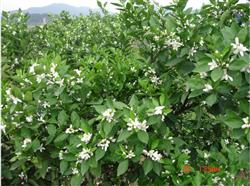
Preserving citrus flowers and fruits is one of the important measures for high-quality, high-yield and stable-yield cultivation of citrus, especially for citrus that suffered light frost damage in winter, flower and fruit preservation is even more important. In view of the fact that spraying "920" and 2,4-D to preserve fruits easily causes deformed fruits and pollutes the fruit, affecting citrus quality, the following introduces several pollution-free measures for preserving flowers and fruits without hormones or plant growth regulators:
1. Use Guangzengsu 802 to preserve flowers and fruits. Foliar spraying of Guangzengsu 802 can improve leaf function, thicken leaves, increase chlorophyll content, promote canopy growth, and enhance the tree's own disease resistance. It has a remarkable effect on preserving flowers and fruits and increasing the fruit-setting rate of fruit trees, opening up a new path for high and stable yields and improved fruit quality in citrus. Spray Guangzengsu 802 2-3 times each during the early flowering stage and the fruit-setting stage of citrus, diluting 10 grams of Guangzengsu 802 in 20 kg of water for foliar spraying.
2. Preserve flowers and fruits by foliar fertilization. In spring, citrus is in the stage of sprouting, flowering, vigorous division of young fruit cells and alternation of new and old leaves, which consumes a large amount of stored nutrients. At the same time, the soil temperature is generally relatively low, and the root absorption capacity is relatively poor, especially for orange trees with a large number of flowers and poor tree vigor, foliar fertilization has a good effect on preserving flowers and fruits. This is because after foliar fertilization at the flowering stage, the nitrogen content in the flowers increases significantly, the dry matter and diameter of young fruits increase markedly, and the fruit-setting rate improves. The commonly used foliar fertilization methods are: spray 0.3-0.5% urea solution or a mixed solution of 0.3% urea plus 0.3% potassium dihydrogen phosphate at the flowering stage, and spray once more 15-20 days after the flowers fall.
3. Use rice vinegar to preserve fruits. Rice vinegar contains 17 kinds of amino acids such as lysine, glutamic acid and alanine, as well as glycerol, aldehyde compounds and various salts. These substances can promote chlorophyll synthesis, improve photosynthetic efficiency, increase the accumulation of organic matter, enhance the absorption of nutrients by citrus, enlarge leaf area and promote fruit expansion, thereby increasing the yield and quality of citrus, generally increasing yield by more than 10%. From late May to early July, spray once every 10-15 days, for 3-4 consecutive sprays, with a concentration of 300 times dilution being appropriate. When spraying, choose a windless, dew-free cloudy morning or afternoon; on sunny days, it should be done after 3-4 pm. Use a small-orifice nozzle sprayer to evenly spray the prepared vinegar solution on the leaf surface and the back of the leaves, and it can also be used together with potassium dihydrogen phosphate, agricultural rare earth or boron fertilizer.
4. Use rare earth to preserve flowers and fruits. According to experiments, spraying rare earth solution to preserve flowers and fruits is best done 3 times: at the flower bud germination stage, the early bud stage, and the beginning of young fruit expansion. The fruit-setting rate increased by 38.1%, and the yield increased by 27.9%. In production practice, the first spray is generally applied from flower bud germination to the early bud stage, and the second spray is applied at the beginning of young fruit expansion after the second physiological fruit drop. The concentration generally used is a 300 mg/kg rare earth solution.