-

Peach Tree Post-Harvest Management Like This, Heavy Fruit Covering the Branches Next Year
After peaches are harvested, the remaining nutrients produced by their leaves are redirected to supply the branches and trunk, promoting branch thickening, tissue maturation, and the accumulation of nutrients, creating better conditions for flower bud differentiation the following year. If managed properly during this period, it can not only increase tree nutrition and improve the tree's resistance to adverse environments, but also play an important role in flowering and fruiting and tree growth the following year. Therefore, the following technical measures should be effectively implemented: 1. Reasonable fertilization After peaches are harvested, fruit-picking fertilizer should be applied promptly. Fertilization
-
Key Technical Points for No-Till Potato Cultivation and Management
No-till potato cultivation is a cultivation method in which, after the late rice or single-crop middle rice is harvested, the soil layer is not plowed, fertilizer is applied directly to the soil surface, potato tubers are planted, and then rice straw is spread as mulch. This method can save the labor of plowing and reduce labor intensity, and because the rice straw and potato stems and leaves are returned to the field, it plays a role in fertilizing the soil. It is a sustainable agricultural farming model that saves labor, saves effort, reduces costs, and increases income, and it is also a good approach for making full use of winter fallow fields in the limestone mountainous areas of northern Guangdong. The key technical points of its cultivation are introduced as follows: 1. Sprouting
-
Key Points of Fine Management Techniques for Chickens Starting to Lay in Autumn
Autumn is exactly the initial laying stage for chickens raised in spring, and the flock management during this period is related to the economic benefits of the chicken farm (household). Therefore, the following management measures should be taken for laying hens that have started to lay: Timely switch to transitional feed. Generally, chickens at 20 weeks of age are switched to pre-laying feed, also called transitional feed, in which calcium is 1% and crude protein is 16.5%. When changing feed, the feed transition process should be gradually completed over half a month. Do not rush it, to prevent diarrhea. When the laying rate reaches 2%-5%, the feed calcium content should be 3.4%-3.5%, and the crude protein content should reach 18%.
-
Rearing and Management Techniques for Growing Ducks (31-20 days of age)
The management goal for growing ducks is to develop a robust and well-proportioned body shape. 1. Increase exercise: Every day, drive the ducks to walk slowly several laps on the exercise yard, or herd them slowly outside for grazing, to strengthen their physique; people should handle the ducks more to build their boldness, so that when they enter the laying period they will not be easily frightened. 2. Feeding of growing ducks: Growing ducks are at the stage of growing frame and muscle. The nutritional principle for the rearing stage is: better low than high; the feed principle is: better coarse than fine. Concentrate feed
-
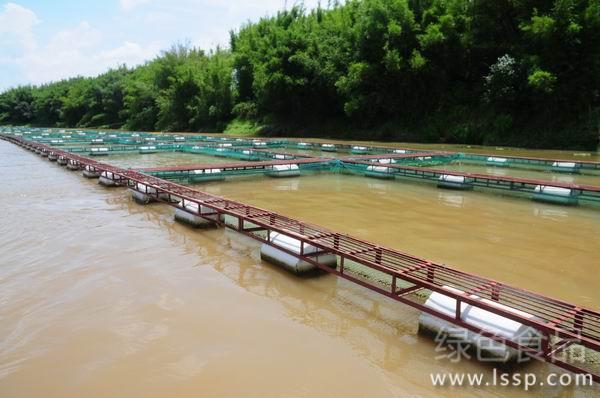
What are the key points for production management during the overwintering stage of freshwater aquaculture
Key points for production management during the overwintering stage of freshwater aquaculture
-
Detailed Explanation of Mid-to-Late Stage Management Techniques for Soybeans in Northeast China
The main soybean-producing areas in Northeast China and Inner Mongolia have generally suffered from a disaster pattern of spring drought followed by spring waterlogging. Drought, low temperatures and insufficient sunlight have caused slow plant growth, and have also increased the occurrence of herbicide injury, weed infestation and diseases. At present, plants generally have 2-3 fewer compound leaves than in the same period of a normal year, and growth is uneven. Therefore, cultivating strong seedlings, building a reasonable population structure, promoting early maturity and preventing lodging are the key tasks in mid-to-late stage field management of soybeans, and at present special attention must be paid to draining waterlogged soybean fields and preventing waterlogging damage. Recently, the soybean expert guidance group of the Ministry of Agriculture and the National Agricultural Technology
-
Key Technical Points and Management Methods for Winter Soybean Cultivation
1. Sowing time. The sowing window for winter soybeans is quite flexible; yields do not differ noticeably when sowing from early April to early June. In practice, to ensure winter soybeans obtain a suitable stand of basic seedlings, in addition to correctly determining the number of hills per mu to provide the density basis, sowing should generally be done during the period before the corn canopy closes, so that the soybean seedlings have already formed the necessary vegetative mass before shading intensifies, which helps ensure the basic seedling stand. In strip-planting areas, it is best to sow together with corn or slightly later, that is, in mid-to-late April; in sole-cropping areas after the small spring crop, it is best to sow in early-to-mid May. 2. Planting method. Winter soybean planting method
-
Detailed Explanation of Key Points in Madeira Vine Planting and Management Techniques
(1) Set up a trellis or stakes: when the seedlings reach 30 cm in height, set up a trellis promptly to let them climb, and pinch off the growing tips to promote the sprouting of lateral buds. (2) When cultivating in the open field, shade with a shade net in summer, which can inhibit flower bud differentiation, keep the plants in continued vegetative growth, inhibit summer flowering, achieve the goal of producing leaves year-round, and increase yield. (3) Fertilizer and water management: Madeira vine has strong growth vigor and a high water requirement. Although it is drought-tolerant, to grow plump, large leaves and achieve high yield, it needs frequent watering, and after every 2 leaf harvests, apply a topdressing of compound fertilizer.
-
Key Points of Water Management Techniques in Schisandra chinensis Orchards
1. Irrigation The root system of Schisandra chinensis is relatively shallow, and drought has a considerable impact on its growth, flowering, and fruiting. In Northeast China, spring rainfall is scarce, making drought conditions likely and highly unfavorable to the early growth of Schisandra chinensis. If irrigation can be carried out promptly throughout the year according to climate changes and the plant's water requirements, it will have an extremely significant effect on improving the yield and quality of Schisandra chinensis. Schisandra chinensis is most sensitive to water during the bud break stage, the rapid shoot growth stage, and the rapid berry enlargement stage. Water shortage in the early growth period can cause uneven bud break, short and small shoots and leaves
-
Detailed Explanation of Soil Management Techniques for Schisandra Berry Orchards
In nature, soil is the foundation for plant growth and fruiting, and the source of water and nutrient supply. When the soil is deep, loose and well aerated, soil microorganisms are active and can improve soil fertility, which is beneficial to root growth and enhances metabolism, and plays an important role in strengthening tree vigor and increasing yield per unit area and fruit quality. Therefore, for pollution-free standardized cultivation of Schisandra berry, soil management is an important part. The soil management of Schisandra berry means, according to its growth and development characteristics and nutritional status,
条件筛选