-

How to Make a Lingzhi (Reishi) Bonsai: Methods and Techniques
1. When selecting materials, choose different types of pots according to the species, color, form and size of the lingzhi (reishi); generally, dark-colored ceramic pots are better. If it is red lingzhi or pine-fir lingzhi, brown or purple pots are ideal, as they make the colors harmonious, quaint and elegant. If it is black zizhi or black lingzhi, white porcelain pots should be chosen, using strong contrast to highlight the features of the lingzhi's form. Do not choose pots of the same or similar color as the lingzhi, so as to avoid a monotonous tone. The lingzhi material can be collected from the wild or artificially cultivated. During artificial cultivation, by artificially controlling temperature, light and air
-
How to choose land and make beds for Asarum planting? Detailed explanation of key technical points
Asarum seedlings have weak emergence ability and strict soil requirements, so understory humus soil is mostly chosen as the seedling field. Humus soil is moist, well structured, and highly aerated, suitable for Asarum seedling growth. Generally, when raising seedlings on humus soil, the emergence rate can reach more than 90%. Farmland soil should not be used for Asarum seedling cultivation; the physical and chemical properties of farmland soil are inferior to humus soil, it is prone to compaction, seedlings are not easy to emerge after sowing, sprouts are prone to drying, and even if they emerge, growth is not easily robust. The specifications of the seedling field beds and the requirements for light transmittance are the same as those of the seed field. The seedling beds should be prepared before
-
How to make beds in a Panax notoginseng seedling field? Methods and key technical points
After the shed is built, plow and harrow the land once more, then make the beds. On flat land and gently sloping land, the bed height is 20-25 cm; on sloping land, the bed height is 15-20 cm, and the bed width is 1.2-1.4 m. Apply 3000-4000 kg of base fertilizer per mu, with poultry and livestock manure accounting for 30%-40% and plant ash accounting for 60%-70%. The base fertilizer must be fully fermented and decomposed, broken up finely, and spread evenly over the bed surface, then turned into the 6-10 cm soil layer of the bed with a shovel.
-
How to make watermelon rind taste good? The method for making licorice watermelon rind strips
Watermelon rind is rich in carbohydrates, minerals and vitamins, and has effects such as clearing heat and detoxifying, and promoting urination. The following introduces the technique for making licorice watermelon rind strips: Cut into strips. Thoroughly wash fresh watermelon rind with clean water, drain off the water, remove the green outer skin and the red flesh, then use a stainless steel knife to cut the watermelon rind into strips 0.2 cm wide and 6 cm long. Salting. First mix sodium benzoate and table salt, in amounts of 0.1% and 10% of the weight of the watermelon rind strips respectively. Then, in a container, salt in the order of one layer of watermelon rind and one layer of mixed salt, with a somewhat larger amount of mixed salt on the topmost layer. The salting time is generally 24 to 48 hours. Rinsing. Put the salted watermelon rind strips into a container holding clean water, changing the water once every 1 hour, until the salt content in the watermelon rind strips drops to 1% (the salt content is tested with a handheld salinity refractometer). Sugar processing. Put the rinsed watermelon rind strips into a bamboo basket and drain off the water. Then, in a container, process with sugar in the order of one layer of watermelon rind strips and one layer of sucrose. The amount of sucrose used is 20% of the fresh watermelon rind strips, and the sugar processing time is 24 to 48 hours. Baking. Take out the sugar-processed watermelon rind, drain off the sugar liquid thoroughly, arrange it evenly on a baking tray, send it into the drying room, and bake at 65 to 70 degrees C until the moisture content of the watermelon rind is 25%. Auxiliary ingredient formula. Calculated per 100 kg of fresh watermelon rind strips, prepare the auxiliary ingredients: sodium saccharin 0.05 kg, monosodium glutamate 0.2 kg, citric acid 0.05 kg, table salt 0.5 kg, potassium sorbate 0.01 kg. Soaking the auxiliary ingredients. Place the dried watermelon rind strips in a container. Dissolve the auxiliary ingredients according to the formula in licorice water, pour into the container, and mix the watermelon rind strips thoroughly from top to bottom. On the second day, mix from top to bottom another 1 to 2 times, leave for 2 days, take out the watermelon rind strips and bake them. The licorice aqueous solution is made by boiling 4 kg of licorice and 25 kg of water per 100 kg of fresh watermelon rind strips, and filtering it. Baking. Evenly arrange the watermelon rind strips that have been soaked with auxiliary ingredients on a baking tray, and send them into the drying room for baking. It is suitable to control the drying room temperature at 60 to 65 degrees C. During baking, turn them several times, and when the moisture content of the product drops to about 25%, the baking is finished. Mixing in licorice powder. Cool the watermelon rind strips at room temperature. Mix licorice powder (used in an amount of 0.1% of the fresh watermelon rind strips) into the watermelon strips, and mix evenly to obtain the finished product.
-
How to Make Schisandra Wine and the Detailed Steps
1. Because schisandra berries are low in sugar and high in acid, a mixed fermentation method is used in which white granulated sugar liquid is added to dilute the acidity. 2. Adjust the alcohol content of the free-run juice to about 13° (by volume), then freeze and filter. Specific procedure: after the berries are crushed, the free-run juice (within 6 hours) is stored in a clean tank, adjusted to 13° (by volume) with deodorized alcohol, then subjected to post-fermentation, followed by freezing and filtration. Generally, the free-run juice accounts for about 11% of the total fermented base wine. 3. The pre-fermentation temperature is controlled at around 20°C, and the fermentation time is generally
-
How to make goji fragrant duck? Detailed production technique shared
Goji fragrant duck is a new medicinal dish, with effects such as clearing heat and reducing internal fire, tonifying the middle and replenishing qi, and soothing the liver and freeing the lungs. The specific production steps are as follows: 1. Braising: slaughter a live duck, remove the feathers, remove the internal organs, wash clean, and braise in a pre-made braising broth. To make the braising liquid, use 100 kg of water plus 5-8 g of magnolia flower buds, 5-8 g of amomum fruit, 6-8 g of dried tangerine peel, 15-25 g of angelica dahurica, 25-35 g of cassia bark, 60-80 g of Sichuan pepper, 60-120 g of fennel, 180-220 g of star anise, 1.8-2.2 kg of salt, and an appropriate amount of scallion, ginger,
-
How to make goji berry fruit tea? A detailed preparation method shared
1. Processing equipment: colloid mill, homogenizer, crusher, water bath heater, degassing device, capping machine. 2. Raw materials and formula: goji berries: 15%; carrots 20%; granulated sugar: 13%; honey: 1%; acidulant: 0.5%; flavoring: as needed; stabilizer: 0.2%; the rest is made up with water. 3. Process flow: raw materials -> selection -> softening -> crushing -> fine grinding -> blending -> heating -> homogenizing -> degassing -> filling -> sterilization -> packaging -> finished product 4. Key operating points 1) Spoiled goji berries should be removed beforehand, otherwise
-

Can you make money growing Paris polyphylla? Profit analysis of Paris polyphylla cultivation
Can you make money growing Paris polyphylla?
-
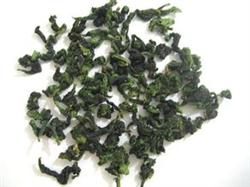
How to Make Goji Leaf Health Tea and Detailed Steps
Goji leaves are rich in betaine, rutin, and various amino acids and trace elements. Regularly drinking goji leaf tea has health benefits such as nourishing the liver and improving eyesight, and softening blood vessels. The production method is as follows: 1. Picking leaves: Pick fresh goji leaves that are tender green in color, free of pests and diseases, and thick and plump. Wash off the dust on the leaf surface with clean water...
条件筛选