-
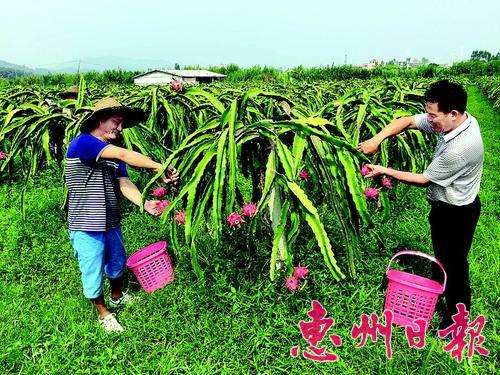
Ruhu Dragon Fruit Rivals Guiwei Lychee: Villagers Grow Exceptional Flavor
Ruhu Villager Grows "The Guiwei of Dragon Fruit"
-
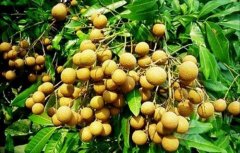
Litchi stink bug feeding damage to lychee and longan: how to control it and handle the eggs
The most serious pest and disease problem for lychee is the damage caused by the litchi stink bug, so when is the best time to control this pest? Now is the critical time to prevent damage from the litchi stink bug! Around February each year. The Council of Agriculture held a press conference on the 12th calling for action: the litchi stink bug, which causes serious harm to lychee and longan, is preparing to lay eggs, and farmers are urged to carry out area-wide integrated control.
-
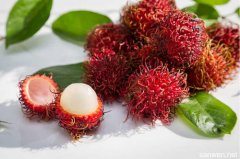
Is rambutan the same as lychee? Which one tastes better, and how do you eat it without getting the seed skin stuck?
Is rambutan the same as lychee? No, they are not the same. They differ greatly in appearance, and their flavors are different too. Lychee is a bit sweeter than rambutan and has more juice; rambutan's flesh feels a bit firmer. So which of these two fruits tastes better? This
-
Is rambutan the same as lychee? Which tastes better, and how to eat it without the seed skin sticking
Is rambutan the same as lychee? They are not the same. There are big differences in appearance, and the taste is different too. Lychee is a bit sweeter than rambutan and has more juice; rambutan's flesh feels a bit firmer. So which of these two fruits tastes better? This still
-
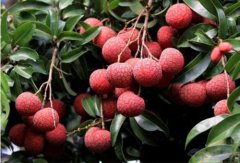
What month do lychees ripen and hit the market? Are there lychees in December?
Generally, the lychee ripening season is from June to July. Some varieties are different, with some ripening earlier and some later, but they generally hit the market in June and July. Feizixiao: a lychee variety of relatively good quality, ripening in early to mid-June. Zhuangyuanhong:
-
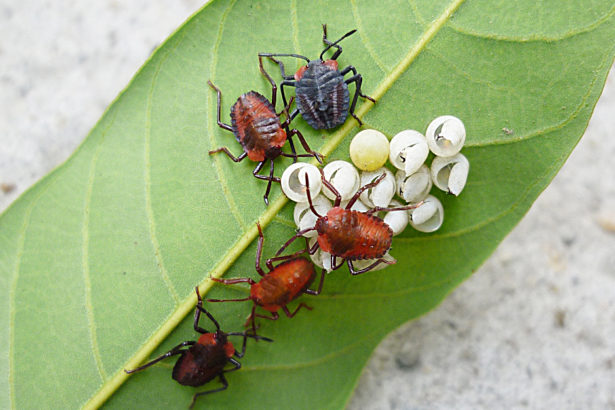
It's the perfect time to tackle the lychee stink bug! Spraying pesticide after egg-laying is too late; releasing Anastatus wasps in spring to remove egg masses is the most effective
It's the perfect time to tackle the lychee stink bug! Spraying pesticide after egg-laying is too late; releasing Anastatus wasps in spring to remove egg masses is the most effective
-

Detailed Explanation of the Variety Characteristics and Traits of Jizui Lychee
Characteristics and traits: When the fruit of the Xiangshan Jizui lychee matures, the seed degenerates into a chicken-beak shape, hence it is called Jizui lychee (Chicken Beak Lychee). The plant of this variety grows vigorously and tall, with a compact tree shape, grayish-brown trunk, semi-round and spreading canopy, clustered, fine, dense and relatively hard branches, medium-sized, long-elliptical, dark green, glossy leaves with smooth leaf margins, and purple-red young leaves. The mature fruit is lopsided-heart-shaped or flat-round, uniform in size. The pericarp is thin but tough, dark red, with large and sparse areoles that are flat or nipple-like protrusions, arranged relatively regularly, and the suture line is broad and obvious
-
The problem of "many flowers but few fruits" in Feizixiao lychee has been solved
On May 20, the "Early-maturing and High-yield Cultivation Technology for Feizixiao Lychee" passed the scientific and technological achievement appraisal of Maoming City. This technology breaks the traditional practice of delaying the flowering period of Feizixiao to obtain fruit, concentrates nutrients for flowering and fruiting, and effectively solves the problem of "many flowers but few fruits" in Feizixiao. With this technology, the average annual yield per tree reaches 25.59-48.47 kg, an increase of 17.63%-28.07% compared with the control; the fruit set of the first batch of flowers accounts for 70%-80%, 40% more than that of trees under ordinary management; the fruit from the first batch of flowers matures 3-5 days earlier.
-
Detailed Explanation of Key Cultivation Techniques for Jizui Lychee
Cultivation points: 1) Select mountainous land, hills, or flat land with deep soil and good drainage. Spring or autumn planting is suitable, with a planting spacing of 3 m x 5 m and 45 plants per mu. 2) Focus on promoting new shoots to expand the canopy, use fertilizer and water management, apply frequently and lightly, and use "two fertilizations per shoot flush" to continuously promote shoot growth. This increases the number of branch orders and expands the canopy. After 2-3 years of management, allow the tree to bear fruit after the canopy spread reaches 2 m. Shaping and pruning generally adopt the natural round-headed form, using methods such as pinching, heading back, thinning, and bud removal to inhibit shoot growth and promote branching.
-
Introduction to the characteristics and traits of the Feizixiao lychee variety
Characteristics and traits: The tree is vigorous and flourishing, with a relatively open canopy, and grayish-brown bark; the leaves are relatively large, long elliptic-lanceolate; the fruit is nearly round or oval, with a single fruit weight of 235-325 g; the fruit shape is neat and attractive, the apex is rounded, and the stalk is thick and straight; the peel is red with green, the crackled segments are finely peaked, and the suture line is not very obvious; the flesh is white waxy, crisp and juicy, sweet with fragrance; most seeds are not plump; the edible rate of the fruit is 77%-83%, and the soluble solids content is 17%-21%, with excellent quality. It has wide adaptability and matures in early May in Hainan, and from late May to early and mid-June in Guangdong and Guangxi.
条件筛选