-

How should fertilizer be applied sensibly when growing lotus root?
How should fertilizer be applied sensibly when growing lotus root? How much fertilizer does lotus root generally need? We also ask experienced gardeners to share how the nutrients lotus root needs during growth and development come partly from photosynthesis in the lotus leaves and partly from the soil, while the soil's original fertilizer is limited (including base fertilizer) and will...
-

What are the environmental requirements for growing lotus root? Read this article to understand
Environmental requirements for growing lotus root
-
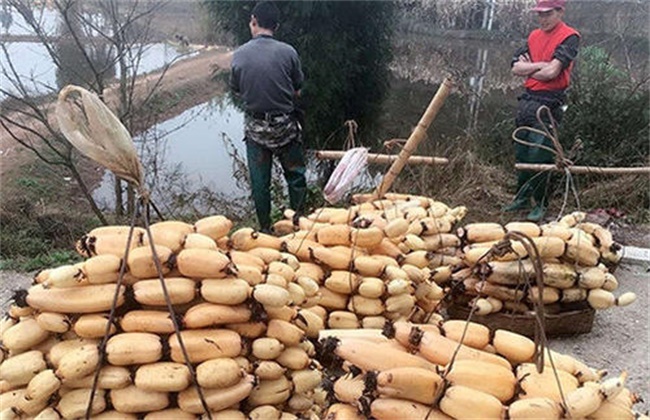
Detailed Explanation of Key Techniques for High-Yield Lotus Root Cultivation
High-Yield Cultivation Techniques for Lotus Root
-
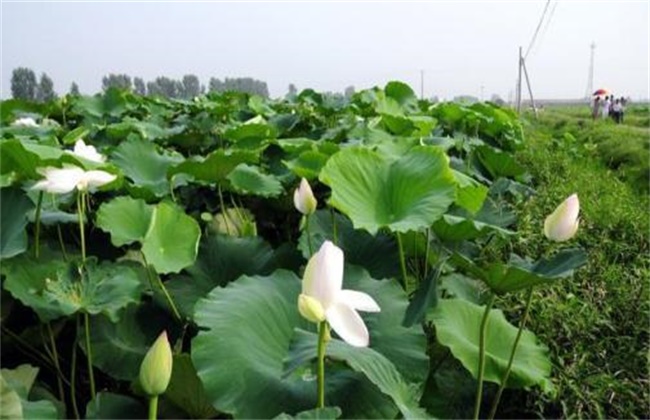
A Detailed Guide to the Growth Characteristics and Fertilization Techniques of Lotus Root
The Growth Characteristics and Fertilization of Lotus Root
-
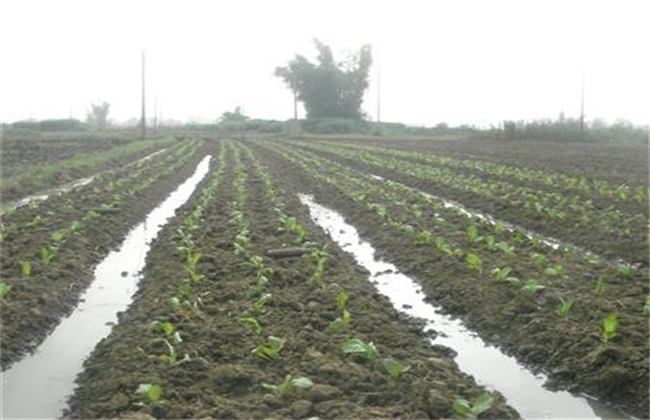
What are the reasons lotus root does not grow vigorously after planting
Reasons lotus root does not grow vigorously after planting
-

Detailed Explanation of Cultivation Techniques for Artificial Pond Lotus Root
I. Selecting Varieties Seed lotus roots are generally dug up just before planting, selecting whole lotus roots or larger daughter lotus roots that have typical varietal characteristics and a relatively thick rear stem node (i.e., the lotus tail). The daughter lotus roots on the whole lotus root must grow in the same direction, so that the extending lotus runners elongate in an orderly manner. If daughter lotus roots are used as seed, they must have at least two or more fully mature lotus root sections, with intact terminal buds, cut at 1.5 cm behind the second node stem; never snap them off by hand, to prevent muddy water from entering the lotus root holes and causing rot. The main varieties of seed lotus roots include early-maturing varieties Hua Ou, E Lian No. 1
-

Detailed Explanation of Lotus Root Seed Selection and Seed Retention Techniques
(1) Selection and breeding. Lotus root selection and breeding mainly includes methods such as asexual selection and sexual crossbreeding. 1. Asexual selection. China has abundant lotus root germplasm resources, which provides excellent conditions for asexual selection. In recent years, varieties bred from superior plants of asexual lines include Kexuan No. 1, Elian No. 1, Zhehu...
-

How should lotus root cultivation be managed?
How should lotus root cultivation be managed? Please give a detailed introduction. Lotus root cultivation can be managed by referring to the following methods: For topdressing lotus root, apply fertilizer 2-3 times. The first time is when 1-2 standing leaves have grown, the second time can be before the rows close, and the third time is when the rear ridge leaves appear. Per 667 sq m (mu), for the first application use 200...
-

What are the control methods for lotus root rot?
How do you control rot when growing lotus root? Please give an introduction. Lotus root rot, commonly called stalk rot, mainly damages the underground stem, and the leaves and stalks can also be affected. Affected leaves form green wilt-colored patches along the leaf margins and curl downward, then the whole leaf turns brown, and the leaf stalk shrivels and dies from top to bottom. When it occurs severely, the whole field turns a withered yellow, caus...
-

Why does lotus root only grow leaves and not rhizomes?
Why does lotus root only grow leaves and not rhizomes? How should lotus root be fertilized? Experienced gardeners are asked to help explain. The main reason lotus root does not form rhizomes is that balanced fertilization was not achieved: too much nitrogen fertilizer was applied and too little potassium fertilizer. To achieve high quality and high yield in lotus root, you need to "reduce nitrogen, control phosphorus, and increase potassium." Therefore Zhongdiwang has compiled the lotus root...
条件筛选