-

Methods for Site Selection and Land Preparation for Angelica sinensis Cultivation
1. Seedbed site: According to the growth habits of Angelica sinensis seedlings, choose a plot surrounded by mountains on all sides, with loose, fertile soil, high humus content, sheltered from the wind, with short sunlight duration, and cool and moist conditions for raising seedlings. Angelica sinensis seeds are small, and the young sprouts have weak soil-breaking strength, so fine land preparation is required to ensure normal emergence. Plow the land in the previous year to allow the soil to fully weather, or plow in April to May of the current year, preferably three times. The first and second plowing should be 24-30 cm deep, and the third shallow plowing 9-15 cm. Dry and burn the weeds, spread them out and plow them into the soil, pick out all stones and unburned weeds, break up clods, level the ground, and then apply 5000 kg of farmyard manure per mu as base fertilizer. Then level and make beds along the mountain contour, with a bed width of 100-120 cm and a bed height of about 25 cm. Dig drainage ditches around the perimeter to facilitate drainage, with a ditch width of 18-24 cm and a depth of 15 cm. Raising seedlings under such conditions results in dense plant growth, mutual shading, leaves growing upward, less sugar accumulated through photosynthesis, more nitrogen absorbed from the soil, and a low bolting and flowering rate. If a site with abundant sunlight and dry, barren soil is chosen for seedling raising, even with sufficient manure and fine land preparation, the strong sunlight and dry soil will result in fewer seedlings emerging, leaves spreading flat, a large nutritional area for plants, high sugar accumulation through photosynthesis, drier soil, less nitrogen absorbed from the soil, and consequently a higher bolting and flowering rate. This should be given serious attention.
-
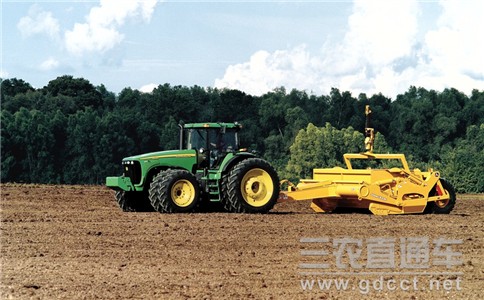
Ministry of Agriculture announces completion of this year's 200 million mu of deep loosening and land preparation by agricultural machinery
Ministry of Agriculture: this year's 200 million mu of deep loosening and land preparation by agricultural machinery completed
-
Land preparation and sowing methods for spring sesame and summer sesame
Spring sesame should adopt the "plowed furrow slice" method. The so-called "plowed furrow slice" means that after the previous crop is harvested, fertilizer is applied, the soil is plowed and harrowed, and then sesame is sown. The advantages of "plowed furrow slice" are: it can turn the soil and loosen it, increasing soil temperature; bury the base fertilizer, improving fertilizer efficiency; reduce weeds, making intertillage convenient; and the soil has good aeration, which can improve the soil's water storage and fertilizer retention capacity. Therefore, planting "plowed furrow slice" sesame is a key measure for increasing yield. For summer sesame, "iron stubble" sowing should be advocated, with rough sowing and careful management. "Iron stubble" sowing means that after the previous wheat crop is harvested, there is no further plowing, plowing or harrowing; as long as it is raked
-
Detailed Explanation of Methods for Site Selection, Land Preparation, and Transplanting of Angelica sinensis
(1) Site selection and land preparation The seedling-raising plot should be chosen as a cool, fertile, and moist virgin wasteland or previously cultivated land, with loose, fertile sandy loam being preferable; the cultivation plot should be chosen as fallow land or secondary wasteland with deep soil layers. In mid-July, first cut down shrubs and weeds, spread them on the ground, and burn them, then deep-plow the land more than 25 cm, and let it weather and mature under the sun. Then, before planting, while preparing the land, apply 37,500 kg of decomposed stable manure per hectare and plow it into the soil as base fertilizer. Before sowing, shallow-plow once more and make raised beds 1.3 m wide, with furrow width 30 cm and bed height about 25 cm
-
Key Technical Points for Site Selection and Land Preparation in Honeysuckle Cultivation
(1) For the seedling nursery, it is advisable to choose sandy loam soil close to a water source, convenient for irrigation, loose and fertile, and well-drained. After selecting the site, plow the soil deeper than 30 cm, harrow it fine and level it, and apply 1500-2000 kg of decomposed barnyard manure or compost per 667 sq m as base fertilizer. Then shallow plow and harrow once, and form beds 100-200 cm wide and 20 cm high. Use these as seedbeds for cutting propagation and sowing propagation. (2) For the planting site, use wasteland slopes, field edges, ditch edges, and in front of and behind houses
-
What are the key technical points for land preparation and fertilization in black locust (Robinia pseudoacacia) seedling cultivation?
The method for land preparation and fertilization in black locust seedling cultivation is: the seedling bed should undergo deep plowing and thorough harrowing, preferably deep plowing in autumn or winter, and in the following early spring, harrowing fine and level while the soil is still frozen, to a depth of 20 to 30 cm, removing stones and grass roots during harrowing. Apply 4000 to 5000 kg of decomposed barnyard manure per mu, and apply 10 to 15 kg of ferrous sulfate to control underground pests.
-
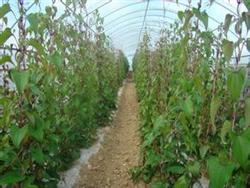
Key Technical Points for Site Selection, Land Preparation and Fertilization in Yam Cultivation
How should yams be managed after planting? From planting until trellising, timely cultivation and weeding should be carried out; later cultivation should be shallow rather than deep, so as not to damage the roots. A few days after the yams emerge, they begin to send out vines, so supports must be set up immediately to train the vines; to increase the light-receiving area, a trellis height of about 1.5 is best. After sowing and until the vines grow, manure can be spread on the ground surface, spread...
-
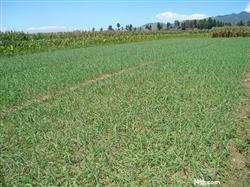
Detailed Guide to Land Preparation and Fertilization for Garlic Planting
How do you prepare the land and fertilize when planting garlic? Please explain in detail. Garlic has strong adaptability to soil and can grow in all soils except saline-alkali and sandy wasteland. However, because its root system is small and short and its ability to absorb nutrients is poor, sandy soil rich in organic matter, well drained and loose is best. Garlic is afraid of alkali and does not like clay. When cultivated in alkaline soil, the mother cloves rot easily and are prone to damage by garlic maggots, and the seedlings are yellow and weak, with the false stem lodging when alkali returns.
-
Key points of land preparation and fertilization techniques for goji berry cultivation
Goji berry (Lycium barbarum) is a deciduous small shrub in the Solanaceae family, also known as goji fruit, gounaizi root, and others, and is a well-known ornamental fruit plant. Its flowering period is from June to September, and its fruiting period is from September to October. Its leaves, roots, and fruits can all be used as medicine, and when grown in pots, the old roots can also be made into exposed-root bonsai. Goji berry has a wide range of adaptability and is not strict about soil requirements, tolerating drought, poor soil, ...
-
Detailed Explanation of Key Techniques for Asparagus Land Preparation and Planting
Key Points for Asparagus Land Preparation and Planting
条件筛选