-
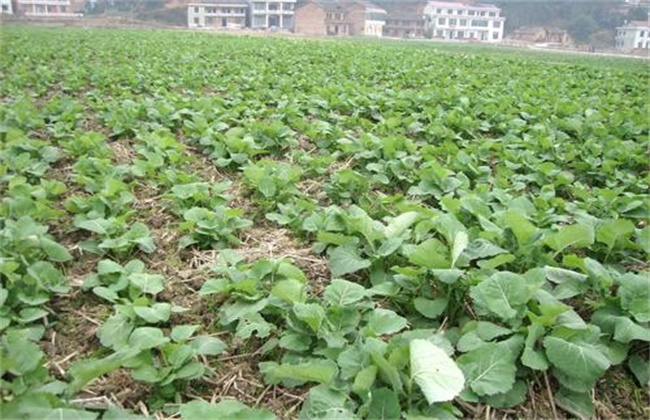
What are the measures for keeping rapeseed seedlings alive through winter? A full breakdown of the key points
Measures for keeping rapeseed seedlings alive through winter
-

Harvesting, Storage, Fresh-keeping and Processing Methods of Taro
Taro is a perennial herbaceous hygrophytic plant of the Araceae family, native to China, India, the Malay Peninsula and other places. At present, in China it is mainly distributed in South China, Southwest China...
-

Detailed Explanation of Key Points for Potato Storage and Fresh-Keeping Techniques
Potatoes are a vegetable with a dormancy period. In summer, heap storage does not require refrigeration or cooling, but it is necessary to prevent heat buildup in the heap. The specific method is: pile undamaged, high-quality tubers in a well-ventilated room or ventilated storage warehouse, with a heap height not exceeding 0.5 m. To prevent the tubers in the heap from overheating, set up a ventilation tube every 1 m. If they are packed in baskets and stacked into piles, it is best to stack them in a "#" shape to facilitate ventilation. During storage, regularly turn and inspect them, promptly remove infected tubers, and prevent the spread of pathogens. To prevent the tubers from sprouting during storage, a certain amount of
-
Detailed Explanation of Key Points of Potato Storage and Fresh-Keeping Technology
The edible part of the potato is the tuber, which contains a large amount of carbohydrates and rich mineral elements. Potatoes are resistant to storage and transportation and can be supplied year-round. They are a popular fresh-eating vegetable and raw material for processed products that help balance market supply during off-peak and peak periods. I. Storage and Characteristics. After harvest, potatoes generally have a dormant period of 2-4 months, and the length of the dormant period varies with different varieties. Late-maturing varieties have a short dormant period, while early-maturing varieties have a long dormant period. Different degrees of maturity also affect the length of the dormant period. The stem of immature potatoes has a longer
-
A Detailed Guide to the Application of Fresh-keeping Technology for Exported Garlic
Garlic is one of the main varieties of agricultural products exported from China, with an annual export volume of about 300,000 tonnes. Of this, refrigerated (fresh-keeping) garlic accounts for about 60% of total exports. Therefore, whether the fresh-keeping technology is mature has a direct impact on the quality of exported fresh-keeping garlic. I. The fresh-keeping principle of garlic. After the cloves of a garlic bulb develop and mature, the bulb immediately enters a dormancy period of 1-2 months, during which it will not sprout even under suitable environmental conditions such as temperature, humidity and gas composition. After the dormancy period, the bud sheath and bud primordium begin to grow and become active, and under suitable conditions the young sprouts gradually germinate. In practice, the storage and fresh-keeping of garlic means that after the dormancy period of the bulb, necessary measures are taken to create unsuitable growing conditions and thereby force it to remain dormant. That is, through appropriate low-temperature, low-oxygen and other measures, its intensity of life activity is inhibited, the rate of consumption of its substances is reduced, and its original fresh state is maintained.
-
A new method for keeping garlic fresh, teaching you to store it longer
5-10 days before harvesting garlic, spray the basal leaves with a 0.2% maleic hydrazide (MH) sprout inhibitor. The MH sprout inhibitor is absorbed through the leaves and transferred to the young sprouts of the garlic cloves, thereby inhibiting their growth and achieving the purpose of keeping them fresh. With this method, garlic can be stored until April of the following year. The following points should be noted when spraying the chemical: 1. Do not water for 3-4 days before spraying the solution. If rain occurs within 24 hours after spraying, immediately re-spray the solution once at the original dosage after the weather clears. 2. Strictly control the concentration of the maleic hydrazide (MH) sprout inhibitor, which must not exceed 0.
-
Garlic Storage and Fresh-Keeping Methods and Key Technical Points
Storage of garlic sprouts, garlic scapes and fresh garlic bulbs ① Ice cellar storage: Choose a shaded, sealed room or basement as the cellar. The cellar floor should have a drainage ditch leading outside, spread a 0.8 m thick layer of ice on the floor, and build ice 0.5 m thick against the walls, up to near the roof. Tie garlic sprouts or garlic scapes into bundles of 1 kg, put them into plastic film bags with 15 kg per bag, tie the outside with rope and stack them in the cellar, filling each layer with ice fragments, stacking until about 2 m from the roof, then seal with a layer of ice on top, and spread a 1 m layer of rice husks over it to seal tightly and prevent the ice from melting. This allows garlic to be stored for more than half a year.
-
Detailed Explanation of Short-Term Storage and Fresh-Keeping Methods for Ginger
If the ginger is to be processed and used, short-term storage and fresh-keeping are needed. Choose a sheltered spot indoors, first spread a layer of moist sand on the ground, then arrange the stored ginger upright and closely packed on top, covering each layer with 5-6 cm of moist sand; in this way it can be stacked 0.8-1 m high, with the topmost layer covered with 10 cm of moist sand, then cover with plastic film to retain moisture. Note that water must not enter the ground, and the film may be left off for the first half month.
-
What are the methods for keeping garlic scapes fresh? Do this to store them longer
1. Harvesting garlic scapes 1. Harvest at the right time. The suitable harvest period is when the scape stalk has grown out of the terminal leaf and bends to one side (that is, hooks) around in a full circle. Harvested too young, the flavor is poor and it does not keep well; harvested too old, the quality is poor and it has no value for long-term storage. 2. Harvesting method. The "lifting the seedling" method is preferable: hold the scape stalk where it emerges from the terminal leaf with your hand and lift upward, so that the scape stalk breaks off from the base. The cross-sectional wound caused by "lifting the seedling" heals easily, whereas the wound from "cutting the seedling" harvest rots easily. 3. Harvesting time. Choose a sunny day, and by no means harvest on a rainy day.
-
A Detailed Guide to the Method of Keeping Eggplants Fresh with Plastic Bags
Put the selected eggplants into a warehouse at a normal temperature below 20-25°C, stack them into piles, and seal them with a polyethylene film tent. Inside the tent, the oxygen content is 2%-5% and the carbon dioxide content is 5%. Under such low-oxygen and high-carbon dioxide conditions, because respiration intensity is reduced and ethylene synthesis in the plant is limited, and the action of ethylene is blocked, the detachment of the eggplant calyx is prevented and eggplant rot is reduced. This method can store eggplants for about 30 days and maintain their original commercial value. Some people also use high-density polyethylene bags 10 micrometers thick to store selected
条件筛选