-
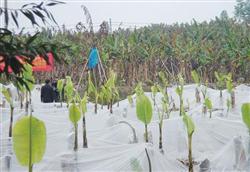
What are the correct methods for keeping and removing suckers on banana trees?
How do you keep and remove suckers on bananas? We ask experienced readers to help explain. Zhongdi Web has compiled the methods for keeping and removing suckers on banana trees, listed below for readers to refer to and learn from. The banana tree is a fruit tree that bears fruit only once; the underground corm, under conditions of sufficient fertilizer and water, has the characteristic of successively sending up suckers, so planting...
-
What are the precautions for keeping black-skinned chewing cane as seed cane over winter?
What should be noted when keeping black-skinned chewing cane as seed cane over winter? Please advise: for black-skinned chewing cane kept as seed cane, in winter it is advisable to apply a heavy dose of potassium fertilizer, so as to raise the plant's nutritional level and the potassium content of the part kept as seed cane. Only in this way can the cold resistance and overwintering ability of the seed cane be strengthened, making the cane buds plump, so that after next spring they sprout early, sprout quickly, sprout...
-
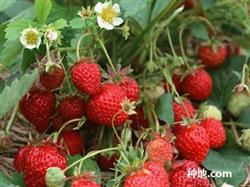
Detailed Explanation of Key Techniques for Keeping Strawberries Safe Through the Summer
How can strawberries be kept safe through the summer? Please advise. To keep strawberries safe through the summer, the following methods can be used: irrigate to retain moisture, shade to lower the temperature. Strawberry roots are relatively shallow and have weak drought resistance, and the leaf area is relatively large, so evaporation is vigorous. If the plants are not watered frequently to keep the soil moist, the stems and leaves can easily wilt and die. Therefore, when the ground surface turns white...
-
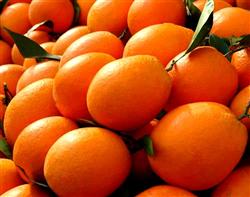
Detailed Explanation of Key Points for Navel Orange Harvesting and Fresh-Keeping Techniques
It is now the navel orange harvest season. If fruit growers only focus on early orchard management while neglecting post-harvest fruit handling and fresh-keeping storage techniques, the fruit will deteriorate and rot, resulting in a bumper harvest without a bumper income. Pay attention to harvesting techniques. For navel orange fruit intended for storage after harvest, picking is generally best when 80% of the fruit surface has colored and the fruit has not yet softened...
-
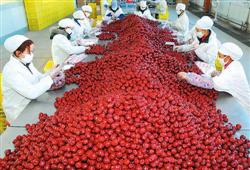
Detailed Explanation of Key Techniques for Scientific Harvesting, Storage and Fresh-Keeping of Fresh Jujubes
Fresh jujubes are now widely cultivated in rural areas across the country. Their fruit has a bright red appearance, a crisp and sweet refreshing taste, and is rich in various nutrients. The vitamin C content of fresh jujubes is 60-80 times that of apples and 30 times that of citrus. Scientific storage and fresh-keeping of jujubes can greatly reduce losses for growers, achieve increased production and efficiency. Ensuring a long-term supply of fresh jujubes on the market...
-
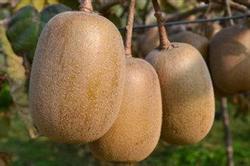
How to store kiwifruit? Remember these key points for keeping it fresh
Precooling: Where a precooling room is available, cold air at a flow rate of 0.75 liters/second?kilogram can be supplied, lowering the fruit temperature from 25°C-30°C to 3°C-4°C over 8-10 hours, and then it is moved into the cold storage. Where no precooling facility is available, the fruit can be placed in a cool, ventilated spot and precooled overnight, then sent into the cold storage early the next morning, and then lowered to...
-

Detailed Explanation of Pear Storage Characteristics and Fresh-keeping Techniques
Pear is one of the three major fruits in our country, and its output ranks first among the three major fruits. Its deep-processing volume is limited, and its rot rate is high. In order to extend market supply, storage and fresh-keeping should be done well in combination with its variety characteristics, reducing urban biological waste and providing a guarantee for generating income in the pear industry. I. Biological Characteristics Pears are composed of fruit, core, and seeds. The growth process of pear fruit follows an S-shaped growth curve. In the early stage, cell division and embryo growth are dominant, and volume increases slowly. In the later stage, the fruit grows rapidly. The increase in the 40 to 50 days before harvest is about 10 times the growth amount of the early stage.
-
Research on Storage and Fresh-keeping Techniques for Jujube Fruit
Jujube is one of the fruit trees unique to China, with a cultivation history of over 2,000 years. The jujube tree is cold-resistant, drought-resistant and tolerant of poor soil, with strong adaptability, and is known as the "ironclad crop." Jujube fruit is rich in nutrients, containing more than twice the sugar of ordinary fruits as well as relatively large amounts of protein, fat, iron, phosphorus, calcium and other substances, and has high nutritional value and dietary therapy functions. Domestic research on fresh jujube storage and its postharvest physiology began in 1980, and studies and explorations have been carried out on the postharvest physiology and storage of jujube, with a great deal of work done on physiological and biochemical mechanisms.
-
Detailed Explanation of Key Points of Peach Fruit Antiseptic and Fresh-keeping Treatment Technology
Currently, methods for storing peaches include ice cellar storage, improved ventilated warehouse storage, cold storage, and controlled atmosphere storage. The suitable temperature for peach storage is 0-3°C. Generally, large cold storage warehouses have uneven temperature distribution, poor temperature control precision, poor fresh-keeping effects, and are difficult to operate and manage. The tzfgz series wall-mounted automatic cold storage is a new type of storage and fresh-keeping cold storage developed and promoted by the Shandong Institute of Pomology, with a temperature control precision of 0.1°C, fast cooling speed, and uniform warehouse temperature. Low and high temperatures can be
-
Detailed Guide to Apricot Storage and Fresh-Keeping Methods and Techniques
Storage and Fresh-Keeping of Apricots 1. Determining the Suitable Harvest Maturity of Apricots Determining the suitable harvest maturity is key to storing apricots. The judgment of maturity can be determined based on factors such as the number of days of fruit development, changes in fruit color, the texture of the peel and flesh, the aromatic flavor of the fruit, and the firmness of the fruit's attachment. Apricots intended for storage should be harvested when the fruit has reached the inherent size of the variety, the fruit surface has turned from green to yellow, the sun-facing side shows the variety's inherent color, the flesh is still firm, nutrients have been fully accumulated
条件筛选