-

Detailed Explanation of Key Points for Storage and Fresh-keeping Techniques of Peaches, Plums and Apricots
Peach, plum and apricot (including cherry) fruits all contain a hard stone and belong to the drupe category of fruits, sharing common characteristics in fruit development and postharvest physiology. It is precisely because the fruit contains a hard stone that a double-S growth curve appears during growth. Peach, plum and apricot fruits have high respiration intensity; all have a respiration peak, so they all belong to the climacteric type of fruit, which determines that they have basically similar storage, transport and fresh-keeping technical measures. However, as tree species and varieties differ, the storage, transport and fresh-keeping techniques adopted also differ. Peaches and plums generally
-
Detailed Explanation of Pear Storage Characteristics and Fresh-keeping Techniques
Pear is one of the three major fruits in our country, and its output ranks first among the three major fruits. Its deep-processing volume is limited, and its rot rate is high. In order to extend market supply, storage and fresh-keeping should be done well in combination with its variety characteristics, reducing urban biological waste and providing a guarantee for generating income in the pear industry. I. Biological Characteristics Pears are composed of fruit, core, and seeds. The growth process of pear fruit follows an S-shaped growth curve. In the early stage, cell division and embryo growth are dominant, and volume increases slowly. In the later stage, the fruit grows rapidly. The increase in the 40 to 50 days before harvest is about 10 times the growth amount of the early stage.
-
Detailed Explanation of Key Techniques for Jujube Storage and Fresh-keeping
Jujube is one of the fruits unique to China. It is rich in nutrients, containing relatively large amounts of sugar, protein, fat, iron, calcium, phosphorus and other substances. At the same time, its content of vitamin C and cyclic adenosine monophosphate (CAMP) is also very high. In clinical medicine, it has preventive and therapeutic effects on the human body in terms of antioxidation and increasing myocardial nutrition, and is therefore favored by consumers. However, jujube fruit is a fruit that does not store well. At room temperature, it loses its original quality in about 20 days, and at low temperature it can only be stored for 40-60 days. Therefore, the storage and fresh-keeping technology for jujube fruit
-
Storage and Fresh-keeping Methods and Technical Key Points for Japanese Sansui Pears
Cultivars such as Hosui and Golden Pear have won wide popularity among consumers for their excellent flavor, so in recent years Japanese and Korean superior sand pears have made considerable progress in our country, and fruit output has also risen substantially year by year. However, the flesh of these pears is relatively soft, easily damaged during transport, and because their harvest period is short, their storability is poor, and their sales period is too concentrated, it is difficult to supply the market over the long term. How to store and keep them fresh is therefore particularly important. The author hereby introduces Japan's storage and fresh-keeping methods for Sansui pears to everyone for reference. 1. Harvest maturity and
-
A Detailed Guide to Jujube Fruit Storage Methods: Easily Extend the Fresh-Keeping Period
I. Timely Harvesting Jujube fruit maturity is one of the important factors affecting the fresh-keeping effect of fresh jujube storage. Many studies have shown that jujube fruit maturity is negatively correlated with storage performance: the lower the maturity, the more storage-tolerant it is, and its storage tolerance declines with jujube fruit maturity. White-ripe fruit is better than early-red fruit, early-red fruit is better than half-red fruit, and the storage tolerance of fully red jujube fruit declines noticeably. In 1985, the storage performance at different harvest times at the Fruit Tree Research Institute of the Shanxi Academy of Agricultural Sciences showed that for pointed jujubes picked from the same tree at different maturity stages and stored in a cold store at 0°C±1°C
-
Storage and Fresh-keeping Techniques for Peach, Plum and Apricot Fruits (Part Two)
III. Pre-storage Agricultural Measures for Peach, Plum and Apricot 1. Selection of Storage Varieties Early-maturing varieties are not tolerant of storage and transport, such as honey peach and Wuyuexian. Mid- and late-maturing varieties have better storage and transport tolerance, such as Feicheng peach, Qingzhou honey peach and Shaanxi winter peach, which are relatively tolerant of storage and transport; varieties such as Okubo and Gangshanbai, Yanhong also have good storage and transport tolerance. Clingstone varieties and soft-fleshed varieties have poor storage and transport tolerance. The storage and transport tolerance of plum and apricot is similar to that of peach; varieties such as Niuxin plum and Hebei rock sugar plum have good quality and are also tolerant of storage. 2. Pre-harvest Agricultural Technical Measures Pre-harvest
-
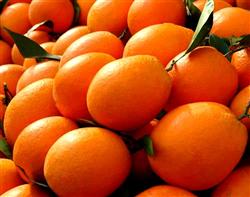
Detailed Explanation of Key Points for Navel Orange Harvesting and Fresh-Keeping Techniques
It is now the navel orange harvest season. If fruit growers only focus on early orchard management while neglecting post-harvest fruit handling and fresh-keeping storage techniques, the fruit will deteriorate and rot, resulting in a bumper harvest without a bumper income. Pay attention to harvesting techniques. For navel orange fruit intended for storage after harvest, picking is generally best when 80% of the fruit surface has colored and the fruit has not yet softened...
-
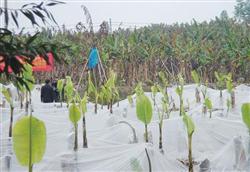
What are the correct methods for keeping and removing suckers on banana trees?
How do you keep and remove suckers on bananas? We ask experienced readers to help explain. Zhongdi Web has compiled the methods for keeping and removing suckers on banana trees, listed below for readers to refer to and learn from. The banana tree is a fruit tree that bears fruit only once; the underground corm, under conditions of sufficient fertilizer and water, has the characteristic of successively sending up suckers, so planting...
-
Detailed Explanation of Key Techniques for the Storage and Fresh-Keeping of Huangjin Pear
1. Key points of storage technology 1.1 Timely harvesting In North China, the suitable harvesting period for Huangjin pear is from September 20 to 30. At this time the fruit has developed to maturity, nutrients have accumulated sufficiently, and storability is at its best. Pears harvested early (September 10) have a higher rot rate throughout the storage period, and the peel is highly prone to browning. If harvested too late (early October), brown scald disease occurs more seriously during storage (at 18.94%). During harvesting, special care must be taken to avoid bruising. 1.2 Grading The purpose of fruit grading is to achieve commercial standardization. Our
-
Pear Fruit Storage and Fresh-Keeping Methods and Technical Key Points
Different pear varieties and types require different optimal temperature, humidity and optimal gas composition standards. For newly bred varieties, experiments must be conducted to determine the suitable temperature, humidity and optimal gas composition required for their storage, so that temperature and humidity control and gas composition regulation can be effectively carried out during storage to achieve the best storage results. Pear fruits are broadly divided into two major types. 1. Crisp-fleshed type varieties: The white pear system and the sand pear system mostly belong to the crisp-fleshed type. Generally, crisp-fleshed varieties, after harvest
条件筛选