-
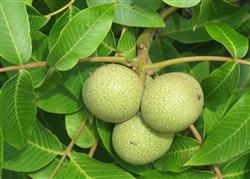
What are the key management techniques for walnut trees in June?
How should walnut trees be managed in June? Please provide an introduction to the management methods. June is the most suitable time for walnut tree growth, but it is also the main period when pests and diseases occur and cause damage. Therefore, doing a good job of management in June is the key to promoting robust tree growth and increasing yield that year. There are four specific management points: management of grafted trees...
-
If Start of Autumn falls in June this year, neither harvest will be good. Will the autumn harvest really drop?
Recently everyone has been very concerned about the question of Start of Autumn, but as things stand now, Major Heat has not yet arrived, so there is still some time before Start of Autumn. This year, Start of Autumn falls on the 26th day of the sixth lunar month, which is August 7 on the solar calendar. This happens to match the saying...
-
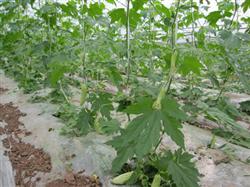
What should be noted when planting bitter melon in June?
What should be noted when planting bitter melon in June? Please advise. When planting bitter melon in June, the following points should be noted: Pruning: since many grafted bitter melon seedlings are still being transplanted from late May to mid-June, this portion of bitter melon seedlings still needs strengthened pruning in June and July. Bitter melon has particularly strong branching habit, almost every leaf can...
-
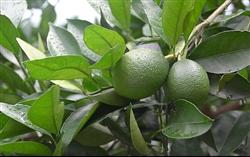
Detailed Explanation of Key Citrus Management Techniques for June
How should citrus be managed in June? Please give an introduction. In June, citrus can be managed by referring to the following methods: (1) Continue fruit retention. The second physiological fruit drop period (also called June drop) begins in mid-to-late May. Unlike the first physiological fruit drop period, the dropped fruit does not have a fruit stalk. For trees whose fruit in the canopy is not obviously different in size and mostly small, in order to reduce fruit drop, foliar topdressing should be strengthened, spraying 0.2% urea plus 0.3% monopotassium phosphate or nutrient solution fertilizer at intervals of about 10 days, and adding 0.2% borax spray in mountain citrus orchards. For young bearing trees and vigorous trees prone to fruit drop, remove summer shoots once every 7-10 days to help retain fruit. In view of the relatively intense competition for nutrients between shoots and fruit, which easily aggravates fruit drop, for vigorous trees that have already undergone girdling (girdling width 2-3 mm), another check should be made before early June, and the healing tissue should be wiped off again from girdling cuts that have healed early.
-
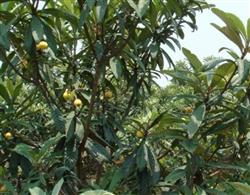
What are the management methods for loquat trees in June and July?
How should loquat trees be managed in June and July? Please advise. The main points for managing loquat trees in June and July are as follows: 1. Continue harvesting and selling the fruit. 2. Apply a heavy post-harvest fertilizer promptly after harvest. Apply it 5-10 days after harvest to replenish the tree's nutrients and promote flower bud differentiation and the sprouting and growth of summer shoots. The N, P, K ratio is generally 3:2:2 with quick-acting fertilizer and high-quality organic fertilizer, generally accounting for 30%; for trees with a heavy crop or weak vigor, more can be applied, accounting for 40-50% of the annual total. 100 jin of decomposed human and animal manure + 1.5 jin of potassium sulfate + 2 jin of calcium-magnesium phosphate fertilizer.
-
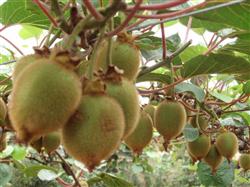
Key Technical Points for Kiwifruit Planting and Management in June
How to manage kiwifruit in June? Here is an introduction to the methods. June is the fruit swelling period for kiwifruit, and also the second peak period of fertilizer demand and the period when pests and diseases are most severe. Making the most of management during this month is crucial. 1. Continue four-season pruning: for the fruiting trees positioned and pruned in May, thin out overly dense branches and overlapping branches, diseased and pest-damaged branches, and thin weak branches. Pinching of fruiting branches: when two fruiting branches are side by side, for one of them leave only one leaf above the foremost fruit and pinch; when the other fruiting branch is being trained as next year's fruiting mother branch, leave 3-4 leaves above the foremost fruit and pinch, with a leaf-to-fruit ratio of 6-8:1. For vegetative branches that are good fruiting mother branches for next year, those already pinched should continue to be trained; those not yet pinched should be pinched after leaving 10-12 leaves. For water sprouts, leave 3-4 leaves and pinch; those with no space should be thinned from the base. They must not be left to grow freely, otherwise useless water sprouts will form.
-
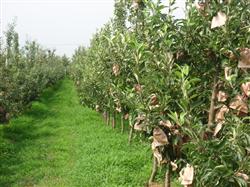
How to apply supplementary fertilizer to fruit trees in June? Methods and precautions
How to apply supplementary fertilizer to fruit trees in June? Please provide guidance on methods. In early to mid-June, supplementary fertilizer should be mainly phosphorus, to swell young fruit and plump up flower buds; from July to August, supplementary fertilizer should be mainly potassium, for a clear yield increase and bright fruit color. Seize the two best opportunities for supplementary fertilization, the critical nutrient period of the fruit tree and the fruit expansion period, and this year the fruit will be large and the yield high, ...
-
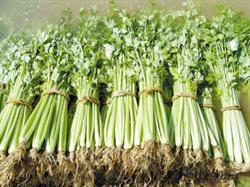
What are the precautions for planting celery in June?
What should be noted when planting celery in June? Please give guidance. Celery is a crop with a shallow root system, weak drought tolerance, and high transpiration, so it needs moist soil and air conditions. Therefore, when planting celery in hot and dry seasons, the entire growth process requires timely irrigation and topdressing to meet its growth needs. Hot and dry...
-

Shin Kong National Children's Painting Competition opens for submissions starting June 3
(Taiwan Business News) Is there anything better than traveling? On a sunny, beautiful day, Grandpa and Grandma take their precious grandchild by the hand, and on this journey hand in hand, the whole family's hearts draw closer together. The annual event co-organized by Shin Kong Life Insurance, Shin Kong Bank and the Shin Kong Bank Cultural and Educational Foundation...
-
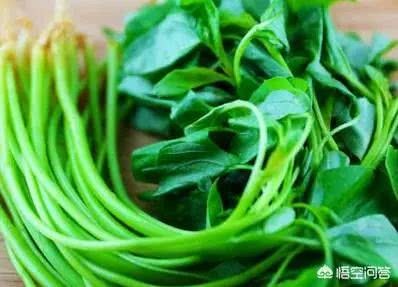
How much do you know about the benefits of amaranth? In June it's as good as eggs, in July it's worth its weight in gold
In summer, my favorite vegetable to eat is amaranth. Where I live, we have red amaranth and green amaranth. Red amaranth loses its color when stir-fried. Around here, amaranth isn't considered a wild vegetable, though it's quite resilient - it can grow in poor spots like wall corners and behind houses...
条件筛选