What are the key management techniques for walnut trees in June?
How should walnut trees be managed in June? Please provide an introduction to the management methods. June is the most suitable time for walnut tree growth, but it is also the main period when pests and diseases occur and cause damage. Therefore, doing a good job of management in June is the key to promoting robust tree growth and increasing yield that year. There are four specific management points: management of grafted trees...
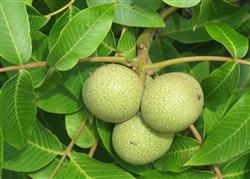
How should walnut trees be managed in June? Please provide an introduction to the management methods
June is the most suitable time for walnut tree growth, but it is also the main period when pests and diseases occur and cause damage. Therefore, doing a good job of management in June is the key to promoting robust tree growth and increasing yield that year. There are four specific management points:
Management of grafted trees. Untie the binding: on some plants grafted in spring, the graft union has completely healed, and the binding film has clearly sunk in, producing constriction marks, so it must be removed in time. Cut the tip and set the trunk: when the new grafted shoot has grown beyond the height at which the trunk should be set, retain three upper buds with appropriate branching angles and relatively mature development, then cut off the tip to encourage it to produce two to three side branches and form an umbrella-shaped crown ahead of time. Thin dense branches: grafting with many spike strips or multi-bud spike strips will produce overly dense sprouts, which need to be reasonably selected and retained, and excess, overly dense, and downward-growing branches should be cut off.
Summer pruning. In June, the growth of primary, secondary, or tertiary side branches has already reached considerable length, and the tips can be cut off at 60-80cm to encourage 2-3 next-level branches to sprout, completing two years of branching growth in one year. Cut off overly dense and overlapping branches that were not removed in April and May.
Foliar fertilization. Foliar fertilization is the most effective way to supplement trace elements. It can be combined with pest and disease control by adding zinc, boron, manganese, copper, iron, molybdenum, and rare earth elements in a targeted way during spraying. Spraying should mainly target the underside of leaves, and the time should mainly be morning and evening. Zinc sulfate, boric acid (borax), copper sulfate, ferrous sulfate, manganese sulfate, and others are not very expensive, but are needed in relatively large amounts. For young trees, each plant needs about 2-5 grams of each micronutrient fertilizer per year. For closed-canopy walnut orchards, the fertilization amount should be calculated according to the covered area and applied in several rounds to avoid being washed away by rain or fixed by the soil.
Management of water, soil, fertilizer, and grass. In areas with heavy clay and low-lying, easily waterlogged conditions, ditches should be opened for drainage. For un-intercropped orchard land, a more suitable method is grass-covered cultivation. First use non-selective herbicides such as glyphosate to clear noxious weeds, then sow leguminous forage, tuber crops, and other crops to make them the main grass cover. Grass-covered cultivation is conducive to soil and water conservation, increases soil organic matter, maintains soil permeability, nurtures large numbers of soil plants, animals, and microorganisms, forms local biodiversity, maintains the ecological balance of the orchard, improves soil fertility, reduces cost input, and achieves sustainable use and development of the soil.
Click to get more hickory planting techniques
Click to get more fruit planting techniques