-

Agrometeorological Conditions: Rainfall in Jiangnan and South China Helps Increase Soil Moisture
On the 13th, scattered heavy rainfall occurred in Jiangnan, northern Guangxi, and the eastern part of the Southwest region. Among these areas, parts of southern Zhejiang, Fujian, Jiangxi, central and southern Hunan, northern Guangxi, southern Guizhou, the Sichuan Basin, and southern Yunnan received 50-110 mm of rain, while localized areas in Wenzhou, Zhejiang
-
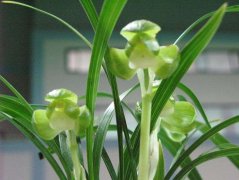
Characteristics, origin, flowering period, and fragrance of the Chunlan orchid cultivar Jiangnan Xue
Jiangnan Xue is a rare Chunlan cicada-wing sumei orchid of recent years. In 1983, the well-known Hangzhou orchid selection expert Huang Xiaojin selected it from orchid plants dug by a Tonglu mountain farmer from Qingyuan Mountain at the border of Tonglu and Fuyang. Because its tongue is as white as snow, it was immediately named Jiangnan Xue. Jiangnan Xue's leaf posture is relatively upright
-
In what season is lotus seed harvesting usually done?
Lotus is mainly produced in the Jiangnan region, so in what season is lotus seed harvesting done? 1. In what season is lotus seed harvesting done? The lotus seed harvesting season is generally summer. However, due to differences in climate conditions, the season when lotus seeds mature varies slightly from region to region, so the best time for harvesting lotus seeds differs slightly.
-
The latest methods for collecting stumps and sourcing material for Syzygium buxifolium bonsai
Syzygium buxifolium is a wild evergreen shrub of the mountainous regions of Jiangnan, and is rarely cultivated artificially. According to its ecological habits and biological characteristics, it can be propagated by sowing or cuttings. However, for making bonsai, wild plants or old stumps are mostly used. Collecting from the wild: in the mountains and hills of Jiangnan,
-
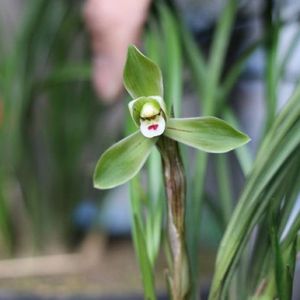
Detailed Introduction to the Characteristics of the Jiangnan Xian Chunlan Variety
Jiangnan Xian ---- discovered in Hutang Village, Fenghua, Zhejiang, on November 12, 2006. It is a true-form narcissus-type orchid, with emerald green color, and its distinguishing feature is the red dots on the lip. In 2012 it won the Bronze Award at the Shanxi Orchid Exhibition.
-
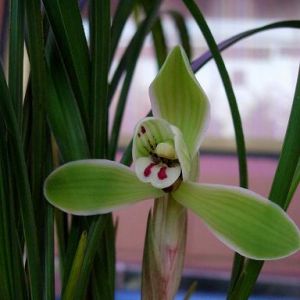
An introduction to the characteristics of the Cymbidium goeringii cultivar Jiangnanchun
In 2006, Jiangnanchun was discovered in the mountainous area of southern Anhui, south of the Yangtze River in Anhui Province. Its foliage type is medium-large with arched, drooping leaves, the flower color is pure green, the flower is large, the flower stem is tall, and its fragrance is subtle yet rich, surrounded by white edges. It remains unchanged after being open a long time and becomes more beautiful the longer it blooms. Through an introduction by a local orchid enthusiast, I got to know a man named Yang Xinbao. This person was very good, and I was never cheated. The first...
-
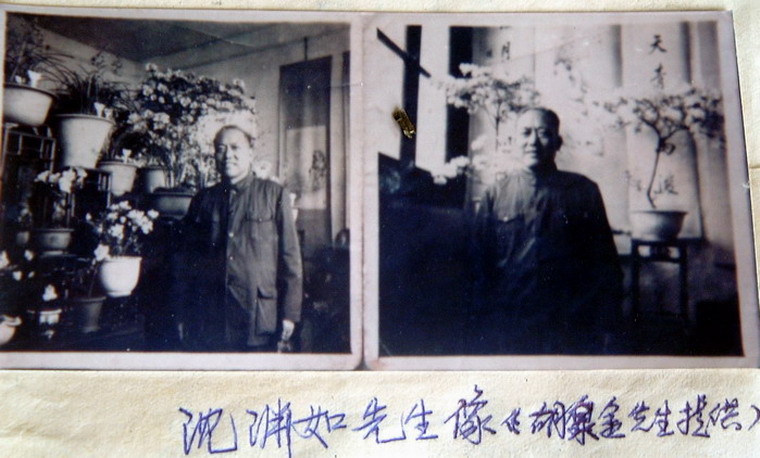
Why Shen Yuanru Is Called the Orchid King of Jiangnan
Shen Yuanru (1905-1979) came from a distinguished and wealthy family, whose ancestors were from Anhui. The family built a large, deep-walled residence at Yingya Pavilion. His forebears acquired property and established factories and businesses, and by the early years of the Republic of China they owned thirteen joint-stock factories in the Shanghai and Nanjing areas, mainly in textiles and department stores. It was said that the Shen family possessed 5,700 taels of silver...
-
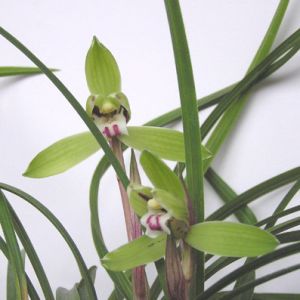
The Cymbidium goeringii cultivar Old Xiaochun is also known as Jiangnan Xiaochun
In the spring of 1919, Wang Kun of Zihong Mountain, Lanting, Shaoxing, found it on his way to offer incense at Xiaohe Mountain in Hangzhou, and later sold it to Jiufeng Pavilion in Hangzhou. The three outer petals have rounded tips and thick flesh, the pollinia are silkworm-moth shaped, and the petal lips bear red dots. It has a Liu Hai tongue, level flower shoulders, bright flower color, and a tall flower scape. For this reason, the lay Buddhist Yidao, Wu Chunbai, said: "The delicate flower, smiling with dimples, keeps spring," and this line of poetry seems to portray this flower....
-
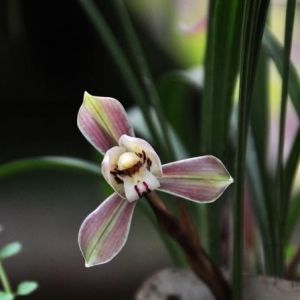
Introduction to the characteristics of the Cymbidium goeringii cultivar Jiangnan Xinhe
Its place of origin is Gulin, Sichuan, and it was selected and named by Mr. Luo Wendian. In 2004 it won the gold award at the 14th China Orchid Expo. This cultivar is a lotus-form red bicolor narcissus type, with red-purple flower stems held above the leaves, large flowers about 6CM in diameter, the three outer petals sharply contracted at the base, broad rounded angles, petal color pink and slightly deep, with a white rim, and the midrib showing green; the two petals are especially broad and large, with the front...
-
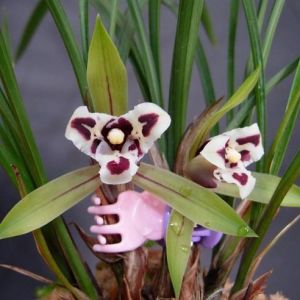
Characteristics and Appreciation of the Cymbidium goeringii Cultivar Jinxiu Jiangnan
Jinxiu Jiangnan, discovered in Zhoushan, Zhejiang in 2004, selected and bred by Zhejiang orchid enthusiasts Chen Zhimin, Gu Shiman, and Zhu Weiming! Special Gold Award at the 2010 Zhejiang Provincial Orchid Exhibition! A new rui die (crested butterfly) flower discovered in Zhoushan, Zhejiang in 2004, selected and bred by Chen Zhimin of Taizhou's "Jinxiu Orchid Garden." When first discovered, the plant was weak and had never rebloomed, until it finally bloomed again in 2010...
条件筛选