-

Introduction to the Performance Characteristics of the Long-Board Type Flat Tea Frying-Drying Machine
The long-board type flat tea frying-drying machine first appeared in the Xinchang tea area in 2000, and its manufacturers are mainly distributed in Xinchang and Pan'an counties. At present, this tea machine has been widely used in some main Longjing tea producing areas of this province. The commonly used models of the long-board type flat tea frying-drying machine are mainly composed of a long semicircular tea frying pan, a long tea-leaf stirring board, a transmission mechanism, a heat source device, a temperature control instrument and a frame, etc. When this machine is used for Longjing tea frying, like manual frying, it is also divided into two main processes: the green-frying pan and the final-firing pan. For frying the green-frying pan, when the pan temperature reaches
-
Characteristics of the Fuding Damao Tea Cultivar and an Introduction to the Tea Types It Is Suitable For Processing
It belongs to the clonal propagation line. It is a national-level improved cultivar. It originates from Fuding County, Fujian Province. It has a cultivation history of one hundred years to date. It has been introduced and cultivated in Zhejiang, Jiangsu, Jiangxi, Hubei, Anhui and other provinces. It is one of the high-yield, high-quality cultivars suitable for growing in low-hill red soil. Morphological characteristics: small tree type, large-leaf, early-budding cultivar. The plant is relatively tall and upright, with plump buds and leaves covered in abundant silvery-white downy hairs, and strong tenderness retention. Spring buds sprout in mid-March, and the peak period of one bud and three leaves is in early April, with a hundred-bud weight of 104 grams. It can be processed into famous teas of different appearances. It is not only a premium raw material for processing "
-
Introduction to the Chu Ye Qi No. 12 tea tree variety
It belongs to the clonal propagation line. It is a national-level improved variety. It was bred by the Hunan Tea Research Institute. It has now been promoted to provinces including Hubei and Anhui. Morphological characteristics: shrub type, medium-leaf, medium-bud variety. The tree posture is semi-open; spring buds germinate in mid-to-late March; the peak period of one bud and three leaves is in early-to-mid April; the weight of 100 buds is 70 grams. The young shoots are green-yellow with abundant fine hairs. It has strong tenderness retention and is suitable for making famous green tea; the appearance is tight and compact, with silvery tips visible, a jade-like moist color, rich aroma and mellow taste. Quality characteristics of fresh leaves of one bud and two leaves: tea polyphenols 36.1%, amino acids 3.
-
Introduction to the Content Determination Method for Aminophylline Tablets
Anhydrous theophylline - Take 20 tablets of this product, weigh accurately, grind finely, weigh accurately an appropriate amount (approximately equivalent to 100 mg of aminophylline), place in a 200 ml volumetric flask, add 20 ml of 0.1 mol/L sodium hydroxide solution and 60 ml of water, shake for 10 minutes to dissolve the aminophylline, dilute to volume with water, mix well; filter, accurately measure 5 ml of the subsequent filtrate, place in a 250 ml volumetric flask, dilute to volume with 0.01 mol/L sodium hydroxide solution, mix well, and follow the spectrophotometric method (Appendix page 17)
-
Introduction to the Characteristics of the Zaobaijian Tea Tree Cultivar
It belongs to the sexually propagated group. Also known as Zaobaidian. It is a national-level improved cultivar. It originated in Junlian County, Sichuan Province. Morphological characteristics: shrub type, medium-leaf, early-budding cultivar. The tree posture is open and spreading. Spring tea buds around mid-March, and each year around March 20 in the local area, one bud with two or three leaves can be picked. The buds and leaves are light green and hairy, with a 100-bud weight of 33.5 grams. It has strong tenderness retention and is suitable for making the famous green tea "Maojian"; the appearance is elegant, the tender down is visible, the aroma is fresh and clear, and the taste is fresh and mellow. Quality characteristics of fresh leaves of one bud and two leaves of spring tea: tea polyphenols 27.3%, amino acids 2.3%, caffeine 4.5%, catechin
-
What tea is Fuding Da Bai Cha? An introduction to its variety characteristics
It belongs to the clonal propagation line. It is a national-level improved variety. It originated in Fuding County, Fujian Province. Morphological characteristics: It has a cultivation history of more than 120 years to date. It is one of the high-yield, excellent varieties suitable for cultivation in low-hill red soil areas, and it has been introduced and cultivated in every tea-producing province. Morphological characteristics: small tree type, large-leaf, early-budding variety. The plant is relatively tall and large, with branches half-spreading. Spring buds sprout in mid-March, and early April is the peak period for one bud and three leaves; the weight of 100 buds of one bud and three leaves is 63.0 grams. The buds and leaves are plump and highly pubescent, making them especially suitable for processing high-grade famous teas of the "pubescent type," such as "Yinzhen,"
-
An introduction to the characteristics of General Wild Stone Cliff Tea
Wild Stone Cliff Tea grows and reproduces naturally on high mountain stone cliffs at an altitude of over 800 m. Because its requirements for the growing environment are extremely strict, it still cannot be cultivated in low mountain areas. It absorbs the clouds and mist of the high mountains, bathes in the radiance of the sun and moon, and takes in the spiritual energy of heaven and earth, free from any pollution. It is picked only around Qingming and Guyu each year, and its yield is extremely limited, making it a rare type of tea. This product uses the fresh leaves of high mountain wild Stone Cliff Tea as its raw material and is finely made by applying modern processing technology combined with traditional craftsmanship. After brewing, the liquor is clear and green, the brewed leaves show a white frost, the aroma is unique, with a rich water chestnut fragrance
-
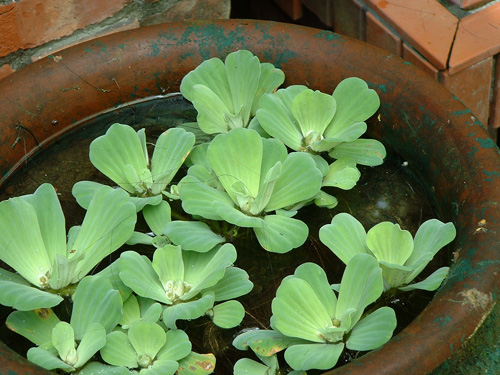
Pistia stratiotes (Water Cabbage, Water Lettuce) Introduction and Detailed Ecological Habits
Pistia stratiotes (Water Cabbage, Water Lettuce) Scientific name: pistiastratiotes Alias: Water Lotus, Large Duckweed, Water Lily, Fat Pig Grass, Water Hibiscus, Water Floating Lotus Family and Genus: Araceae Pistia Genus Morphological characteristics: Perennial floating herb. With stolons, leaves basal, rosette-like clustered, sessile
-
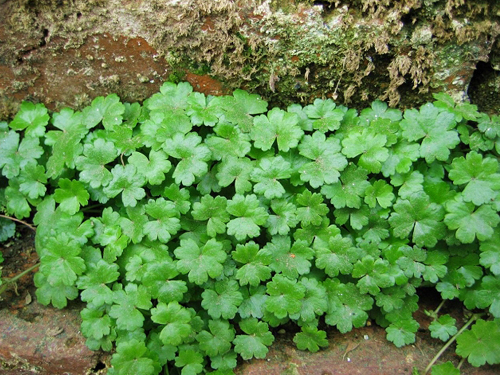
How to grow Hydrocotyle sibthorpioides? Introduction and care methods for Baby's Tears, Po Tong Qian
Hydrocotyle sibthorpioides (Baby's Tears, Po Tong Qian, Taiwan Hydrocotyle) Scientific name: hydrocotylesibthorpioides Family: Apiaceae Morphological features: Perennial herb. Plant height 5-10 cm, stems slender, creeping growth. Leaves alternate, kidney-shaped, usually 5-lobed, hence the name Po Tong Qian
-
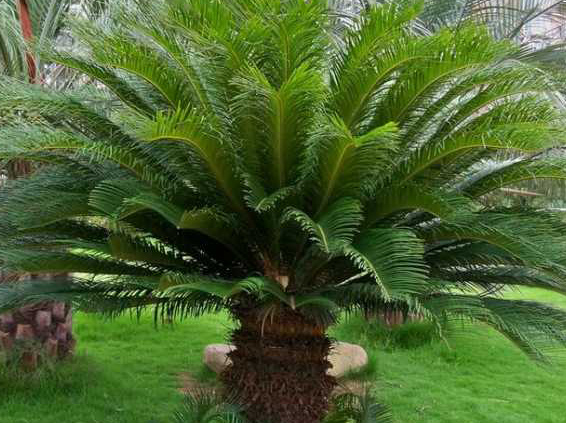
What Types of Cycads Are There? Introduction to Common Varieties
Cycads are a rare plant group in the world, with 24 extant species. Those commonly seen in gardens include: Cycas rumphii, Cycas szechuanensis, Cycas panzhihuaensis, Cycas micholitzii, Cycas multipinnata, Zamia cycads, and others
条件筛选