Introduction to the Cultivation Techniques of Purple Potato / Black Potato
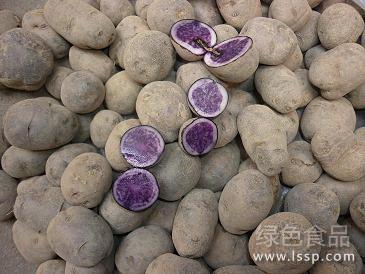
Black Potato
Black potato is not a genetically modified food, nor is it some kind of space breeding. The black potato originated in Peru in South America, where there are more than three thousand potato varieties in every color imaginable, and the black potato resource comes from there. In fact, this variety already existed when the potato was introduced to China, but due to low yield and other reasons, it was never taken seriously, just like the tomato, which for a long time nobody dared to eat because of its color. Later, Chinese agricultural scientists noticed this variety and conducted research on it. Through testing at a national-level laboratory, they found that the Black King Kong potato is rich in proanthocyanidins, reaching 1700 mg per kilogram, and also contains various vitamins and minerals needed by the human body. Testing also revealed that the black potato is rich in selenium, the element of longevity. None of this was known before.
This cultivation and management program is for reference only; for specific operations, please adapt to local conditions such as climate.
Purple potato (also known as black potato / purple potato / black potato): The tuber shape is long oval, with relatively small eyes. The skin is black-purple, glossy black and shiny, full of luster. The flesh is deep purple, attractive in appearance, with strong color appeal. The starch content of the flesh is as high as 13-15%, with good taste and excellent quality. According to measurements: every 100 grams of black potato contains 2.3 grams of protein, 0.1 grams of fat, 16.5 grams of carbohydrates, 11 mg of calcium, 1.2 mg of iron, 64 mg of phosphorus, 342 mg of potassium, 22.9 mg of magnesium, 0.01 mg of carotene, 0.1 mg of thiamine, 0.03 mg of riboflavin, and 16 mg of niacin. This variety is rich in anthocyanins. In addition to inhibiting carcinogenic substances, anthocyanins can also enhance human immunity, delay aging, strengthen the physique, and improve eyesight.
The purple potato is a new colored potato variety that combines food value, nutrition, health benefits, and ornamental value. Besides having excellent qualities of being fine-textured, fragrant, and mealy, it also has a uniquely bright-colored appearance, with effects such as cancer prevention and beauty care. The cultivated area of purple potato in China is still small, and the price per kilogram is 8-12 yuan, which is 6-8 times that of ordinary potatoes. It is popular in both domestic and international markets, and its economic benefits in the coming years will be considerable, with great development prospects.
I. Characteristics and Traits
The seedlings are upright, the plant cluster is luxuriant, the plant type is tall, and the growth vigor is strong. The plant height is 60 cm, the stem diameter is 1.37 cm, the stem is deep purple, and the cross-section is triangular. The main stem is well developed, with fewer branches. The leaves are dark green, the petioles are purple, the corolla is purple, and the petals are deep purple. The tuber body is long oval, the skin is smooth, black-purple, glossy black and shiny, full of luster. The tuber flesh is deep purple and compact. The appearance color has strong appeal. The starch content is 13-15%, with a fragrant and mealy taste and good quality. The eyes are shallow, and the number of eyes is medium. Tuber formation is concentrated, with 6-8 tubers per plant, and a single tuber weight of 120-300 grams. The whole growth period is 90 days, belonging to a medium-early maturing variety, with strong drought and cold tolerance, wide adaptability, and tubers that store well. It is resistant to early blight, late blight, ring rot, blackleg, and viral diseases. The general yield is 1000-1500 kg per mu. It is suitable for cultivation in the main and secondary potato production areas nationwide, with promising development prospects.
II. Food Value
The purple potato is rich in nutrition. Every 100 grams contains 2.3 grams of protein, 0.1 grams of fat, 16.5 grams of carbohydrates, 11 mg of calcium, 1.2 mg of iron, 64 mg of phosphorus, 342 mg of potassium, 22.9 mg of magnesium, 0.01 mg of carotene, 0.1 mg of thiamine, 0.03 mg of riboflavin, 0.4 mg of niacin, 16 mg of ascorbic acid, and 100 mg of anthocyanins. The purple potato can be used both as a side dish and as a specialty dish. It can be stir-fried, deep-fried, braised, boiled, stewed, steamed, pan-fried, and so on, and can be made into 500 dishes with delicious flavors and different shapes and colors. In addition, it is itself rich in antioxidant substances, and after high-temperature frying, it can still maintain its original natural color without adding pigments.
III. Key Cultivation Points
1. Sprouting and cutting: 20-30 days before sowing, place selected seed potatoes evenly in a 20°C environment, spray with an appropriate amount of water, and shade with straw mats. When the young sprouts grow to the size of soybean grains, place the seed potatoes in a warm, sunny place to sun the seeds, so that the seedlings turn green and the sprouts become strong. Cut the seed potatoes 1-2 days before sowing, with each seed piece weighing about 25 grams. Cut small seed potatoes vertically, and each piece must have a strong top sprout; cut large seed potatoes starting from the tail end, discard weak sprouts, and following the arrangement of the eyes, cut diagonally from the top, finally dividing the top into two. The cutting knife must be strictly sterilized with 75% alcohol.
2. Land preparation and sowing: The purple potato has a relatively short growth period and requires concentrated fertilizer. Spread 3-5 cubic meters of high-quality organic fertilizer per mu, 20 kg of diammonium phosphate, 20 kg of urea, and 10 kg of potassium sulfate. After fertilizing, plow the soil deeply and harrow it finely. The purple potato should be planted sparsely rather than densely. Open furrows at a row spacing of 70 cm, with a furrow depth of 5 cm. When opening the furrows, apply phoxim granules to control underground pests such as cutworms. Sow at a plant spacing of 25-30 cm, keeping about 3500 plants per mu.
3. Field management: After the seedlings emerge, promptly break the film to release the seedlings, and seal the release holes tightly with moist soil. After the seedlings have all emerged, to promote early plant development, spray foliar fertilizer 2-3 times; during the flowering period, promptly remove the flower buds. To increase the proportion of large tubers, spray the foliage with 800-fold diluted Tianguojing solution 2-3 times. The main disease of the purple potato is late blight, and the pests are aphids and ladybugs. To control late blight, spray with 600-fold diluted 64% Duofan; to control aphids and ladybugs, spray with 1000-fold diluted 18% Lorsban.
4. Timely harvest: Harvest at the appropriate time according to market supply and demand conditions. During the harvest process, minimize mechanical damage as much as possible to avoid affecting commercial quality.
Black Potato
Several Main Steps in Black Potato Cultivation
Black potato, also known as purple potato, comes in large and small sizes, with smooth skin. Not only is the skin black-purple, but the flesh color is also purple. Experts say that this purple potato is not only good-looking but also much higher in nutritional value than ordinary potatoes. It not only contains starch, protein, organic acids and other elements found in ordinary potatoes, but is also rich in anthocyanins, VC, carotene and other vitamins, and is known as the "underground apple" and the "second bread."
Since black potato has not yet been planted on a large scale in China, but trial planting began in some areas of most provinces in 2006, and it has been cultivated for three years in our Gansu region, producing good economic benefits. At the same time, after many experiments, we have summarized a set of mature cultivation experience to provide to everyone for reference.
I. Select Good Varieties
Selecting good varieties is an important step in high-yield black potato cultivation.
II. Land Selection and Preparation
Black potato is not tolerant of continuous cropping. The plot for planting black potato should be selected from land that has not grown black potato or other Solanaceae crops within three years. Black potato is very sensitive to continuous cropping, and continuous cropping must be avoided in production. If black potato is continuously planted on the same land, it will not only cause serious diseases such as bacterial wilt, but also cause soil nutrient imbalance, especially of certain trace elements, resulting in poor growth, short plants, low yield, and poor quality. Rotation of black potato with rice, corn, wheat, barley, and other plants gives better yield-increasing effects.
The expansion of black potato tubers requires loose and fertile soil. Therefore, the plot for planting black potato should preferably be flat, have irrigation conditions, and have good drainage, deep plow layer, and loose, slightly acidic sandy loam. After the previous crop is harvested, carry out deep plowing and fine harrowing, then make beds. The width and height of the beds should depend on the terrain and soil moisture. Where the terrain is high and drainage is good, wide beds can be made; where the terrain is low and drainage is poor, narrow beds or high beds should be made.
III. Apply Sufficient Base Fertilizer
Black potato forms a large amount of stems, leaves, and tubers during its growth period, so it requires more nutrients. Among the three major fertilizer elements, potassium is needed in the greatest amount, followed by nitrogen, and phosphorus the least. Applying sufficient base fertilizer plays an important role in increasing black potato yield. The base fertilizer for black potato should account for 3/5 or 2/3 of the total fertilizer application. The base fertilizer should mainly be decomposed manure, compost, and human and livestock manure and other organic fertilizers, combined with phosphorus and potassium fertilizers. Generally, apply 1000-1500 kg of organic fertilizer per mu, 15-25 kg of superphosphate, and 100-150 kg of plant ash. The base fertilizer should be applied together with bed making or hole digging into the soil layer below 10 cm, to facilitate plant absorption and loosen the tuber-forming layer. When sowing, use 20-30 loads of decomposed human and livestock manure and urine per mu, or 5-8 kg of nitrogen chemical fertilizer as seed fertilizer, so that seedlings emerge quickly and uniformly, and promote strong seedling growth.
IV. Seed Potato Treatment
(1) Carefully select seed potatoes
On the basis of selecting good varieties, choose healthy seed potatoes with regular tuber shape, typical characteristics of the variety, smooth skin, bright color, and a moderate size of 1-2 liang. When selecting seed potatoes, strictly remove tubers with cracked skin, deformities, pointed ends, necrotic eyes, disease spots, or black rot at the navel.
(2) Cutting into pieces and using small whole tubers as seed
Planting seed potatoes cut into pieces: This can promote oxygen exchange inside and outside the tuber, break dormancy, and promote earlier germination and emergence. However, when cutting into pieces, disease is easily transmitted through the cutting knife, causing seed rot, missing plants, or increasing the incidence rate in the field, and accelerating variety degeneration. If the pieces are too large, the amount of seed used is large, so generally cutting into 20-30 grams is appropriate. Cut vertically so that each piece carries an eye with apical dominance. When cutting, remove diseased potatoes, and strictly disinfect the cutting tools to prevent disease transmission.
Using small whole tubers as seed: This can avoid disease transmission by the cutting knife, and small whole tubers have strong vitality and drought resistance. After sowing, they emerge early and uniformly, and the number of sprouts, main stems, and tubers per hill increases. Therefore, using healthy small tubers of about 25 grams as seed has a significant effect on disease prevention and yield increase. However, small tubers generally have a short growth period, low maturity, and a long dormancy period, and often show premature aging in the later stage. In cultivation, it is necessary to maintain appropriate density, do a good job of sprouting treatment, increase potassium fertilizer, and combine it with corresponding nitrogen and phosphorus fertilizers to bring out the production potential of small tubers as seed.
(3) Sprouting
Sprouting is an important measure for disease prevention and high yield in black potato cultivation. Sprouting before sowing can promote early maturity and increase yield. At the same time, during the sprouting process, diseased and rotten potatoes can be eliminated, reducing the rate of diseased plants or missing plants in the field after sowing, which is conducive to full and strong seedlings. Sprouting method: Place seed potatoes and sand in alternating layers, about 3-4 layers thick, and keep them at the optimal temperature of about 20°C and in a constantly moist state. The seed potatoes will sprout in about 10 days. During sprouting, soaking the seed potatoes in 0.5-1 ppm gibberellin solution or 0.1-0.2% potassium permanganate solution for 10-15 minutes, or soaking in 2% thiourea for 20 minutes, can all improve the sprouting effect.
V. Timely Sowing
An important condition for determining the suitable sowing time for black potato is the temperature during the growth period. In principle, the peak tuber-forming period of black potato should be under conditions of an average daily temperature of 15-25°C. The longer this period suitable for continuous tuber growth, the higher the total weight. In most cases, it is planted after the late rice or middle rice harvest. Autumn potato is best sown from late September to late October, and winter potato is best sown from late December to mid-January.
VI. Reasonable Close Planting
The yield factors that make up black potato production are the product of the number of plants per unit area and the yield per plant. Yield per plant is determined by the number of tubers per plant and the weight per tuber. There is a contradiction between population yield increase and individual plant yield increase. When the number of plants per unit area increases, the yield per plant decreases accordingly, and both have a certain dependent relationship with planting density. Within a certain density range, population yield increases with increasing density; yield per plant decreases with increasing density. Therefore, determining density must consider the coordinated unity of the two contradictory factors: population yield and individual yield. If density is low, although individual plants develop well and yield is high, because the total number of plants per unit area is small, tuber formation is less, and yield is not high. If density is too high, although the total number of plants is large, the weight per tuber is very low, and yield is likewise not high. Therefore, reasonable close planting means giving the unit area a reasonable population structure, so that individual plants can develop well and the population can play a yield-increasing role, fully utilizing light energy and soil fertility to obtain high yield. Considering the coordinated development of population and individuals, under general cultivation levels, about 6000 plants per mu for black potato, with 2-3 stems per plant, is relatively suitable.
Black Potato
VII. Field Management
(1) Check seedlings and fill gaps
After black potatoes have all emerged, promptly check the seedlings and fill gaps in time to ensure a full stand. The method of filling gaps is: when sowing, densely plant extra tubers at the edges of the field to use for filling gaps. When filling gaps, if there are diseased or rotten tubers in the missing hills, first dig out the diseased tubers and the surrounding soil before filling the gap. When the soil is dry, dig holes, water, and combine with applying a small amount of fertilizer before planting seedlings, to reduce the time for seedling recovery and restore growth as quickly as possible. If there are no spare seedlings, select hills with multiple seedlings from the rows of emerged plants in the field, break off the excess seedlings from the base of the mother tuber, and transplant them to fill gaps.
(2) Intertillage and hilling
Intertillage and loosening the soil makes the tuber-forming layer loose and aerated, which is beneficial to root growth, stolon elongation, and tuber expansion. If the soil surface crusts before emergence, loosen the soil to facilitate emergence. After full emergence, carry out the first intertillage in time, with a depth of 8-10 cm, and combine it with weeding. 10-15 days after the first intertillage, carry out the second intertillage, which should be slightly shallower. At the bud stage, carry out the third intertillage, shallower than the second. Combine it with hilling, with a hilling thickness not exceeding 10 cm, to thicken the tuber-forming layer, avoid tuber exposure, and reduce quality.
(3) Topdressing
Black potato takes a relatively long time from sowing to emergence. After emergence, apply sprout and seedling fertilizer early with clear manure water plus a small amount of nitrogen chemical fertilizer, to promote rapid seedling growth. At the bud stage, combine with hilling and apply tuber-forming fertilizer once, mainly potassium fertilizer, combined with nitrogen fertilizer, with the amount depending on plant growth. After flowering, generally no more fertilizer is applied. If nutrient deficiency and premature aging appear later, spray phosphorus and potassium or combined with Disongbao trace elements at 300-fold dilution on the leaves.
(4) Pest and disease control
Black potato has many diseases. Common diseases include viral disease, late blight, bacterial wilt, ring rot, scab, and wart disease. Late blight mostly occurs during periods of more rain and around the flowering stage of the plants. Therefore, pay attention to early control with Bordeaux mixture or Ridomil. Bacterial wilt is currently difficult to control with chemicals; control methods mainly include reasonable rotation, selecting disease-resistant varieties, and using small whole tubers as seed. The main pests of black potato are ladybugs, cutworms, aphids, white grubs, mole crickets, and so on, which can be controlled with chemicals or manual capture.
VIII. Harvest
When the black potato plants stop growing and most of the stems and leaves turn yellow and withered, the tubers separate easily from the stolons, the periderm hardens, the specific gravity increases, and the dry matter content reaches its maximum. This is the most suitable harvest period for edible tubers. For tubers used as seed, harvest 5-7 days earlier to reduce the adverse effects of high temperatures in the later growth stage and improve seed quality.
IX. Causes of Black Potato Degeneration and Prevention
(1) Causes of black potato degeneration
When black potato is planted in spring in the hot summer regions of the south, after one or several years, the yield gradually decreases, or there is even no harvest at all. This phenomenon is called black potato degeneration. The direct external cause of black potato degeneration is virus damage. Common ones in the south include mosaic virus, leaf roll virus, common mosaic virus, and spindle tuber viroid. These viruses are transmitted through mechanical friction, aphids, leafhoppers, or soil nematodes and other vectors, infecting plants and causing degeneration. High temperature is the indirect external cause of black potato degeneration. When black potato is cultivated under high temperature, its growth vigor weakens and disease tolerance declines. Moreover, high temperature is conducive to virus reproduction, infection, and spread within the plant body, thus aggravating the harm of the virus and worsening degeneration. The internal cause of black potato degeneration is the antiviral ability of the variety. Varieties with strong disease resistance have milder disease and less severe degeneration, while varieties with weak disease resistance have severe disease and more serious degeneration. Therefore, varieties with strong disease resistance should be selected.
(2) Measures to prevent black potato degeneration
1. Select varieties with strong disease resistance. Selecting varieties with strong disease resistance is an effective measure to prevent degeneration. At the same time, attention should be paid to improving the seed breeding system and institutions, establishing seed reservation bases in high mountains, and combining the selection of good varieties with virus prevention and seed preservation, so as to maintain the productivity of good varieties and extend their service life.
2. Autumn sowing and late sowing for seed reservation. Autumn sowing and late sowing for seed reservation place the tuber-forming period under cool climate conditions, making plants grow robustly, enhancing disease resistance, and being unfavorable to virus reproduction and infection, which can reduce degeneration.
3. Remove viruses:
(1) Select superior plants for expanded propagation. In fields where virus infection is not yet serious, select healthy and excellent individual plants for propagation and seed reservation, and eliminate diseased plants.
(2) Use seedling tubers as seed.