What should you pay attention to when growing flowers in summer? Master these care points
Every summer is a hard time for many flowers. High temperatures, intense heat, and the rainy season with waterlogging are all difficult hurdles for flowers to get through.
First, note that plants must not be left exposed to high temperatures for long periods. Different flowers, and even the same flower at different stages, have different light requirements. Many shade-loving flowers cannot adapt to the strong light of midsummer, so 50% to 80% of the light must be filtered out. Flowers that need light filtering include orchids, lucky bamboo (Dracaena sanderiana), asparagus fern, camellias, nandina, gardenia, azaleas, and chloranthus. In addition, some flowers fear high temperatures and are prone to poor growth in hot weather, entering a dormant state. In this case, place the plants on a ventilated balcony, or spray water on the leaves to lower the temperature. Flowers that need cooling include clivia, calla lily, geranium, and begonia.
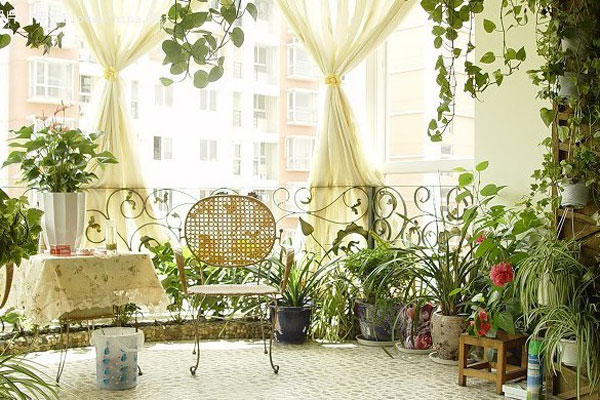
Second, summer has abundant rain, and flower pots easily accumulate water, so pay attention to timely drainage. Otherwise the soil easily becomes compacted, and lack of oxygen in the potting soil can suffocate and kill the flowers. Flowers with fleshy roots are especially afraid of water accumulating in the pot, such as clivia, dahlia, and cactus. Third, summer is hot and rainy, and air humidity is too high. If ventilation conditions are poor, pests and diseases easily occur; red spider mites, aphids, and leaf spot disease are all possible. Therefore, be sure to strengthen ventilation if there is a continuous rainy season. Also, some spider plants themselves have stems that are too tall and easily break in storms, so before heavy rain, be sure to prepare against lodging. Finally, for some flowers such as salvia and zinnia, watering should be controlled in summer, otherwise they easily grow excessive branches and leaves without blooming. At the same time, methods such as pinching, removing buds, and stripping flower buds can be used to prevent excessive growth of branches and leaves.
What should be noted when growing flowers at home in summer
With the arrival of summer, temperatures gradually rise from June to August, and there is plenty of rain, which benefits the growth of potted flowers. However, some flowers and trees cannot tolerate high temperatures and stop growing. Especially on home balconies, the area is small, ventilation is poor, and it is easy for them to become hot; in the rainy season, humidity is high and it is stuffy and hot, which easily causes potted flowers to grow poorly or even become diseased and die. Therefore, management should be strengthened in aspects such as shading, ventilation, and water and fertilizer.
In mid-to-late May, place bamboo blinds for shade on sunny windowsills, and put shade-loving azaleas, camellias, orchids, daphne, hosta, and chloranthus on flower stands under the bamboo blinds for care, frequently spraying the leaves and sprinkling water around the window to increase air humidity. Sun-loving succulents as well as jasmine, Aglaia odorata, crape myrtle, and pomegranate are still placed on balcony flower stands for cultivation. Roses, gardenias, four-season begonias, and geraniums also need shade during the hot hours from 12:00 to 14:00. Clivia, asparagus fern, water bamboo, and spider plants are placed in ventilated indoor spots, and direct sunlight should be prevented.
In the moldy rainy season of June, do not let potted flowers be exposed to rain, or fertilizer will be leached away. If water accumulates in the pot due to rain, lay the flower pot on its side to help drainage; otherwise, too much water suffocates the root system and causes root rot and death. When humidity is high and temperatures are high, pay attention to observation and strengthen the prevention and control of pests and diseases. Except for jasmine, Aglaia odorata, crape myrtle, and four-season begonia, which can still bloom in the hot season and may continue to be fertilized, all other potted flowers should stop being fertilized. Flowers that are dormant or semi-dormant in summer, such as fuchsia, lycoris, cyclamen, geranium, poinsettia, calla lily, and epiphyllum, especially must not be fertilized.
For watering, grasp the principle that evaporation is low in the rainy season and the potting soil should be on the dry side. As temperatures rise, the amount of watering should also increase; at high temperatures, water thoroughly both morning and evening. Loosen the soil regularly so that water can easily penetrate thoroughly, and the potting soil will also have better air permeability, which benefits plant growth. While watering, also sprinkle water in the surrounding environment to lower the temperature. In addition to strengthening environmental ventilation, for potted flowers with dense branches and leaves, thin out some overly dense small branches and leaves to improve ventilation and light penetration for better growth and also to help prevent and control pests and diseases.
How to grow flowers in summer? What should be noted when growing flowers in summer?
It is generally thought that the best time to prune flowers is in late autumn. In fact, proper pruning in summer is also necessary to help flowers and plants get through summer safely. After many flowers enter summer, they often tend to grow excessively, affecting flowering and fruiting. To maintain a beautiful plant shape and abundant flowers and fruit, pruning and shaping are needed. Summer pruning generally focuses mainly on measures such as pinching, bud removal, leaf removal, bud thinning, and fruit thinning.
(1) Pinching: For some herbaceous flowers, such as four-season begonia, fuchsia, salvia, chrysanthemum, Dutch chrysanthemum, and early small chrysanthemum, when they grow to a certain height, pinch off the top to encourage more branching and more flowering. For some woody flowers, such as kumquat, when the current year's branches grow to about 15-20 cm, they should also be pinched to promote more fruiting.
(2) Bud removal: In summer, many flowers often sprout adventitious buds from the base of the stem or on branches. These should be removed promptly to avoid consuming nutrients and disrupting the plant shape.
(3) Leaf removal: For some foliage flowers, old leaves should be properly cut off to promote new leaves, making the leaf color even more beautiful.
(4) Bud thinning and fruit thinning: For flowers grown mainly for their blooms, such as dahlia, chrysanthemum, and rose, excess flower buds should be thinned promptly; for fruit-viewing flowers, such as kumquat, pomegranate, and fingered citron, when the young fruit grows to the size of a soybean, excess young fruit should be thinned; for some flowers that cannot set seed or whose seeds are not going to be collected, promptly cut off the spent flowers after they fade.
(5) Shaping: For flowers such as poinsettia, plum blossom, ornamental peach, and crown of thorns, the side branches are often bent and shaped in summer to make the plant shape full and beautiful.
Comprehensive management of disease prevention and pest control: Summer temperatures are high and humidity is high, which favors the massive occurrence of pests and diseases. The policy of "prevention first, comprehensive control" should be carried out, and in the spirit of "treat early, treat small, treat thoroughly," do a good job of prevention and control to ensure healthy flower growth.
(1) Common diseases in summer include powdery mildew, anthracnose, gray mold, leaf spot disease, nematode disease, and bacterial soft rot. Powdery mildew mainly harms rose, plum blossom, peony, chrysanthemum, dahlia, begonia, cineraria, and fuchsia. After being affected, the plant becomes short, tender shoots bend, and leaves become uneven or curled. On tender buds, tender leaves, tender shoots, and flower buds, it looks as if covered with a layer of white powder and many small black spots grow; in severe cases, the leaves shrivel and dry up, and even the whole plant dies. Anthracnose mainly harms orchids, Michelia alba, Aglaia odorata, plum blossom, rubber tree, and cactus.
After most flowers are infected by the pathogen, nearly round disease spots appear on the leaf surface, with edges mostly purplish brown or dark brown and centers light brown or grayish white. Small black spots arranged in concentric rings often grow on the disease spots. When the disease is severe, the leaves wither and die. Gray mold mainly harms peony, Chinese peony, cyclamen, begonia, and fuchsia. The affected parts of leaves, stems, and flowers show brown or purplish brown rotting, and in humid weather gray mold-like substances grow on the disease spots; in severe cases, the whole plant dies.
To prevent and control the above three diseases, the following methods can be used:
① In early spring, thoroughly remove dead branches and fallen leaves, and promptly cut off diseased branches, leaves, and buds, and destroy them together to reduce sources of the pathogen;
② Strengthen cultivation management, fertilize and water reasonably, and pay attention to ventilation and light penetration so that plants grow robustly and their disease resistance improves;
② In the early stage of disease, spray 50% carbendazim or 50% thiophanate-methyl at 500-800 times dilution.
(2) Common pests in summer include two major categories: piercing-sucking mouthpart pests and chewing mouthpart pests. The former mainly include aphids, red spider mites, whiteflies, and scale insects. These pests often gather in groups on leaves, tender stems, flower buds, branches, and trunks, piercing into the flower body with needle-like mouthparts to suck sap, causing leaves to turn yellow and curl, and leading to leaves drying yellow and falling off. For control, spray 50% dichlorvos emulsion at 1000-1500 times dilution. This pesticide easily causes phytotoxicity to flowers and trees such as plum blossom, cherry blossom, azalea, and elm-leaved spirea, so it must not be used on these flowers and trees. The latter mainly include moth and butterfly larvae, various beetles, and underground pests. These pests eat leaves and bite roots, causing plants to wither and die. For control, spray 50% dichlorvos emulsion at 1000-1500 times dilution, or pour 500-800 times dilution at the root zone. Summer temperatures are high, pesticides volatilize easily, and at high temperatures the human body's emission functions are enhanced and skin absorption increases, so toxic substances easily enter the human body and cause poisoning. Therefore, when applying pesticides in summer, it is best to move flower pots outdoors and do it in the morning or evening.