-
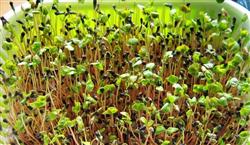
What are the precautions for growing celery seedlings in summer?
What should be noted when growing celery seedlings in summer? Please give a detailed introduction and guidance. Celery likes cool conditions, tolerates cold and fears heat. June and July coincide with high temperature, high humidity and strong light. Under high temperatures, germinating celery seeds is difficult, and combined with pest damage, especially aphids and soil-dwelling insects, it is very easy for missing seedlings and dead plants to occur. If you want...
-
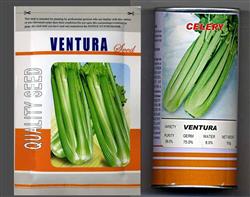
How do you grow celery in summer so it grows well?
How to grow celery well in summer? Please give a detailed introduction to the method. Summer celery is sown in early May, transplanted in early to mid-June, and begins to be harvested in early August. Summer celery grows during a period of high temperatures, when pest and disease damage gradually becomes more serious, and premature senescence easily occurs, causing the celery to develop curled leaves and shrunken leaves, with poor marketable characteristics, seriously affecting the celery...
-
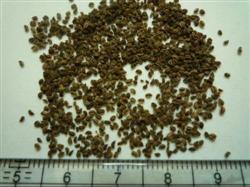
What should be noted when sowing celery in summer?
What should be noted when sowing celery in summer? Please give guidance. Summer temperatures are high, which is not conducive to celery sprouting, so low-temperature sprouting must be carried out. First soak the seeds in clean water for half an hour, remove and rinse them clean, wrap them in wet gauze, hang them in a water well 20 cm above the water surface or place them in a refrigerator at about 4°C, take them out and rinse 1...
-
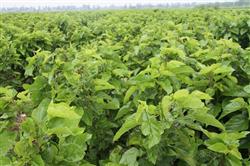
What pests and diseases need to be controlled in mulberry trees in summer?
What pests and diseases need to be controlled in mulberry trees in summer? Please give guidance. In summer, mulberry trees have the following pests and diseases that need to be controlled: 1. Diseases. Mulberry red rust. The symptom is that after the young buds are damaged, they swell, become deformed and curved, and the surface is covered with small yellow slightly raised spots (aecium). When leaves are damaged, at first circular...
-
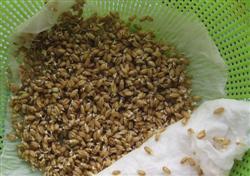
Detailed Explanation of Lettuce Germination Methods and Planting Techniques for Summer and Autumn
How do you germinate lettuce in summer and autumn? What methods can be used for germination? Please introduce the methods. The germination methods for summer and autumn lettuce can refer to the following list: The temperature range for lettuce seed germination is 5~25°C, and germination is hindered above 30°C. When sowing summer and autumn lettuce, the air temperature is relatively high, so subjecting the seeds to low-temperature treatment can make them emerge earlier...
-
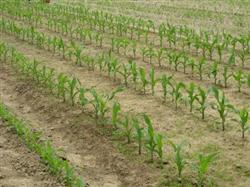
How to control weeds during summer corn cultivation?
How to control weeds when planting summer corn? Please explain the methods. When planting summer corn, you can refer to the following two methods for weed control: The "seal-and-kill" weed control technique involves a "seal-and-kill" treatment before corn emergence after sowing, that is, using a soil-sealing herbicide in combination with a non-selective herbicide, so that a single application achieves both soil sealing and killing of visible weeds...
-
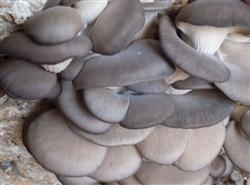
How can oyster mushrooms be cultivated in summer to increase yield?
How can oyster mushroom yield be increased in summer? Please describe the methods. In summer, the following methods are used to increase oyster mushroom yield: 1. Stop watering and dry out. When the temperature stays above 30°C for 7-8 consecutive days, the already formed fruiting bodies stop growing, and the mycelium no longer knots or differentiates. At this point, watering should be stopped immediately so that the bed surface dries out and may even crack, after which clear water should be sprayed once every...
-
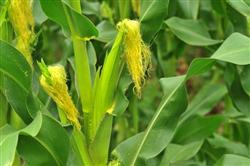
Mid-to-late Season Planting Techniques and Precautions for Summer Corn
What should be paid attention to in the mid-to-late season of summer corn? Here is an introduction. The following points should be noted in the mid-to-late season of summer corn for reference: Fertilization (1) Ear fertilizer. Generally, heavy application of nitrogen fertilizer at the large trumpet stage, accounting for about 50% of the total topdressing amount, with 30-40 kg of standard nitrogen fertilizer applied per mu. (2) Grain fertilizer. Generally accounting for about 10% of the total topdressing amount...
-
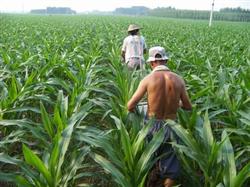
How to Apply Jointing Fertilizer to Summer Corn? Fertilization Methods and Key Points Explained
How to apply jointing fertilizer to summer corn? When is the best time to apply jointing fertilizer for good results? Please provide guidance. Summer corn generally reaches the jointing stage 18 to 21 days after emergence. The signs of entering the jointing stage, from the external morphology, are as follows: for early-maturing varieties, such as Ludan 50, Yedan 20 and Denghai 9 corn, 4 to 5 leaves are unfolded and 7 to 10 leaves are visible;...
-
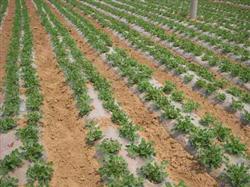
What are the key technical points for the cultivation and management of summer-sown peanuts?
How should summer-sown peanuts be managed? Please provide guidance. Summer-sown peanuts can be managed by referring to the following methods: 1. Check seedlings and reseed. After sowing, check the seedling emergence promptly. If gaps in the seedlings are found, promote germination and reseed in time. 2. Intertillage. During the seedling stage of peanuts, clearing the plants should be combined with intertillage. Generally, a small hoe can be used to dig away the soil around the base of the peanut seedlings to form a "small hollow", exposing the two cotyledons and the lateral buds in the leaf axils above the ground. At the same time, weeding can also be carried out in combination with intertillage.
条件筛选