-
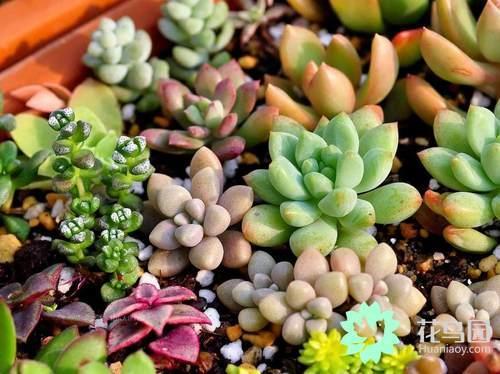
What to do when succulents lose their color in summer? These 5 kinds keep their color even with shade
When the dog days of summer arrive, the temperature gets higher and higher, and many flower lovers don't dare put their succulents out in the sun, so they slowly fade to green! Today, I'll introduce a few kinds of succulents that won't fade into cabbages even in summer! Graptosedum 'Bronze' Graptosedum 'Bronze'...
-
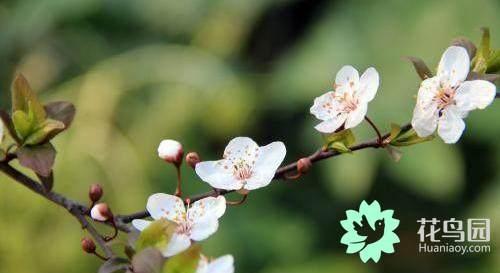
5 flowers that fear heat the most in summer - take a quick look and see if you have any at home
Growing flowers has gradually become a choice for more and more modern people in their spare time. For many friends who are just starting to get into plants, they often make many basic mistakes; for example, when it is more suitable to plant which plants is often something many friends do not know.
-
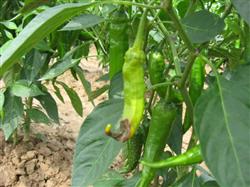
Detailed Explanation of Methods for Preventing and Controlling Blossom-End Rot in Summer Peppers
How to prevent and control blossom-end rot in summer peppers? Please introduce the methods. The symptoms of blossom-end rot in peppers are very similar to those of bacterial soft rot in peppers. Blossom-end rot in peppers mainly damages the fruit, initially appearing as dark green or dark gray water-soaked lesions, which then expand into lesions that can reach 2-3 cm in diameter. As the fruit develops, the diseased area becomes grayish brown or white...
-
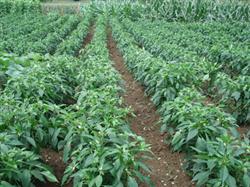
Key Technical Points for Summer Pepper Cultivation and Management
How to manage peppers in summer when growing them? Please provide guidance on management methods. Summer pepper management can be carried out with reference to the following methods: 1. Growth period management. About 20 days after transplanting, promptly remove the first pepper (the door pepper). 2. Promptly control pests such as tobacco budworm, cotton bollworm, aphids, and red spider mites. For tobacco budworm and cotton bollworm, it is advisable to choose...
-
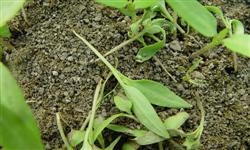
Prevention and control methods for pepper seedling death caused by high summer temperatures
How to prevent and control pepper seedling death in high summer temperatures? Please explain the methods. In summer, the hot and rainy climate conditions easily trigger the occurrence of various pepper diseases. When heavy rain is followed by sudden clearing and a sharp rise in temperature, disease epidemics are easily caused, and plants can die within 3 to 5 days, known as "dead plants." This disease is a devastating disease of peppers...
-
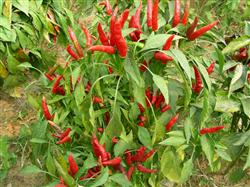
How can you grow peppers in summer to achieve high yields?
How can you grow peppers in summer to achieve high yields? Please explain the cultivation methods. For growing peppers in summer, you can refer to the following methods: 1. Variety selection. Over-summer cultivation of peppers mainly supplies the summer and autumn seasons. Because temperatures are high and humidity is great, diseases are easily triggered, causing reduced yields or even total crop failure. Therefore, choose medium-late and late maturing pepper varieties that are heat tolerant, disease resistant, large fruited, good in commercial traits, and high yielding, such as Zhengjiao No. 12. Some medium maturing varieties with good resistance, such as Zhengjiao Xianfeng, can also be selected. If shipping externally, the selected varieties should also have thick flesh, resistance to pressure, and tolerance for storage and transport, such as Zhengjiao No. 16, Xiangjiao No. 37, etc.
-

Succulent plants in summer: controlling your hands and managing water well is key
Cause of death 1: High temperature and humidity In summer, plant deaths are mostly due to sunburn and bacterial infection. Many people say that in summer plants need shade to avoid sunburn, but this is not entirely true. Succulent plants grow in their native habitat on mountain...
-
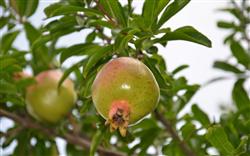
What are the key points of pomegranate tree summer management techniques
How to manage pomegranate trees in summer? Please give an introduction. Pomegranate tree summer management mainly consists of the following three major points: Fertilization. For young pomegranate trees that have not yet reached full growth, apply fertilizer once after 2/3 of the flowers have dropped and once about 1 month before the fruit ripens; for mature, high-yielding large trees, in addition to the above two fertilizations, at the early stage of bud break and flower bud appearance, also...
-
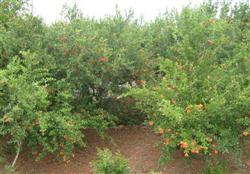
How to prune a pomegranate tree correctly in summer?
How should a pomegranate tree be pruned in summer? An introduction: Summer pruning of pomegranate trees can be based on the growth characteristics of pomegranate branches. For young trees, during shaping, excessively vigorous new shoots growing from the main branches should be promptly bent, pinched, and removed to maintain the absolute dominance of the main branches' growth. For trees in the fruiting stage, excessive buds should be promptly removed, and suckers should be thinned out. In particular, suckers near pruning and saw cuts and at underground root crowns should be repeatedly removed multiple times. When removing underground suckers, be careful not to damage the bark. Vigorously growing new shoots should be promptly pulled down to adjust their angle or heavily pinched to develop fruiting branch groups. Pomegranates often have many secondary, tertiary, and even quaternary branches, so pinching should be repeated to control excessive growth. For young, vigorous trees with low fruit set rates, ringing can be done on vigorous branches during the flowering period, preferably with two ring cuts spaced 10 cm apart.
-
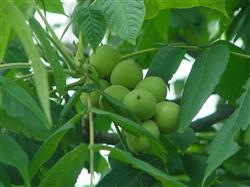
What are the key technical points for summer management of walnut trees?
How to manage walnut trees well in summer? Here are the methods. In summer, walnut new shoots grow fastest and physiological activity is strongest; this is the period with the highest survival rate for bud grafting and the most critical time. Pests such as the yellow slug moth, the walnut fruit moth (walnut black), the walnut yellow weevil, the cloud-banded longhorn beetle, the gypsy moth and the walnut tuft moth begin to emerge and lay eggs. Rot disease...
条件筛选