-

High-efficiency cultivation technique for oyster mushrooms without spraying water for humidification
The narrow-shed no-spray high-efficiency cultivation method for oyster mushrooms combines the advantages of the soil-burial cultivation method and the mushroom-wall cultivation method, making the cultivation and management of oyster mushrooms simpler, with excellent quality and high yield. The method is: after harvesting the first flush of mushrooms, remove the mushroom blocks from their bags and build a mushroom wall around the four earthen walls of the shed. The outer ends of the wall are bonded block-to-block with sealing mud, the interior of the wall is entirely filled with nutrient soil, and a water trough is built on top of the wall for replenishing water and nutrients. The advantages of this method are mainly five: (1) Before building the mushroom wall, first let the blocks produce one flush of mushrooms; the wall built from already-shrunk blocks does not deform, does not dry-crack,
-
How to control humidity for higher yields when growing oyster mushrooms indoors?
When growing oyster mushrooms indoors, humidity control is the key to success, and management after fruiting begins is especially important. At this stage, if the humidity is too low, the mushrooms will shrivel, stop growing, or even die; if the humidity is too high, the mushrooms rot easily. Practice has shown that controlling humidity by spraying water is hard to master, and sometimes spraying too heavily on the surface of the substrate affects the development of mushroom buds, causing young mushrooms to die and reducing or even wiping out the harvest. Here is a clever method that controls humidity without spraying water and can also increase oyster mushroom yields. Get some cotton cloth and a jar, cut the cotton cloth into a strip 8 cm x 40
-
Key points to note during the fruiting period of shiitake mushrooms: regulation of temperature and humidity differences
Increase the day-night temperature difference. In late autumn and early winter, daytime temperatures are high and nighttime temperatures are low. Cover with a layer of film during the day so that the temperature inside the mushroom bed is 2°C-3°C higher than outside the film, then open the film after 10 p.m. so the temperature drops rapidly. After several consecutive days, a large number of primordia will emerge on the surface of the mushroom logs and develop into mushroom buds. Control the humidity of the mushroom yard. After color change, initially maintain the relative humidity of the mushroom bed at about 85%. As large numbers of mushroom buds differentiate into caps and stipes, lower the air humidity to about 80%. Create a suitable dry-wet difference. In the early stage of autumn mushrooms, the internal water content of the mushroom logs is relatively sufficient and can safely
-
Overwintering edible fungi: raise the temperature and maintain humidity
December is the busiest period for edible fungus production. Most cultivated varieties are fruiting, some that fruit in spring are in the mycelial growth phase, and some spawn is being made or is in the mycelial growth phase. With the arrival of December, temperatures drop, which is a considerable challenge for edible fungus growth. Therefore, mushroom growers must plan reasonably, manage well, and ensure normal growth of the edible fungi. Oyster mushrooms are mostly at the fruiting stage, and some cultivated in autumn have entered the tail end of fruiting. The focus of management is heat preservation, resolving the contradiction between raising the temperature and maintaining humidity in the mushroom shed and ventilation.
-
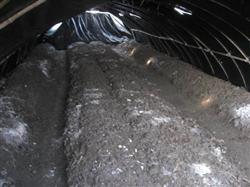
How do you cultivate straw mushrooms in summer under high temperature and high humidity?
How do you cultivate straw mushrooms in summer under high temperature and high humidity? Please introduce how, during the hot summer season of high temperature and high humidity, idle greenhouses can be used to cultivate straw mushrooms. For site preparation, clean the greenhouse thoroughly, repair the greenhouse film, disinfect the floor and walls, and cover the greenhouse roof with wheat straw. Make beds inside the greenhouse, with a bed surface width of 80 cm and a height of 10 cm...
-
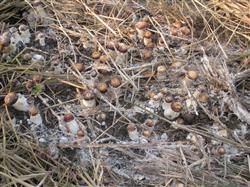
What are the temperature and humidity requirements for Wine Cap mushroom (Stropharia rugosoannulata) during the mycelium running stage?
What are the temperature and humidity requirements for Wine Cap mushroom (Stropharia rugosoannulata) during the mycelium running stage? Please explain. Regulating temperature and humidity is an important part of cultivation management for Wine Cap mushroom. During the mycelium growth stage, Wine Cap mushroom requires a pile temperature of 22 to 28°C, a moisture content of 70% to 75% in the growing medium, and a relative humidity of 85% to 90% in the air...
-
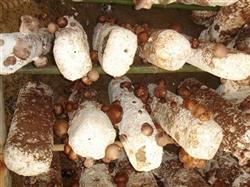
What is the suitable humidity during the growth and development period of shiitake mushrooms?
What humidity is suitable during the growth and development period of shiitake mushrooms? I would also like experienced readers to help explain. Shiitake mushrooms have long been known as the "king of mountain delicacies" and are a high-protein, low-fat nutritional health food. Shiitake mushrooms have a very high ergosterol content, which is effective in preventing and treating rickets; moreover, lentinan (beta-1,3-glucan) can...
条件筛选