-

Rice carefully bred for 6 years finally yields a high-quality new variety
A kilogram of rice sold for a high price of 188 Hong Kong dollars?! A reporter learned yesterday at the provincial agriculture and forestry crop breeding research summary meeting that this was a sales record once set by the Ezhong No. 5 rice bred in our province. Ezhong No. 5 rice is the fruit of 6 years of selective breeding by scientific and technical personnel in our province. According to the introduction, He Shengqiu of the Rural Science and Technology Division of the Provincial Department of Science and Technology found the rice very delicious when visiting abroad in 1998, so he brought back 107 grains of rice and handed them to Chen Yiyi, a researcher at the Provincial Academy of Agricultural Sciences. Chen Yiyi treasured them like a precious treasure,
-
Can Keeping Chickens, Ducks, and Geese Together with Pigs Lead to Highly Pathogenic Avian Influenza?
Poultry should not be kept together with pigs, because influenza viruses from poultry can infect pigs, and human influenza viruses can also infect pigs. Since influenza viruses have 8 different nucleic acid segments, when these two different virus particles infect a single cell together, their nucleic acid segments undergo reassortment and rearrangement to produce new types of influenza virus particles. These new influenza virus particles can often cause major epidemics in humans, resulting in great harm. In addition, chickens should not be kept together with waterfowl such as ducks and geese, because
-
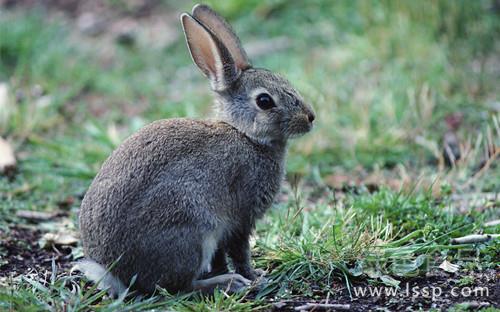
Rabbit epizootic enteritis is highly prevalent in winter; be on guard against refusal to eat, abdominal bloating, severe watery diarrhea and dehydration
Refusal to eat, abdominal bloating, severe watery diarrhea and dehydration; be on guard against rabbit epizootic enteritis in winter
-
How can colored ecological cotton be cultivated for high quality?
The Special Economic Animal and Plant Research Institute of Cao County, Shandong Province introduced green, brown and other natural ecological cottons and achieved relatively high economic benefits. They have been rapidly promoted locally. To achieve high yield and high quality in colored cotton, the following field management tasks should be carried out well in the later stage. 1. Water well with autumn water, spray pesticide to protect bolls. Watering well with autumn water and spraying pesticide to protect bolls have significant effects on preventing premature senescence of cotton, reducing boll shedding, increasing boll weight, and improving seed maturity and fiber quality. The specific method is: use small furrow irrigation to water the roots, and at the same time spray the whole plant with cotton boll-protecting agent. 2. Prune carefully to reduce
-
Detailed Explanation of Rapid-Growth, High-Yield Field Cultivation Techniques for Reishi Mushroom
Reishi mushroom, also known as red reishi, red ganoderma, or reishi herb, is a precious medicinal fungus. The rapid-growth, high-yield field cultivation technique for reishi mushroom features mushroom sticks that do not shed, fixed-point fruiting, directional water supply, high biological efficiency, and good product quality. Each mu of land can be planted with 8000-10000 sticks, with considerable economic benefits. I. Stick Preparation and Mycelium Incubation 1. Culture medium formula: (1) Hardwood sawdust 78%, wheat bran (or rice bran) 20%, sugar 1%, gypsum 1%; (2) Cottonseed hull (or sweet potato residue) 78%, wheat bran 15-2
-
Key Technical Points for High-Quality and Safe Production of Edible Fungi
High-quality and safe production of edible fungi is an important part of the sustainable development of the edible fungi industry. It helps save resources, protect the environment, improve the competitiveness of products in the international market, increase the trade volume and price of exports, and raise the income of mushroom farmers. In recent years, with the increase in cultivated varieties of edible fungi, the broadening of types of cultivation resources, the expansion of cultivation area and the extension of cultivation regions, some production areas arbitrarily change formulas in pursuit of high yields and add some chemical components with unclear uses and mechanisms; and in one-sided pursuit of labor saving, they adopt some
-
Reasonable flower and fruit thinning of bayberry (Chinese bayberry, Myrica rubra) promotes stable and high yields
Bayberry (Chinese bayberry, Myrica rubra) bears fruit mainly on short and medium fruit branches. Because on these two types of bearing branches only the terminal bud is a leaf bud, while the rest mostly differentiate into flower buds, if they are allowed to set fruit naturally, they often bear excessively, the fruits are small and of poor quality, and it easily causes alternate bearing. To achieve stable and high yields, fruit thinning should be carried out. (1) The thinning period is generally in mid-to-late April, after fruit set is determined and before the fruits rapidly swell. (2) Thinning method: out of every 6 bearing branches, keep 3 to bear fruit and thin out 3, and each fruit-bearing branch keeps 2 fruits. (3) Thinning principle: keep fewer on the upper part of the canopy and more on the lower
-
What kind of pear is the Golden Pear? Introduction to high-quality pear varieties
The Golden Pear was bred by crossing Shin Go with Nijisseiki, introduced to China from South Korea in the 1990s, and is suitable for growing in the middle and lower reaches of the Yangtze River and the Huai River basin. This variety has strong growth vigor and a relatively open tree posture; 1-year-old branches are greenish-brown; the leaves are large and thick, ovate or oblong, with sharp and dense serrations along the leaf margins; the young shoot leaves are yellow-green. The fruit is round and slightly flattened, with yellow-green skin; bagged fruit is golden yellow and appears translucent, with thin skin and large, sparse fruit dots, very attractive; the average single fruit weight is 350 grams; the flesh is fine, tender and crisp, with no or very few stone cells, abundant juice
-
What are the high-quality Korean pear varieties? A detailed introduction
Chuhwang pear was bred by the Korea Horticultural Research Institute and named Chuhwang pear in 1985. Its parents are Jincunqiu x 20th Century. This variety has large fruit, with an average single fruit weight of 395 grams, a flat-round fruit shape, and yellow-brown skin. The flesh is white, the core is small, the texture is fine and crisp, the soluble sugar in the juice is 14.1%, there are very few stone cells, the taste is good, and the quality is superior. The tree vigor is strong, and both budding ability and branching ability are also strong; it bears fruit 2-3 years after planting. The flowers are in full bloom in mid-April, and the fruit matures in mid-October. The storage period is 120 days. Ganquan pear was bred by the Korea Horticultural Research Institute
-
7 Highly Effective New Fish Medications Recommended for Aquaculture Reference
Fish parasite killer. This product is an external insecticide for black carp, grass carp, bighead carp, crucian carp, and bream, capable of expelling and killing Sinergasilus, Lernaea, Trichodina, Ichthyophthirius, Gyrodactylus, sporozoans, Dactylogyrus, fish lice, glochidia, and other parasites on fish within a few hours, and can also kill aquatic centipedes, ants, and other pests. High-chlorine preparation. This product is a bactericide. It has a powerful killing effect on bacteria, fungi, pathogens, fungi, pathogens, etc., and is effective against hemorrhage disease, red skin disease, stamping disease, gill rot, black gills, enteritis, shell rot, and red
条件筛选