-

What are the treatment methods for unknown high fever in pigs?
Postpartum fever in sows is a disease that easily occurs during the high-temperature period in summer and autumn. Within 1-3 days after farrowing, high fever caused by uterine infection is called postpartum fever. Clinical symptoms are as follows: elevated body temperature, 40.5-41.5°C, preference for lying down, reduced appetite or no eating, body trembling, accelerated breathing, reduced milk production, and purulent discharge flowing from the vulva. Postpartum fever in sows is often caused by inadequate disinfection during farrowing assistance. During farrowing, an oversized fetus injuring the birth canal, or the assistant's arm not being strictly disinfected and being inserted into the birth canal to probe, can both cause postpartum fever. Especially when the weather is hot and humid
-
How to Feed Sows for High Milk Production? Five Feeding Tips to Share
Feed fermented feed: Especially feed fermented with yeast has a good milk-stimulating effect on sows. Feed green feed that stimulates lactation: such as sugar beet roots and their leaves, Swiss chard, raw potatoes, bitter lettuce, etc. all have good effects. Feed afterbirth: Wash the sow's afterbirth clean and boil it into soup to feed the sow, which also has the effect of increasing milk production. Feed Chinese herbal medicine to strengthen the stomach and promote milk: Wangbuliuxing (cowherb seed) 40 grams, Mutong (clematis stem), Duhonghua (safflower), Jingsanleng (burreed tuber) 30 grams each, Liushenqu 50 grams, Chishao (red peony root) 20 grams, mix with water and decoct into juice, daily
-
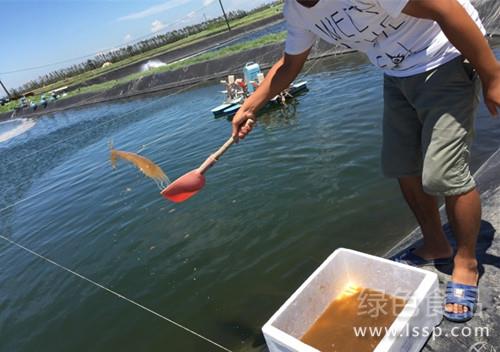
South American shrimp feed costs are high, how can feed be saved?
South American shrimp feed is expensive and costs are high; how to save feed when farming shrimp
-
Why is high-mountain cloud-and-mist tea of such good quality?
That high mountains and cloud and mist can produce good tea is something people have come to recognize gradually through long years of production practice. Green tea from cloudy and misty mountains has a high aroma, a rich and full flavor, is fresh and brisk, and is of good quality. The reasons for this are mainly related to the ecological factors of high mountains. First, in tea gardens at a certain altitude, with high mountains and dense forests, abundant rainfall, moist air and plenty of scattered light, a unique set of ecological conditions is formed, resulting in deep and fertile soil, short sunshine hours and high relative humidity there; the tea plants are nourished by mist and dew all year round, which exactly suits their growth characteristics of liking warmth and moisture and tolerating shade.
-
Detailed Explanation of High-Yield Cultivation Techniques for Korean Zhengjian Goji Berry
1 Variety Characteristics and Traits The Korean Zhengjian goji berry has large berries, red color, thick flesh, and a soft, moist texture. Its sugar content is 11.3%, which is 3.3%-4.3% higher than that of Ningxia goji berry. It has wide adaptability, tolerates drought, poor soil, and low temperatures, and offers the advantages of early fruiting, high yield, excellent quality, short cycle, and quick returns. 2 Cultivation Techniques 2.1 Fine Soil Preparation. Apply Sufficient Base Fertilizer The goji berry has wide adaptability and is not strict about soil requirements, but planting in low-lying plots should be avoided as much as possible. Generally, from late February to early March
-
How can goji berries be cultivated to achieve both high yield and premium quality?
Goji berry (Lycium barbarum) is a perennial deciduous shrub of the genus Lycium in the nightshade family Solanaceae. Its leaves, fruit, roots and bark all have extensive medicinal value. It has strong stress resistance and tolerance to fertilizer and water, and is suitable not only for planting in arid, sandy wasteland and saline-alkali land, but is also an excellent tree species for courtyard economies; its fruiting period is long, and plants set out in the current year can still bear fruit up to 50 years later, reaching full fruiting stage in 3 to 4 years, generally producing more than 3000 kg of dried fruit per hectare; its fruit contains a variety of organic compounds and nutrients and has effects such as tonifying the kidney, nourishing the liver, brightening the eyes, invigorating blood circulation and fighting cancer. 1. Select good varieties. There are many goji varieties; in ** alone there are nearly 1
-
Detailed Guide to High-Yield Cultivation of Nameko Mushrooms (Part 2)
V. Management During the Fruiting Body Stage 1. Unwrapping and Scoring the Blocks Once the spawn-running stage of the blocks is complete and the blocks have formed, fruiting management should be carried out according to temperature conditions. In late August, as temperatures gradually drop, open the plastic sheeting on the mature blocks and place them on the fruiting racks. The mycelial film that grows on the blocks is too thick, which is unfavorable for the emergence of fruiting bodies, so a bamboo knife or iron nail should be used to score lines on the surface of the blocks, cutting crisscross into squares about 2 cm wide. Score through the mycelial film, with appropriate depth, generally 1 cm deep is sufficient. Scoring too deep makes the blocks prone to breaking. Then place them flat on the racks, spray water, and adjust the room temperature
-
Analysis of Key Technical Points for High-Grade Lion's Mane Mushroom Cultivation
IV. Bag Placement in the Field to Induce Directional Fruiting. Lion's mane mushroom (Hericium erinaceus) is an aerobic fungus, and the cultivation site requires fresh air, making an outdoor mushroom shed relatively ideal. After about 25 days of indoor mycelial incubation, when the mycelium reaches physiological maturity, it shifts from vegetative growth to reproductive growth. Lion's mane mushroom typically begins to form primordia and differentiate into fruiting bodies before the mycelium has fully colonized the bag. Therefore, close observation is needed, and the bags should be promptly moved to a shaded outdoor shed for placement, and the surface layer of the original spawn block should be scratched off to induce uniform directional fruiting. There are 3 common placement methods:
-
Eight Technical Measures for High-Yield Cultivation of Lion's Mane Mushroom
Selecting Good Strains First, the mother cultures used for production should have excellent traits, shown as fast growth, uniform and neat, and covering the slanted surface within two weeks at suitable temperature. When preserved in a refrigerator, primordia often form, and microscopic examination shows a small number of chlamydospores; if there are too many spores, the yield tends to be low. If the mycelium turns yellow, is thin and weak, or sparse, it indicates that the strain has degenerated. If growth is uneven or irregular, or there is antagonism, it indicates that the strain is not pure, and none of these should be used. All stock cultures should be dense and white, uniform from top to bottom, with no interruption in the mycelium, and vigorous mycelium on the surface. If the substrate shrinks and dries, separates from the container wall, and the color darkens, it indicates that the strain is aging.
-
Key Points of Fast-Growing, High-Yield Cultivation Techniques for Lion's Mane Mushroom
Lion's mane (Hericium erinaceus) is a kind of edible fungus, and its fruiting body is fresh and meaty with a delicate fragrance and pleasant taste. In recent years, as the area under artificial cultivation of lion's mane has expanded year by year, the yield has also been continuously increasing. The fast-growing, high-yield cultivation techniques for lion's mane are summarized and introduced as follows. 1. Material selection and mixing Select fresh, clean sawdust or cottonseed hulls as the raw material. If the raw material is not fresh, it should be exposed to strong sunlight for 2-3 days before use. For large-scale production, sufficient raw material should be prepared all at once and stored in a moisture-proof, well-ventilated site. When mixing, first mix 65% sawdust (if the sawdust is too fine, add an appropriate amount of wood shavings), 30%
条件筛选