-
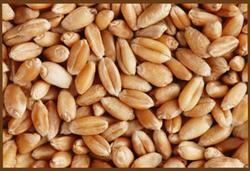
How much chlorpyrifos and phoxim should be used to dress wheat seed?
How much chlorpyrifos and phoxim is suitable for dressing wheat seed? Please advise: 40% phoxim emulsifiable concentrate is registered for wheat seed dressing to control soil-dwelling pests, using 180-240 ml of the formulation per 100 hectares of seed, diluted with water and sprayed onto the wheat seed while mixing. For dressing seed with chlorpyrifos to control soil-dwelling pests in wheat, use 200 ml of 48% chlorpyrifos emulsifiable concentrate per 100 kg of wheat seed...
-
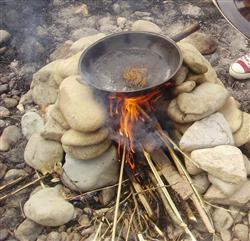
Which disinfectants become more effective at killing germs after being heated?
Which disinfectants can have their germ-killing power increased by heating? Please give an introduction. Below are several disinfectant drugs and heating-based disinfection methods: Sodium carbonate. Sodium carbonate: at low temperatures it has a bacteriostatic effect, but only a mild one, whereas the alkaline solution after heating has a strong germ-killing effect. When boiling instruments for disinfection, adding 1%...
-
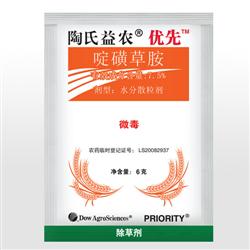
How is the herbicide pyroxsulam used in wheat fields?
How is the herbicide pyroxsulam used in wheat fields? Please give an introduction. Pyroxsulam 7.5% water-dispersible granules, a priority for weed control in wheat fields, is a sulfonamide herbicide launched in the winter of 2009 by Dow AgroSciences of the United States for controlling grass weeds in wheat fields while also controlling broadleaf weeds. In recent years, through a large number of trials and...
-
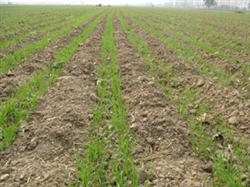
Can acetochlor be used for weed control during the wheat seedling stage?
Can acetochlor be used on wheat seedlings? Please advise: acetochlor must not be applied to wheat seedlings. Wheat is fairly sensitive to acetochlor from just emerging until before the 2-leaf stage, and applying the herbicide at this time easily causes herbicide injury. In wheat fields, acetochlor should be applied after sowing but before emergence, or after the wheat reaches the 2-leaf 1-heart stage. After application, keeping the field moist gives a better sealing effect; note that the soil...
-
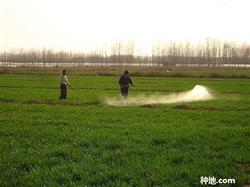
Chemical Weed Control Methods and Technical Points for Winter Wheat Fields
How to chemically control weeds in winter wheat fields? Please guide. For chemical weed control in winter wheat fields, you can refer to the following methods: 1. Control agents: 3% Shima oil suspension concentrate (mesosulfuron-methyl); 3.6% Kuoshima water-dispersible granules (mesosulfuron-methyl + iodosulfuron-methyl-sodium). 2. Usage amount: Shima...
-
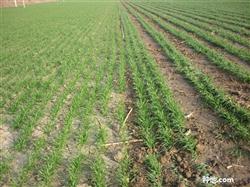
Correct use of herbicides after wheat emerges
How should herbicides be used after wheat emerges? Please provide guidance. Summarize the experience of chemical weeding in wheat fields across different regions. Different chemical herbicides should be selected according to different wheat seedling conditions and wheat subsequent crops. The following herbicides can be selected: Maiji quizalofop-p-ethyl, namely 15% quizalofop-p-ethyl wettable powder, mainly controls various grass...
-
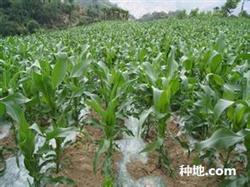
Methods for applying herbicides to wheat to prevent freeze-related herbicide injury
What herbicide is best for corn planting? Corn plants that preferably do not suffer herbicide injury are relatively sensitive to herbicides, so they should be chosen reasonably to avoid herbicide injury. For soil treatment, 40% atrazine-acetochlor aqueous suspension emulsion has high herbicidal activity, a long application period, and is safe for corn and subsequent crops. Before emergence after sowing or after emergence when weeds...
-
What are the precautions for using herbicides in wheat fields?
What should be noted when using herbicides in wheat fields? How should it be done? Applying herbicides to wheat requires the following strict practices: Strictly select herbicide varieties. There are many types of herbicides, and each herbicide has a certain spectrum of weed control. Some herbicides have a very narrow weed control spectrum, such as barban, which can only control wild oats; MCPA controls shepherd's purse, purslane, and wild oats very well, but its effect on cleavers is very poor; 2,4-D is effective against broadleaf weeds such as amaranth, but ineffective against grass weeds. Farmers should choose the right herbicide according to the most common weed species in the wheat field in order to achieve the desired effect. To control broadleaf weeds, herbicides such as chucaojing, dicaojing, tribenuron-methyl, and baijia mixture can be selected for good control results; however, metsulfuron-methyl, chlorsulfuron, and maicaoer can only be used early in wheat fields under a rice-wheat rotation system. If crops such as cotton, corn, peanuts, or beans are planted after rice, serious phytotoxicity will occur, leading to frequent incidents of almost total crop failure.
-
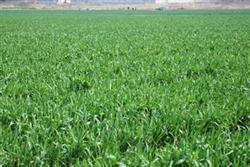
Timely application of regulators to wheat boosts stress resistance and yield
1. Paclobutrazol. At the wheat jointing stage; spray 50 kg of a 200 ppm paclobutrazol solution per mu, which can dwarf the plants, enhance lodging resistance and drought resistance. It can also control powdery mildew and improve the plant's absorption and utilization of nitrogen. 2. Chlormequat. For wheat fields with large populations and vigorous growth, at the wheat jointing stage, use 40-50 kg of a 40-50 ppm solution made from 5% chlormequat aqueous solution per mu...
-
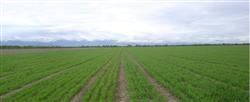
Which herbicides can be used after wheat emerges?
Wheat and weeds differ in their sensitivity to herbicides at different stages, and the safety of herbicides to wheat also varies; the performance of various herbicides differs, so it is very important to correctly grasp the application timing, especially when applying herbicides from the jointing stage of wheat to the young ear differentiation stage, where even more attention should be paid to the safety of the herbicide to wheat. At present, ...
条件筛选