Chemical Weed Control Methods and Technical Points for Winter Wheat Fields
How to chemically control weeds in winter wheat fields? Please guide. For chemical weed control in winter wheat fields, you can refer to the following methods: 1. Control agents: 3% Shima oil suspension concentrate (mesosulfuron-methyl); 3.6% Kuoshima water-dispersible granules (mesosulfuron-methyl + iodosulfuron-methyl-sodium). 2. Usage amount: Shima...
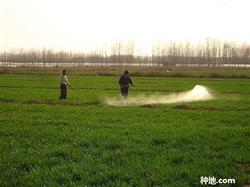
How to chemically control weeds in winter wheat fields? Please guide.
For chemical weed control in winter wheat fields, you can refer to the following methods:
1. Control agents:
3% Shima oil suspension concentrate (mesosulfuron-methyl); 3.6% Kuoshima water-dispersible granules (mesosulfuron-methyl + iodosulfuron-methyl-sodium).
2. Usage amount:
Shima 25-30 ml/mu + safener (Banbao) 75-95 ml/mu (2-3 sets)/mu, mixed with 30 kg water; Kuoshima 20-25 ml/mu + safener (Banbao) (80-100 ml)/mu, i.e. (2-2.5 sets) per mu, mixed with 30 kg water, which can also control broadleaf weeds.
3. Master the appropriate application time:
Use the herbicide before winter as much as possible; the weed control effect is good and the safety is high. Specific requirements:
(1) Observe the seedling condition: winter wheat at the 3-6 leaf stage after emergence, grass weeds at the 2-5 leaf stage (before 2 tillers), basically all seedlings emerged.
(2) Observe the weather: it is best to use it on a sunny day with no frost or heavy rain within 4 days. The optimal application temperature is 10-20°C; it is best to use it at noon when the light is good and the temperature is high, and it can basically be absorbed within 4 hours. When applying, the minimum temperature should generally not be lower than 4°C.
When the crop growth is seriously poor, or when the following conditions occur: cloudy and rainy days, low-lying waterlogging, muddy and excessively wet soil, saline-alkali land or suffering from waterlogging, freezing damage, salt damage, pests and diseases, and malnutrition, or when there is heavy rain or frost (minimum temperature below 3°C) within 4 days after application, the use of this agent is prohibited, and flood irrigation of the wheat field must not be carried out within 2 days before and after application, so as to avoid phytotoxicity.
4. Method of use:
When applying, mix the bundled preparation and Banbao (safener) into a mother liquor, then pour it into a sprayer already filled with water and stir evenly. Add each packet of the agent to the sprayer water (16 liters) for spraying. Be sure to pay attention: when spraying, move at a constant speed and spray evenly; it is strictly forbidden to "spray more where there are more weeds", and it is strictly forbidden to double-spray, miss spraying, or use beyond the scope. The optimal water volume for spraying wheat fields is: 15-20 kg/mu for motorized sprayers; 30 kg/mu for manual sprayers.
5. Precautions:
(1) The herbicide should be used alone and must not be arbitrarily mixed with other herbicides, pesticides, or foliar fertilizers. It is prohibited to mix it with 2,4-D and long-residual herbicides. If there are many kinds of broadleaf weeds in the wheat field, other agents can be sprayed 1-2 weeks after spraying Shima or Kuoshima.
(2) It is prohibited to use it during the low-temperature frost period in winter and after wheat jointing and stem elongation, so as to ensure efficacy and avoid residual effects on subsequent crops. When controlling weeds, weeds at the field edges and corners should also be controlled.
(3) This agent has a certain seedling-dwarfing effect. After use, some crop varieties may show temporary yellowing or dwarfing in the early growth stage. Under normal use conditions, the yellowing disappears naturally after wheat turns green, which can prevent excessive growth and lodging of wheat and significantly increase yield by controlling weeds.
(4) Do a good job of personal protection when spraying. For example, when applying, wear protective goggles, a mask and gloves, and wear protective clothing; eating and smoking are prohibited. After use, thoroughly wash exposed skin with soap and clean water before eating and smoking. If the skin has a persistent stinging sensation, seek medical diagnosis and treatment. If the liquid splashes into the eyes, rinse with plenty of clean water for more than 15 minutes and seek medical treatment.
(5) The issue of adaptability to wheat varieties. Years of multi-point trials on different wheat varieties have confirmed that Shima and Kuoshima are very safe for the vast majority of winter wheat varieties grown in our province (except unapproved varieties). However, they have a certain impact on some wheat varieties with extremely strong spring habit and strong gluten (vitreous or hard) type. Users are requested to consult the relevant departments before use to determine which category their planted variety belongs to, first conduct a small-area trial, and then use it on a large scale according to the situation.
Click to get moreWheat Planting Techniques
Click to get moreHerbicide Application Techniques
Click to get more pesticide application techniques