-
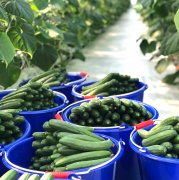
Cucumber cultivation is highly challenging, but young farmer Lin Kai-yao uses technology to solve the problems
When describing cucumbers, people usually say they are sweet, crisp and refreshing, but have you ever heard that cucumbers are "mischievous"? That's right! Young farmer Lin Kai-yao says cucumbers are animals wearing a plant's skin, and the mischievous kind at that. He once set up
-
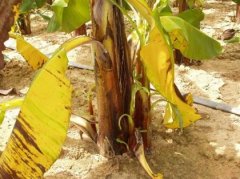
Treatment methods for banana yellow leaf disease and medication for sucker handling
Banana yellow leaf disease is very difficult to cure. To confront yellow leaf disease head-on, there are only two paths: prevention and control. In areas where it has not yet broken out, prevention of infection must be strong; in areas where it has already broken out, efforts should be made to reduce damage and prevent the epidemic from spreading. Banana farmers are encouraged to establish isolation zones on their farms,
-
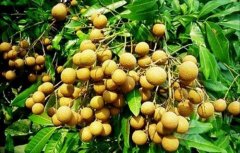
Litchi stink bug feeding damage to lychee and longan: how to control it and handle the eggs
The most serious pest and disease problem for lychee is the damage caused by the litchi stink bug, so when is the best time to control this pest? Now is the critical time to prevent damage from the litchi stink bug! Around February each year. The Council of Agriculture held a press conference on the 12th calling for action: the litchi stink bug, which causes serious harm to lychee and longan, is preparing to lay eggs, and farmers are urged to carry out area-wide integrated control.
-
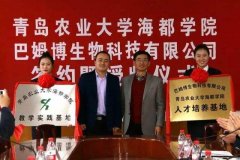
Shandong Bambo Chemical's Fake Pesticide "Shaweibang" Accused of Being Inferior Pesticide; Arrests Approved in Major Counterfeit Pesticide Case
According to a notice from the Agricultural Administrative Law Enforcement Brigade of Xianju County, Zhejiang Province, the county recently uncovered a case of fake and inferior pesticides. In October 2017, during the "Green Sword" campaign against counterfeit agricultural materials, the Xianju County Agricultural Bureau took a sample from an agricultural supply store of emamectin benzoate labeled as "Shaweibang". Testing showed
-
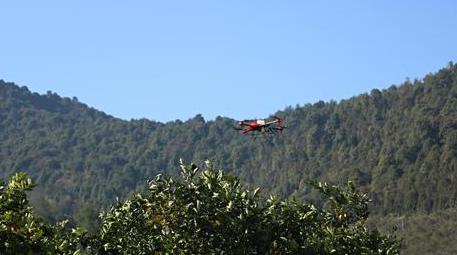
How to prevent citrus greening disease in navel oranges? Drones lend a hand in Shuangyuan Township, Anyuan County, Jiangxi
Ganzhou, Jiangxi (China Jiangxi Network) - Correspondent Liu Rongqing reports: "Spraying pesticide by drone is just so fast. The workload that normally takes two days with hired workers to spray pesticide was completed by a drone in just one and a half hours," said Liu Chongliang, a large-scale navel orange grower, happily to our reporter while watching the drone. On January 16, Anyuan
-

Organic agriculture cannot rely on producers alone
In Jiangjiazhuang Village, Pingyi County, Shandong Province, Jiang Gaoming, a researcher at the Institute of Botany of the Chinese Academy of Sciences, rented a 20-mu farm, growing corn, soybeans and wheat, and also raised more than 100 head of cattle. No chemical fertilizers or pesticides, and no agricultural film, additives or herbicides. After three years of cultivation,
-
Rational Land Transfer Requires Properly Handling Six Relationships
In order to further understand the current situation of rural land transfer, better promote the transfer of rural land contractual management rights in accordance with the law in a regulated and orderly manner, and actively explore new paths for large-scale land management, the author recently went to Zhuxianzhuang Town and Huigu Town in Yongqiao District, Suzhou City, Anhui Province, in conjunction with the Party's mass line education and practice activities
-
The key to reforming the household registration system lies in handling three major contradictions well
The State Council's "Opinions on Further Advancing the Reform of the Household Registration System" is a top-level design for household registration system reform. From the perspective of the reform roadmap, it must be supported by the "Residence Permit Management Measures" to be issued within the year; from the perspective of the reform timetable,
-
Oilseed rape polyploid genome jointly decoded by Chinese and foreign scientists
Recently, led by the International Brassica Genome Sequencing Consortium, the genome sequencing of Brassica napus (oilseed rape) was completed for the first time. This is the first complete sequencing and assembly of the complex genome of a traditional polyploid crop internationally, and it also completed a systematic comparison and
-
How can the rapeseed industry be made stronger? Five provinces join hands to promote development
Hubei Daily dispatch (reporter Wu Wenjuan, correspondent Zhong Ping) On the 12th, at the Yangtze River middle and lower reaches rapeseed yield increase model research technical exchange meeting held in Wuhan, heads of agricultural departments from five provinces - Hunan, Sichuan, Jiangxi, Jiangsu and Hubei - as well as rapeseed experts, discussed tackling ⟦4 <p> Hubei Daily dispatch (reporter Wu Wenjuan, correspondent Zhong Ping) On the 12th, at the “Yangtze River middle and lower reaches rapeseed yield increase model research technical exchange meeting” held in Wuhan, heads of agricultural departments from five provinces - Hunan, Sichuan, Jiangxi, Jiangsu and Hubei - as well as rapeseed experts, held discussions on overcoming technical challenges in rapeseed breeding, transplanting and segmented harvesting.</p> <p> Experts explained that in recent years, despite repeated calls, the rapeseed planting area has been difficult to expand, mainly because the level of rapeseed mechanization is low, especially the lack of new early-maturing and very early-maturing varieties. In 2012, the national level of mechanized rapeseed planting and mechanized harvesting stood at 12.3% and 13.3% respectively, far lower than other crops.</p> <p> To keep the “oil bottle” stable, in April last year, the Ministry of Agriculture launched the Yangtze River middle and lower reaches rapeseed yield increase model research project, led by the Hubei Provincial Department of Agriculture, with the participation of the departments of agriculture of the four provinces of Hunan, Sichuan, Jiangxi and Jiangsu, to overcome the bottlenecks of early-maturing, high-yield, high-oil, high-resistance varieties and mechanization technology in rapeseed production.</p> <p> Over more than a year, new breakthroughs have been made in research on early-maturing varieties. Hubei has bred several promising early-maturing varieties and combinations such as “Shengguang 127” and “Huazao 291”, which can be harvested from late April to early May in the southeast and central regions. They are suitable varieties for the “rapeseed-rice-rice” combination, can ease the tight conflict in crop rotation, and can expand the rapeseed planting area in triple-cropping regions; in Hunan, a batch of early-maturing varieties (combinations) maturing around April 25 have been bred, and a batch of extremely early-maturing rapeseed lines sown in the Changsha area at the end of October and maturing around April 20. At the same time, the project areas have balanced grain and oil and pursued coordinated development, exploring triple-cropping planting models for grain and oil such as “rapeseed-rice-rice” and “rapeseed-rice-ratoon rice”.</p> <p> The meeting revealed that through large-scale promotion of mature technical models, by 2020, the rapeseed area in the Yangtze River middle and lower reaches project areas will achieve stable development, reaching more than 73 million mu, an increase of about 7 million mu; total output will approach 10 million tons, an increase of 1.3 million tons; the full-process mechanization rate of rapeseed will increase by 15 percentage points; and grain yield per unit area will increase by an average of 1.5 percentage points per year.</p>
条件筛选