-

Japan's MOA Natural Farming improves the soil and grows cream-flavored championship rice
Rural Vision 06 | From the soft power of soil to cream-flavored championship rice - Japan's MOA Natural Farming
-

How do you care for a white magnolia (Michelia alba) so it grows lush leaves and abundant flowers?
To make a white magnolia bloom abundantly, ① for pot cultivation choose loose, fertile, acidic soil with good drainage and aeration. You can use a growing medium made from leaf mold or peat soil plus 1/5 perlite, and add a small amount of bone meal as a base fertilizer. Because the white magnolia has fleshy roots, it fears waterlogging most of all.
-
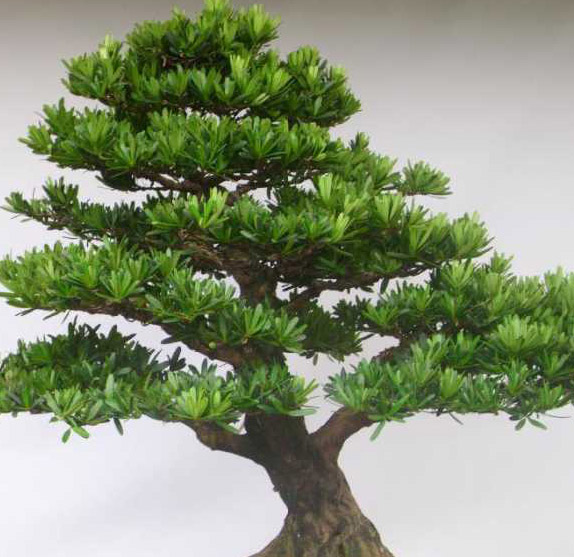
How to care for a potted Buddhist pine (Podocarpus macrophyllus) so it grows vigorously
The Buddhist pine is an evergreen shrub of the family Podocarpaceae. Its stems are upright and straight. In spring and autumn it sprouts new branches and leaves once each season; the internodes are dense and it produces many branches. The leaves are linear-lanceolate, glossy and dark green, alternate, and arranged in a spiral pattern as they grow. It likes warm, humid and semi-shaded environments, and prefers fertile, moist, well-drained soil.
-

What are the characteristics of the ecological environment in which licorice grows?
Licorice is widely distributed in the warm temperate and cold temperate continental monsoon climate zones of the arid and semi-arid regions of northern China. The suitable average annual growing temperature is between 3 and 10°C, and the altitude range is 250 to 1400 m. Licorice is an indicator plant of calcareous soils in the dry regions of China. Its requirements for soil are not very strict: it can grow in sandy loam, light loam, heavy loam and clay, and it grows best in sandy-covered loam with a sandy upper layer. Licorice has extremely strong cold resistance and drought tolerance; at an absolute minimum temperature of -47°C it still
-
Plastic-mulched cotton grows vigorously, so lodging and premature senescence must be prevented early
Many cotton farmers, in the process of growing plastic-mulched cotton, are prone to some technical mistakes that cause cotton plant lodging and premature senescence. The former is triggered by removing the film too late, while the latter is caused by untimely or insufficient topdressing. Therefore, the following measures should be taken promptly: remove the plastic film at the right time. Plastic-mulched cotton has a much stronger capacity to absorb fertilizer and water in the early stage than directly sown cotton. If the film is removed at the right time and field management is strengthened, plastic-mulched cotton can give full play to its advantages; if the film is removed late or not removed at all, it is not conducive to the cotton roots growing downward, causing most roots to be distributed in the upper soil layer,
-
Farmer Grows Poppies to Prevent Chickens and Pigs from Getting Sick
The Wanshi Police Station of Yixing City seized 50 illegally planted poppy plants on Xu's private plot in Mazhuang Village. The investigation revealed that Xu, during a casual chat with someone, heard that poppies were effective in treating sick chickens, pigs and other poultry. Thinking of his own chickens and pigs, he tried to obtain poppy seeds and secretly planted them on his private plot. Recently, the police have strengthened anti-drug publicity efforts, helping villagers learn how to identify poppies. When someone discovered that the plants blooming vibrantly on Xu's private plot were poppies, they reported it to the police.
-
Straw Grows Small Mushrooms: A New Technology for Circular Agriculture
In the rice-producing areas of the south, the technology of rapid straw decomposition and return to the field is promoted; in the dry-farming agricultural areas of the north, the technology of straw bio-reaction carbon fertilizer utilization is the focus of promotion; in the key corn and wheat producing areas, the technologies of straw crushing and return to the field, straw silage for feed, and straw forming, solidification and gasification for fuel are promoted, achieving a fundamental shift from "storing grain in granaries" to "storing grain in the land." In Nannihe Village, Zhaoxian County, the village is not large, but it has already developed more than 200 button mushroom (Agaricus bisporus) sheds. Each mushroom shed can convert and utilize the straw produced from 20 mu of land and more than 3,000 kg of dry livestock and poultry manure, producing more than 2
-

How to care for the purple-edged peperomia and pruning tips for when it grows tall
Besides being ornamental, the purple-edged peperomia (Peperomia) also has certain medicinal properties. How do you care for the purple-edged peperomia? How do you prune it when it grows tall: How to care for the purple-edged peperomia: the water the purple-edged peperomia needs. The purple-edged peperomia likes a humid environment. May to September is the growing season, and during the growing season it needs more watering.
-

Amaryllis only grows leaves and won't bloom, and the leaves are too long - what should I do?
Amaryllis (Hippeastrum) is a plant that is very easy to grow and super beautiful, and it also has another name, duilan.
-
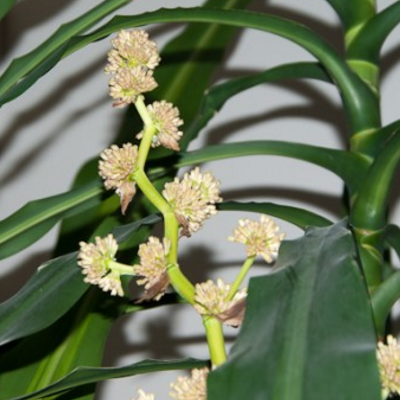
What to Do If Your Dracaena fragrans Grows Too Tall and Its Leaves Turn Yellow
Dracaena fragrans (corn plant) is a plant that huge numbers of people love, and it looks absolutely wonderful in the home. What should you do if your Dracaena fragrans grows too tall? What should you do if its leaves turn yellow: What to do if your Dracaena fragrans grows too tall: if your Dracaena fragrans grows too tall, then at this point you need to prune the plant.
条件筛选