How do you care for a white magnolia (Michelia alba) so it grows lush leaves and abundant flowers?
To make a white magnolia bloom abundantly,
① For pot cultivation choose loose, fertile, acidic soil with good drainage and aeration. You can use a growing medium made from leaf mold or peat soil plus 1/5 perlite, and add a small amount of bone meal as a base fertilizer. Because the white magnolia has fleshy roots, it fears waterlogging most of all, so you need to place a 3~4 cm thick drainage layer of granular furnace cinders or broken tile pieces at the bottom of the pot.
② In the north, after moving it outdoors in late April or early May, place it in a wind-sheltered, sunny spot to prevent spring wind and sand from damaging the leaves. In midsummer, when sunlight is intense, provide proper shade around midday, or move it to a spot with dappled shade from June to August.
③ During the peak growing season (May to September), apply a liquid fertilizer once every 1~2 weeks, and at the same time keep the potting soil consistently moist. Do not water too much, and do not let it lack water either, otherwise it is prone to root rot or scorched leaf edges. In summer, also pay attention to frequently spraying and washing the leaf surface and sprinkling water on the ground to keep the environment humid.
④ The white magnolia is not cold-tolerant. In the north it is usually moved indoors in early October and placed in a spot with ample sunlight. During the day the room temperature should be kept at around 12°C, and at night it should not drop below 5°C, otherwise it easily sheds leaves or even suffers cold damage, affecting the next year's growth and flowering. Just after being moved indoors, the leaves of the white magnolia still have relatively strong respiration, so watering should not be too little; if the potting soil is too dry, the roots and leaves easily wither. Around the winter solstice the white magnolia enters its dormant period, and watering should be controlled to prevent excessive water from causing root rot and leaf drop. In winter, stop fertilizing and pay attention to proper ventilation. During overwintering, also frequently spray and wash the branches and leaves with clean water close to room temperature to keep the leaf surface fresh and moist.
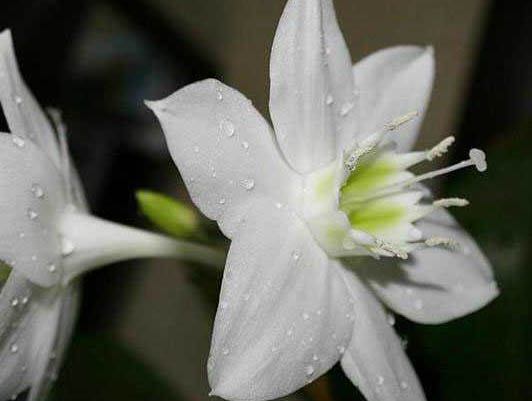
⑤ To maintain vigorous growth, repot once every 1~2 years in early spring. When repotting, do not trim the roots, but properly thin out and prune dead, weak, diseased and pest-infested branches to encourage more new shoots. When moving it outdoors, properly remove some old leaves from the lower parts of the branches; this also helps stimulate new shoots and more flowers. After the flowers fade, remove some more old leaves to encourage new shoots so that more flower buds can form. After late autumn, remove some more old leaves to reduce nutrient consumption and help it overwinter.
⑥ If yellow leaves are found, promptly spray with a 0.2% ferrous sulfate solution 2~3 times, and the leaves will gradually turn from yellow back to green.
How do you care for household potted flowers and plants in summer? What should you pay attention to?
Suitable light and prevention of sunscald
Light is the energy source for flowers to produce nutrients, so many flowers can only have abundant flowers and lush leaves under sufficient light conditions. But different flowers, or the same flower at different growth stages, have different light requirements, hence the gardening saying: “shade for camellias, sun for peonies, half shade half sun for four-season orchids.”
Generally, flowers that like ample light, such as Chinese rose, pomegranate, osmanthus, jasmine, plum blossom, peony, poinsettia, croton, chrysanthemum, dahlia, Aglaia odorata, white magnolia, hibiscus, crape myrtle, kumquat, aquatic flowers, and cacti, should be placed in a sunny spot after being moved outdoors in spring, but by midsummer they also need to be moved to a slightly shaded place to prevent intense sunlight from scorching them.
Generally shade-loving or strongly shade-loving flowers, such as orchids, Monstera deliciosa, spider plant, asparagus fern, camellia, rhododendron, ivy, gardenia, lucky bamboo, begonia, palm bamboo, nandina, Aspidistra, ferns, and clivia, should in summer be kept in a well-ventilated environment with 50-80% shade. If exposed to direct strong light, their branches and leaves will turn yellow and wither, or even die. For these flowers, in summer it is best to place them on an east- or north-facing balcony or windowsill; or place them indoors in a well-ventilated spot with bright scattered light; you can also build a shade shed with reeds or bamboo blinds and place the pots under it, which reduces light intensity and helps the flowers grow robustly.
Lower the temperature, increase humidity, and pay attention to ventilation
Temperature is an essential condition for flower growth. Because different flowers have long been influenced by the natural climate conditions of their places of origin, they have formed their own optimum, maximum and minimum temperatures. For most flowers, the suitable growing temperature is 20-30°C. In most regions of our country, the maximum summer temperature can reach above 30°C. When the temperature exceeds the maximum limit for flower growth, the normal life activities of the flowers are hindered, resulting in stunted plants, localized leaf scorch, reduced flower quantity, and shortened flowering period. For many kinds of flowers, the important reason they bloom little or not at all in summer is the effect of high temperature on their normal growth.
Flowers native to tropical and subtropical regions, such as Michelia figo, camellia, rhododendron, and orchids, have long grown under warm, humid maritime climate conditions and have developed a special ecological requirement for humid air during their growth. They generally require air humidity of no less than 80%. If this air humidity requirement can be met during care, they grow well; otherwise they easily show poor growth, dry leaf edges, and scorched young leaves.
Under household conditions, there are mainly the following 4 methods for lowering temperature and increasing humidity in summer:
(1) Spray water to lower temperature. In summer, while watering normally, according to the different air humidity requirements of different flowers, spray water on the branches and leaves 2-3 times a day, and at the same time sprinkle water on the ground around the flower pots 1-2 times.
(2) Spread sand to lower temperature. Spread a thick layer of coarse sand on a north- or east-facing balcony, then place the flower pots on the sand surface, and in summer sprinkle clean water on the sand surface 1-2 times a day. The moisture contained in the sand absorbs heat from the air, thereby achieving the purpose of lowering temperature and increasing humidity.
(3) Use a water trough to lower temperature. Place a piece of hard miscellaneous wood or a cement precast slab on top of a water trough filled with cold water, then place the flower pots on the board or cement slab, and add water once a day. As the water is heated it continuously evaporates, which can both increase air humidity and lower air temperature.
(4) Place the flower pots indoors in a well-ventilated spot with scattered light, spray clean water 1-2 times a day, and use an electric fan to blow air and lower the temperature.
Reasonable watering and proper fertilizing
In summer the temperature is high, evaporation is fast, and plant transpiration is also strong, so flowers need more water. Therefore, for most flowers, a sufficient water supply should be provided. As for how to manage summer watering? It should be determined according to the type of flower, the size of the plant, and the actual wet or dry condition of the potting soil. Generally, herbaceous flowers themselves contain more water and have high transpiration intensity, so they should be watered more; woody flowers can be watered somewhat less. Under normal circumstances, most flowers should be thoroughly watered 1-2 times a day. Never give only half-hearted watering, otherwise the leaves often curl and turn yellow, and over time the whole plant will wither and die.
In summer it is best to water flowers with rainwater, or first let tap water sit in the sun for 1 to 2 days. The best times to water are morning and evening, and never water with cold water at noon, because at that time the temperature is very high and the outside temperature can often reach around 40°C; not only is transpiration strong, but water also evaporates quickly. A sudden shock of cold water turns the leaf surface cells from a turgid state to a wilted one, causing the leaves to scorch, and in severe cases causing the entire plant to die. This phenomenon is especially obvious in some herbaceous flowers. If cold water is poured at noon in hot summer during the early stages of flower bud formation, flowering, and fruit setting, it can also easily cause bud drop, flower drop, and fruit drop.
What especially needs to be mentioned here is: in hot summer, because the soil temperature is high, after a shower you must water promptly to flush out the high humidity and stuffiness in the potting soil and lower the potting soil temperature; if rainwater accumulates in the pot after a heavy rain, it should be poured out immediately, or use a bamboo skewer to poke several small holes in the potting soil (be careful not to damage the roots) to let the water flow out through the drainage hole at the bottom of the pot, so as to avoid root rot.
For fertilizing potted flowers in summer, one should grasp the principle of “light fertilizer applied frequently.” Too high a fertilizer concentration easily causes root rot. For generally vigorously growing flowers, apply a dilute liquid fertilizer about once every 10-15 days. Fertilizing should be done on sunny days when the potting soil is relatively dry, because fertilizing in wet soil easily causes root rot. The best time to fertilize is in the evening after it has gradually cooled. Water once the day after fertilizing. The type of fertilizer varies with the flower. Acid-loving flowers, such as camellia, rhododendron, white magnolia, gardenia, and jasmine, avoid alkaline fertilizers and should be given acidic or physiologically acidic fertilizers, such as superphosphate, ammonium sulfate, ammonium nitrate, and ferrous sulfate. When flowers enter the flower bud differentiation and bud formation stage, it is suitable to apply more phosphorus and potassium fertilizers to promote more flowering. For foliage-oriented flowers, it is suitable to apply more nitrogen fertilizer to promote emerald-green leaf color. For bulbous flowers, more potassium fertilizer should be applied to help the bulbs plump up. For large-flowered and long-flowering plants such as dahlias, during the bud formation and flowering period a moderate amount of complete fertilizer is needed so that all the flowers can open and be beautiful in shape and vivid in color. For fruit-oriented flowers, during the flowering period fertilizer and water should be properly controlled, and during the fruit-swelling period a sufficient complete fertilizer should be applied, so that the fruits are large and numerous.
During the care of potted flowers, if the plant is found to be stunted, thin and weak, with small branches and pale yellow leaves, this is a sign of nitrogen deficiency, and nitrogen fertilizer should be supplemented promptly; if the plant grows slowly, the leaves curl, the plant is stunted, and the root system is underdeveloped, this is mostly caused by phosphorus deficiency, and a fertilizer mainly based on phosphorus should be supplemented. If the leaf edges and leaf tips turn yellow (old leaves first, then new leaves) and then turn brown and fall off, and the stems are soft and bend easily, this is mostly caused by potassium deficiency, and potassium fertilizer should be applied.
Getting dormant flowers safely through summer
Some flowers, such as cyclamen, fuchsia, four-season begonia, narcissus, geranium, Caladium bicolor, clivia, freesia, gloxinia, tulip, and Epiphyllum, enter a semi-dormant or dormant state when the high-temperature summer season arrives, showing slowed or paused growth in order to resist the harm of adverse external environmental conditions. To help these flowers safely pass through the summer dormancy period, corresponding measures must be taken to care for them meticulously according to their physiological characteristics during dormancy. The main measures are:
(1) After early summer, move dormant flowers to a cool and ventilated place, avoiding direct sunlight and preventing rain, otherwise root rot and even death easily occur;
(2) Strictly control watering. During dormancy, too much watering and long-term wet potting soil very easily cause root rot, while too little watering and too dry potting soil easily cause the root system to shrink. Therefore, watering should be kept at a level that keeps the potting soil slightly moist. However, it is necessary to frequently spray water on the branches and leaves and sprinkle water on the ground around the flower pots to create a moist, cool microclimate, which is beneficial for dormancy. But for flowers such as gloxinia that have dense fine hairs on the leaf surface, and for cyclamen whose flower buds are sensitive to water and moisture, it is not suitable to spray water on the leaf surface or the center of the leaves;
(3) Stop applying any fertilizer. Because during dormancy the physiological activities of the flowers are extremely weak, they do not need fertilizer. If fertilizer is applied, it can also easily cause root rot, bulb rot, and even the death of the whole plant.
Pruning and shaping to prevent leggy growth
Many flowers, after entering summer, often tend to grow leggy, affecting flowering and fruiting. To keep the plant shape beautiful and produce many flowers and abundant fruit, pruning and shaping are needed. Summer pruning generally mainly consists of measures such as pinching, bud removal, leaf removal, bud thinning, and fruit thinning.
(1) Pinching. For some herbaceous flowers, such as four-season begonia, fuchsia, scarlet sage, chrysanthemum, Dutch aster, and early small chrysanthemum, when they grow to a certain height, pinch off their tips to encourage more branching and more flowering. For some woody flowers, such as kumquat, when the current year's branches grow to about 15-20 cm, they should also be pinched to promote more fruiting.
(2) Bud removal. In summer, many flowers often sprout adventitious buds from the base of the stem or on the branches; these should be removed promptly to avoid consuming nutrients and disturbing the plant shape.
(3) Leaf removal. For some foliage flowers, old leaves should be properly cut off to stimulate new leaves, so the leaf color becomes even more beautiful.
(4) Bud thinning and fruit thinning. For flower-oriented flowers, such as dahlia, chrysanthemum, and Chinese rose, excess flower buds should be thinned promptly; for fruit-oriented flowers, such as kumquat, pomegranate, and bergamot, when the young fruits grow to the size of soybean grains, the excess young fruits should be thinned; for some flowers that cannot set seed or for which seed collection is not planned, the faded flowers should be cut off promptly after flowering.
(5) Shaping. For flowers such as poinsettia, plum blossom, ornamental peach, and crown of thorns, in summer the various side branches are often bent and shaped to make the plant shape full and beautiful.
Comprehensive control of diseases and pests
In summer the temperature is high and the humidity is great, which favors the massive occurrence of diseases and pests. The policy of “prevention first, comprehensive control” should be carried out, and in the spirit of “treat early, treat small, treat thoroughly,” do a good job of prevention and control to ensure the robust growth of flowers.
(1) Common summer diseases include powdery mildew, anthracnose, gray mold, leaf spot, nematode disease, and bacterial soft rot. Powdery mildew mainly harms Chinese rose, plum blossom, peony, chrysanthemum, dahlia, begonia, cineraria, and fuchsia. After being affected, the plant is stunted, the young shoots bend, and the leaves are uneven or curled. On the young buds, young leaves, young shoots and flower buds, it is as if a layer of white powder covers them and many small black spots grow; in severe cases the leaves shrink and dry up, and even the whole plant dies. Anthracnose mainly harms orchids, white magnolia, Aglaia odorata, plum blossom, rubber tree, and cacti. After most flowers are infected by the pathogen, nearly round disease spots appear on the leaf surface, with edges mostly purplish brown or dark brown and centers pale brown or grayish white, and small black spots arranged in concentric rings often grow on the disease spots. When the disease is severe, the leaves wither and die. Gray mold mainly harms peony, Chinese peony, cyclamen, begonia, and fuchsia. The affected parts of leaves, stems, and flowers show brown or purplish brown rot, and when the weather is humid, gray mold-like substances grow on the disease spots; in severe cases the whole plant dies. To control the above three diseases, the following methods can be used: ① In early spring thoroughly remove dead branches and fallen leaves, and promptly cut off diseased branches, leaves, and buds and destroy them together to reduce sources of the pathogen; ② Strengthen cultivation management, fertilize and water reasonably, pay attention to ventilation and light transmission, so that the plants grow robustly and improve disease resistance; ② In the early stage of disease, spray 50% carbendazim or 50% thiophanate-methyl 500-800 times solution.
(2) Common summer pests fall into two major categories: piercing-sucking mouthpart pests and chewing mouthpart pests. The former mainly include aphids, red spiders, whiteflies, and scale insects. These pests often gather in groups on leaves, young stems, flower buds, branches and other parts, piercing into the flower body with their needle-like mouthparts to suck sap, causing leaves to turn yellow and curl, and leading to withered yellow leaves that fall off. For control, spray 50% dichlorvos emulsion 1000-1500 times solution. This pesticide easily causes phytotoxicity to flowers such as plum blossom, cherry blossom, rhododendron, and elm-leaved spirea, so it must not be used on these flowers. The latter mainly include moth and butterfly larvae, various beetles, and underground pests. These pests eat the leaves, bite the roots, and cause the plant to wither and die. For control, spray 50% dichlorvos emulsion 1000-1500 times solution, or drench the root zone with 500-800 times solution. In summer the temperature is high, pesticides volatilize easily, and in addition at high temperatures the human body's excretion function is enhanced and skin absorption increases, so toxic substances easily enter the human body and cause poisoning. Therefore, when applying pesticide in summer, it is best to move the flower pots outdoors and do it in the morning and evening.
The importance of light to flowers and plants
Magnolia
In the vast majority of articles on flower cultivation, the question of whether light is sufficient is mentioned, because flowers and plants cannot do without light when carrying out photosynthesis, and many flowers and plants can only have lush branches and leaves under sufficient light conditions. However, light plays a key role in the healthy growth of flowers and plants, so below let us understand in detail the importance of light to flowers and plants!
1. Different flowers have different light requirements
1. Sun-loving flowers
Most flower-viewing and fruit-viewing flowers belong to the sun-loving category, such as Yulan magnolia, Chinese rose, pomegranate, plum blossom, crape myrtle, and citrus. Among foliage flowers there are also a few sun-loving ones, such as sago palm, palm, and croton. Most aquatic flowers, cacti, and succulents also belong to the sun-loving category. All sun-loving flowers like strong light and cannot tolerate shade. If sunlight is insufficient, it easily causes leggy branches and leaves, soft and weak tissues, pale and yellowing leaf color, difficulty in flowering or poor flowering, and susceptibility to diseases and pests.
2. Shade-loving flowers
These grow well under shaded environmental conditions, such as asparagus fern, camellia, rhododendron, hosta, pothos, lucky bamboo, ivy, gloxinia, Monstera deliciosa (detailed introduction), and begonia. If kept under strong light for a long time, their branches and leaves turn yellow and wither, growth stagnates, and in severe cases they even die.
3. Neutral flowers
These grow well under sufficient sunlight, but when light intensity is great in summer, they should be slightly shaded, such as osmanthus, jasmine, white magnolia, and hydrangea. In summary, various flowers have different light requirements, and even the same flower has different light requirements at different growth and development stages; seedlings can gradually increase their light requirement, while sun-loving chrysanthemums require short-day conditions to form flower buds.
Redbud
2. Light affects the growth and development of flowers
1. The intensity of light determines the opening time of certain flowers. For example, the flowers of purslane and wood sorrel only open at noon on sunny days. Evening primrose, jasmine, and tuberose only give off fragrance in the evening. And the beautiful flowers of Epiphyllum exude fragrance at night. Morning glory is most beautiful at the moment of sunrise in the early morning.
2. The intensity of light affects flower color. The flower colors of alpine tropical flowers are more vivid than those of flowers on the plains. For the same flower variety, the flower color outdoors is more gorgeous than indoors.
3. The length and intensity of light also affect the germination of flower seeds. For example, seeds of primrose and begonia are called photoblastic seeds, and they germinate better under exposure to light (without covering with soil), but after sowing, Philodendron must be covered with soil and cannot germinate under light conditions. Light also affects the formation and growth of the vegetative organs of flowers and trees, and the dormancy of flowers, etc.
Therefore, to care for any kind of flower or plant, you must first understand its growth habits, and must not blindly give it what you think it needs. Only by providing it reasonably can you grow flowers and plants with abundant blooms, lush leaves, and delightful fragrance.