Amaryllis only grows leaves and won't bloom, and the leaves are too long - what should I do?
Amaryllis (Hippeastrum) is a plant that is very easy to grow and super beautiful, and it also has another name, duilan. What should I do if amaryllis only grows leaves and won't bloom? What should I do if the amaryllis leaves are too long:
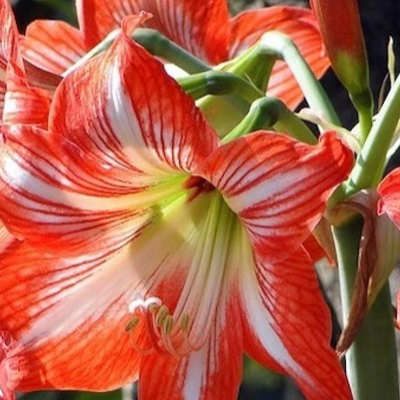
What should I do if amaryllis only grows leaves and won't bloom:
1. Not old enough:
Amaryllis can be propagated in two ways: by seed and by division. Seed propagation generally takes 2 to 3 years before it blooms, so during this period it will only grow leaves.
Solution: We can observe the bulb at its base. If it exceeds 5 cm, then it will bloom during its flowering season.
2. Insufficient nutrients:
When a plant blooms, it needs a large amount of nutrients. If nutrient supply is insufficient at this time, it is very difficult for it to bloom, and it will only grow branches and leaves. Although its base can store a large amount of nutrients, that is far from enough for its flowering period;
Solution: Do a good job of nutrient supplementation before and during flowering. At the same time, it is recommended not to grow multiple plants in one pot, as this will greatly reduce the effect after fertilizing.
3. Planted too deep:
When planting amaryllis, if its base is buried too deep in the soil, there is almost no extra air in the soil. This will prevent the roots from breathing freely, which will greatly reduce its growth rate;
Solution: The normal planting method is to bury 2/3 of the base in the soil and leave 1/3 exposed above the soil surface.
4. Too much nitrogen fertilizer:
During fertilizing, if the nitrogen fertilizer content is relatively high, it can effectively promote more robust leaf growth in the plant, but it just will not bloom.
Solution: When summer arrives, use potassium fertilizer for fertilizing, or use potassium fertilizer as the main fertilizer. In spring, use nitrogen fertilizer, but also pay attention to the fertilizer concentration.
What should I do if amaryllis leaves are too long:
1. Summer pruning
In summer, no matter how long the amaryllis leaves grow, do not cut them. Cutting the leaves is equivalent to doing more harm than good.
In early summer, amaryllis is in the flower bud differentiation stage and needs a relatively large amount of nutrients itself. If at this time you dislike the leaves being too long and prune them, and fertilizing cannot keep up, it will affect the plant's growth and even its flowering.
In midsummer, with sufficient sunlight and suitable temperatures, amaryllis is in its vigorous growth period. The more leaves there are, the more nutrients the plant produces through photosynthesis, the healthier the plant, and the more favorable it is for blooming next year.
2. Amaryllis winter pruning
Absolutely do not prune.
Fellow flower growers may have this question: after the flowers fall in winter, don't such long leaves consume nutrients? The truth is not what everyone sees.
If you do not divide the plant or force flowering at this time, keep the leaves as much as possible and wait for them to fall naturally. This is because before amaryllis goes dormant, the leaves will still carry out photosynthesis and accumulate nutrients. The longer the leaves remain, the more favorable it is for the growth of the bulb.
That is all for the introduction to amaryllis leaf problems. It is not easy to grow these flowers well.
What should I do if amaryllis only grows leaves and won't bloom
Reason 1: Not old enough:
Amaryllis can be propagated in two ways: by seed and by division. Seed propagation generally takes 2 to 3 years before it blooms, so during this period it will only grow leaves.
Solution: We can observe the bulb at its base. If it exceeds 5 cm, then it will bloom during its flowering season.
Reason 2: Insufficient nutrients:
When a plant blooms, it needs a large amount of nutrients. If nutrient supply is insufficient at this time, it is very difficult for it to bloom, and it will only grow branches and leaves. Although its base can store a large amount of nutrients, that is far from enough for its flowering period;
Solution: Do a good job of nutrient supplementation before and during flowering. At the same time, it is recommended not to grow multiple plants in one pot, as this will greatly reduce the effect after fertilizing.
Reason 3: Planted too deep:
When planting amaryllis, if its base is buried too deep in the soil, there is almost no extra air in the soil. This will prevent the roots from breathing freely, which will greatly reduce its growth rate;
Solution: The normal planting method is to bury 2/3 of the base in the soil and leave 1/3 exposed above the soil surface.
Reason 4: Too much nitrogen fertilizer:
During fertilizing, if the nitrogen fertilizer content is relatively high, it can effectively promote more robust leaf growth in the plant, but it just will not bloom.
Solution: When summer arrives, use potassium fertilizer for fertilizing, or use potassium fertilizer as the main fertilizer. In spring, use nitrogen fertilizer, but also pay attention to the fertilizer concentration.
What should I do if amaryllis leaves are too long? No matter how long they grow, do not prune them
What should I do if amaryllis leaves are too long? 1. Amaryllis leaves grow long in summerIn summer, no matter how long the amaryllis leaves grow, do not cut them. Cutting amaryllis leaves in summer is equivalent to doing more harm than good.
In early summer, amaryllis is in the flower bud differentiation stage and needs a very large amount of nutrients itself. If at this time you dislike the amaryllis leaves being too long and cut them off, it will affect the growth and even the flowering of the amaryllis plant.
In midsummer, with sufficient sunlight and suitable temperatures, amaryllis is in its vigorous growth period. The more amaryllis leaves there are, the more nutrients the plant produces through photosynthesis, the healthier the plant, and the more favorable it is for blooming next year.
In addition, generally the total number of leaves on a single amaryllis plant should not be less than 5 to 6. The more the better; the more leaves there are, the more favorable it is for blooming the following year.
2. Amaryllis leaves grow long in autumnGenerally, autumn is the final growth period for amaryllis. Since amaryllis is potted, its leaves may grow too long. You can find a way to tie and secure them, but try not to choose to forcibly cut off the amaryllis leaves.
3. Amaryllis leaves grow long in winterIn winter, amaryllis leaves should likewise not be pruned. After the flowers fall in winter, such long leaves are not consuming nutrients. At this time, you can generally divide the plant or force flowering, and keep the leaves as much as possible and wait for them to fall naturally.
This is because before amaryllis goes dormant, the leaves will still carry out photosynthesis and accumulate nutrients. The longer the leaves remain, the more favorable it is for the growth of the bulb.