-
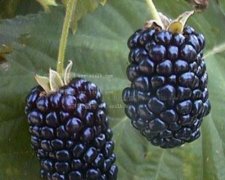
Introduction to blackberry growing conditions and cultivation techniques: are blackberries easy to grow?
Blackberries planted in the same year can bear fruit in that same year, and generally enter the full-production period in the 3rd year, with yield per mu stabilizing at around 1750 kg. They are rich in sugar, fruit acids and various vitamins, and also contain various mineral elements, with effects such as anti-aging and improving human immunity. So how are blackberries
-
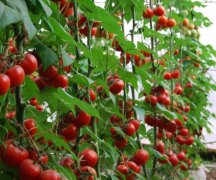
Tomato Growing Methods and Tips: Why the Bottom Turns Black and Planting Precautions
How should tomatoes be grown? Why does the bottom of a tomato turn black? What are the planting precautions and tips? Want to find out? Then let's take a look together! Tomato Growing Methods The tomato, which is both a vegetable and a fruit, is a produce many people love, and it has an extremely large number of varieties, so here is a brief
-

What is the black stuff growing on corn
Corn is one of China's important food crops, grown all over the country. As a cash crop, growers may have encountered tumor-like growths about 4-14 cm on corn. At first they are white, and later they turn gray or white. When broken open, a large amount of black powder comes out.
-
What to Do When Adiantum Leaves Wither: How to Handle Spores Growing and Turning Black on the Underside of Adiantum Leaves
Adiantum (maidenhair fern) is a plant that likes warmth and cannot tolerate strong light, and it is distributed in many places in our country. It is now a fairly popular houseplant, but if improper management occurs during cultivation, it can cause the leaves to wither or turn black.
-
A Detailed Guide to Blackberry Propagation Methods: Teaching You How to Grow Blackberries Well
Blackberries can be propagated by methods such as cuttings, layering, root sucker division, and tissue culture. At present, hardwood cuttings and root sucker propagation are mainly used, and where conditions permit, softwood cuttings can also be used. 1. Hardwood cuttings. During winter pruning (after leaf fall in December), cut vigorous, plump, disease-free and pest-free branches into cuttings 8-12 cm long with 2-3 buds, and store them in sand. In early spring before budbreak (around mid-February), insert the cuttings. Bury the cuttings 3-5 cm into the soil, planting 40-50 cuttings per square meter. After inserting, water thoroughly and cover with rice straw, then keep the soil moist regularly. With good management, the survival rate can reach 40-50%, and at best over 60%, and the plants can be lifted from the nursery in the same winter. After the cutting-propagated seedlings are lifted from the nursery, many root segments remain in the soil and can be used to continue propagating seedlings. The specific method is to apply a small amount of organic fertilizer to the nursery bed in winter, shallowly turn it once to press the fertilizer into the soil, prepare the land and make beds in early spring, water once during drought, and by April a large number of root sucker seedlings will sprout. Leave about 20 seedlings per square meter, and thereafter manage them the same as in a general nursery.</p><p>2. Softwood cuttings. From mid-July to early August, carry out softwood cuttings under shade frames and full-automatic misting conditions. Use peat and sand mixed at 1:1 for the cutting bed soil. Roots can form 7-10 days after insertion, and the survival rate can be as high as 80-90%. After 1 month, move them to open ground, strengthen management, and they can be lifted from the nursery the following spring.</p>
-
Control methods for the blackberry pest, the sloe bug (Dolycoris baccarum)
Blackberry is one of the third-generation fruits recommended to the world by the Food and Agriculture Organization (FAO) in 1993. In 1995, the Xingnong Seed Company of Xuecheng District, Zaozhuang City, Shandong Province, successfully introduced it from the United States, and in 1997 it was listed by the Municipal Science and Technology Commission and the Municipal Finance Bureau as a key agricultural extension project. Because of its good nutrition
-
How to prevent and control grape black pox disease? Key points for disease prevention when growing grapes
Grape black pox disease is also known as scab and bird's eye disease. Common names include toad's eye, liulong, and black spot. This disease is an important disease of grapes. It generally begins to occur in mid-to-late April, with the peak period from mid-to-late May to early June, and it is severe in rainy seasons. Throughout Shanxi Province
-
How to Grow Black Bean Sprouts? A Complete Guide to the Growing Technique
Select some high-quality black bean seeds, wash them 2-3 times in 30-degree water, then soak them overnight, remove and rinse them, spread them evenly on a seedling tray, then cover them with paper and place them in a cool spot. During this period, sprinkle water once every morning and evening; in hot summer weather, you can increase
-
A Detailed Guide to Growing Black Bean Sprouts at Home
Nowadays there are more and more varieties of sprouts, no longer limited to mung beans and soybeans, and the nutritious black bean sprouts have won the favor of many people. Black bean sprouts are high in protein and have a very crisp, tender taste, and you can grow them at home too. Below is a detailed explanation.
-
Suitable Growing Regions for Black Apples and Why They Are So Expensive
Black apple is a new variety of apple, and because of its striking color and demanding growing conditions it has high market value, but due to regional issues it cannot be grown just anywhere, so where are black apples suitable for growing? Why are they so expensive? Black ap
条件筛选