Tomato Growing Methods and Tips: Why the Bottom Turns Black and Planting Precautions
How should tomatoes be grown?Why does the bottom of a tomato turn black?What are the planting precautions and tips? Want to find out? Then let's take a look together!
Tomato Growing Methods
The tomato, which is both a vegetable and a fruit, is a produce many people love, and it has an extremely large number of varieties, so here it is simply divided into large-fruited and small-fruited (cherry tomato); it can be grown all year round, with the peak season falling between early autumn and late spring.
Tomatoes are suited to loam or somewhat clayey soil and should be raised as seedlings first; the seeds sprout about 3-5 days after sowing, and the seedlings can be transplanted once they are about 10-15 cm tall.
Tomatoes need large amounts of fertilizer; when growing in flower pots it is best to use pots of 10 inches or more, plant 1 plant per pot, and fertilize once a week,
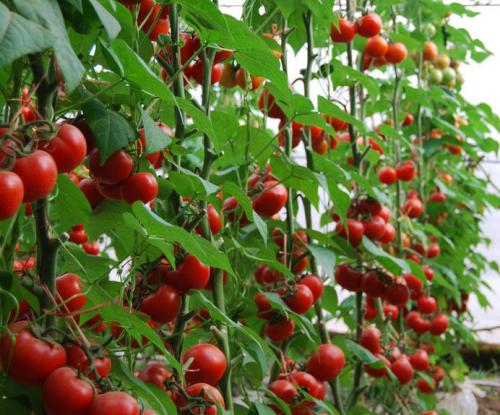
The main stem is easily blown over by wind when it is 30 cm to 60 cm tall, so it needs support; with water management, attention must be paid to drainage, and it must not be waterlogged for long periods; simply water when the soil is slightly dry; the mature plant is about 1-2 m tall. After flowering, a common problem is difficulty in setting fruit; it is recommended to pollinate the flowers once each time you see them bloom (pollinating means hand pollination), and the yield will increase greatly; continuous weekly fertilizing can extend the production period. Generally speaking, tomatoes can be harvested in two cycles, and with proper management the yield can be as expected.
Tomatoes have quite a few pests and diseases; under the principle of not spraying pesticides, first note that tomatoes dislike continuous cropping, and after a second planting of tomatoes in the same plot of land, pests and diseases will be more numerous than in the first planting; also, proper water management can prevent or reduce the occurrence of pests and diseases.
Why does the bottom of a tomato turn black?
1. The bottom of a tomato turning black is blossom-end rot (also called navel rot), and is a sign of calcium deficiency.
2. You can spray 200-fold calcium chloride; in severe cases, spray once every 3 days, for 2~3 consecutive sprays.
3. Do not apply too much nitrogen fertilizer, so as to avoid hindering the absorption of calcium.
4. Before soil preparation, you can apply organic fertilizer containing high calcium.
Planting Precautions and Tips
Generally, the most suitable light range for tomatoes is 50-80klux; tomatoes like warmth, and the suitable temperature for fruiting is 19-24°C; when the temperature is too high, especially when the night temperature is too high, it easily causes serious flower drop, resulting in poor fruit set, or even incomplete fruit set or smaller fruit. When the temperature is too low, growth is slow, and there is no resistance to frost damage.
The suitable temperature for the development of the red 'lycopene' in tomato fruit is around 19-24°C. When the temperature exceeds 30°C, development is poor, the fruit colors poorly, and it does not turn red but instead orange-yellow.
Day length has no significant relationship with tomato flower bud differentiation, but light intensity does affect flower bud development; when light intensity is low and weak, it easily causes leggy growth and flower drop, and diseases also occur easily, and the fruit does not easily plump up.
A warm climate with a large temperature difference between day and night, drought, scarce or no rainfall, low humidity (relative humidity 30-50%), and sufficient sunlight are the better conditions.
Greenhouse management is very important; if there is a water wall, pay attention to it, and avoid too large a flow of water from the water wall, which sprays out and causes water accumulation, easily leading to plant diseases.