Introduction to blackberry growing conditions and cultivation techniques: are blackberries easy to grow?
Blackberries planted in the same year can bear fruit in that same year, and generally enter the full-production period in the 3rd year, with yield per mu stabilizing at around 1750 kg. They are rich in sugar, fruit acids and various vitamins, and also contain various mineral elements, with effects such as anti-aging and improving human immunity. So how are blackberries cultivated?
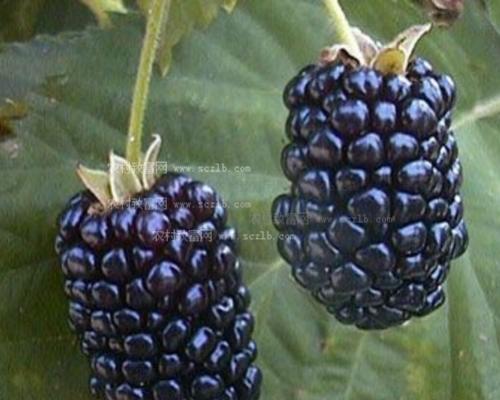
Seedling raising: Blackberry propagation is extremely easy, mainly by cuttings. Choose a place with fertile soil, cool and slightly moist but not waterlogged as the nursery site for best results. Select mature new branches, leave 2 buds, cut them off and insert them as cuttings. The cutting time is from December to January. If water and fertilizer management is strengthened, cuttings taken in the same year can produce very well-growing young seedlings in that same year, with branching reaching 4 to 5 shoots and a height of more than 2 m. Some mature branches can bear fruit in the same year they are cut, but the fruit quality is poor.
Orchard site selection: For the orchard site, choose a sandy loam soil with sufficient sunlight, convenient drainage and irrigation, and fertile, loose soil. Although blackberries grow better in cool, moist places, this has a slight effect on their quality, especially the sugar-acid ratio.
Water and fertilizer management: Fertilize 4 times throughout the year. In October, apply base fertilizer, mainly organic fertilizer, superphosphate, coke mud ash or rapeseed cake. At the end of January, apply pre-bud fertilizer, mainly imported compound fertilizer. In mid-to-late July, apply topdressing, mainly quick-acting nitrogen fertilizer (diluted human manure or urea). Pay attention to drainage in the orchard, and try to keep the orchard dry during the fruit ripening period, which helps increase the sugar-acid ratio.
Harvesting: Pinching Because the new shoots sprouting from the root crown of blackberries are the fruiting mother branches of the second year, and their growth is extremely vigorous, regular pinching should be carried out to promote their maturation and branching. For branches that have already borne fruit in the current year, in order to reduce nutrient consumption, they can be cut off from the base in August to September after fruiting, so as to concentrate nutrients and cultivate new shoots, and attention should be paid to regularly tying new shoots.
Pruning: Winter pruning The pruning period is from December to late January, and according to the degree of maturity of the new shoots (fruiting mother branches), leave 8 to 20 buds and shorten them. The general pruning principle is mainly light pruning, with fruiting mother branches spaced 50 cm apart on the trellis, and excess ones removed.
Trellising: Trellising should begin immediately after blackberries are planted, with the trellis height at 1.8 to 2 m, and either a hedge trellis or a shed trellis can be used. The new shoots should be distributed on the trellis surface at 30 cm apart, so that they do not overlap.
Cultivation is mainly based on the six points introduced above. Now you know how blackberries should be cultivated, right? If you want to grow them, then get started right away.