-

How to prevent and treat goose flu? These methods must be mastered
Epidemiology Goose influenza, abbreviated as goose flu, is an acute systemic or respiratory infectious disease caused by certain pathogenic serotype strains of type A influenza virus, occurring mainly in goslings within 30 days of age. In recent years, the incidence of goose flu has gradually increased, mostly due to sudden climate changes, poor feeding and management, and goslings catching cold and becoming infected. The mortality rate is generally 50%-90%. Clinical symptoms are mostly seen in the acute type; affected geese suddenly fall ill, with depression, ruffled feathers, drooping wings, and elevated body temperature.
-
What to Do If a Goose Gets Echinostomiasis? Detailed Prevention and Treatment Measures
Goose echinostomiasis is a parasitic disease caused by Echinostoma revolutum parasitizing the rectum and ceca of geese. Affected geese show diarrhea, anemia, emaciation, hemorrhagic enteritis and other changes, and severe cases can cause death. Geese, ducks and many other poultry can be infected. It is widely prevalent in China and is extremely harmful to young chicks. (1) Pathogen characteristics. Pathogen. The pathogen of echinostomiasis is Echinostoma, belonging to the family Echinostomatidae. There are many species of Echinostoma; nearly 120 species of this family have been found in China.
-
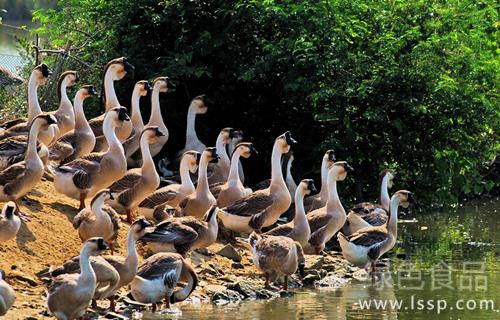
The goose is completely paralyzed with a drooping head and weakness; how to prevent botulism poisoning?
The goose is completely paralyzed with a drooping head and weakness; how to prevent Clostridium botulinum poisoning in geese
-
The integrated fish-goose farming model can increase economic returns by 30%.
Integrated fish-goose farming is a three-dimensional ecological farming model that combines poultry rearing with fisheries management. According to comparisons, under the same conditions, integrated fish-goose farming increases economic returns by about 30% compared with raising fish or geese separately. 1. Benefits of integrated fish-goose farming. 1. Geese are fully automatic, energy-saving and highly efficient aerators for fish ponds. In integrated fish-goose farming, farmers do not need to worry about oxygen depletion in the water caused by weather changes, because whenever the weather changes, the geese will scramble to jump into the water to bathe and chase each other, churning up splashes, which has a particularly good oxygenating effect on the fish pond.
-
The layout of a goose farm requires careful consideration; only scientific planning allows for successful goose rearing
1. Site selection. The site should be close to a water source, with the water surface as wide as possible, a water depth of 1-2 m, and good water quality, and a bit far from residential areas; the soil is best if it is sandy loam, with convenient transportation and a south-facing orientation. 2. Scale determination. The production scale is determined by investment capacity, rearing conditions, technical strength, sources of goslings, and product @#@136@#@, etc. Only by achieving batch production can greater rearing benefits be obtained. 3. Overall planning. First, the buildings should be divided into a production area and an administrative area and living area, with the two areas separated by more than 50 m and separated by a wall. Production
-
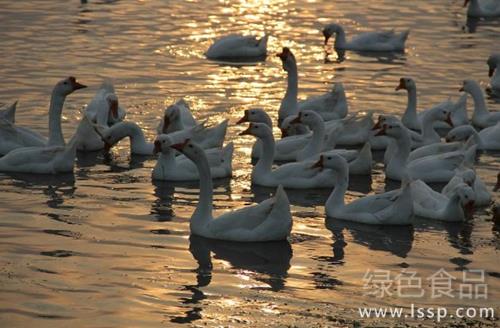
Master the key technical points of winter goose fattening, get good returns by marketing before the Spring Festival
Good returns from marketing winter geese before the Spring Festival; key technical points of winter goose fattening
-
Autumn Fattening of Geese Is in Season, Goose Farmers Should Not Miss the Good Timing
Autumn weather is cool, green grass is abundant, and there is plenty of by-product after the autumn harvest, making it the best season for fattening meat geese. During this period, after 20 to 25 days of fattening, geese can generally gain 1.5 kg to 2.2 kg. For breed selection, choose meat-type hybrid breeds such as Lion Head geese and Xupu geese that are over 70 days old, lively, with glossy feathers, good at foraging, healthy and disease-free. Fattening methods: 1) Grazing fattening. During the day, drive the flock of geese to harvested fields to let them eat leftover grain heads, grass seeds, etc., and after returning to the shed at night, feed them 1 to 2 more times with concentrated feed and provide clean drinking water. 2) Shed fattening. Build a rack with bamboo or wooden sticks, with the rack 0.6 m to 0.7 m above the ground to make manure cleaning easier. Put 5 geese per square meter, make a small pen around them, place the feed trough and water trough outside the pen, and let the geese stretch their heads through the gaps to eat and drink. 3) Pen fattening. Use bamboo or reed stalks to enclose small pens, with 3 to 5 geese per pen. The height of the enclosure should be such that the geese can stand but not raise their heads. Place the feed trough outside the pen and let the geese eat and drink through the gaps. During pen raising, the shed should be quiet, grazing should not be done, activity should be restricted, and energy consumption should be reduced. For shed fattening and pen fattening, the feed should be diversified and combine concentrated and green feed. It can mainly consist of rice bran, broken rice, corn, blighted grain, vegetable leaves, etc., plus about 6% cake-type feed, 0.3% table salt, and concentrated feed ground fine, mixed into a wet feed for feeding, 5 to 7 times a day, with 1 to 2 additional feedings at night. In addition, adding 19 g manganese sulfate, 17 g zinc sulfate, 12 g ferrous sulfate, 2 g copper sulfate, 0.7 g potassium iodide, and 0.1 g cobalt chloride to every 100 kg of concentrated feed can increase weight gain by about 20%. However, when mixing the feed, it must be mixed evenly to prevent individual geese from being poisoned by eating too much. 4) Forced fattening. Mix powdered feeds such as corn, sweet potato, rice bran, and soybean cake with an appropriate amount of table salt and trace elements, add water and mix well, make strips 1 cm to 1.5 cm thick and 6 cm long, and after drying in the shade, manually stuff them into the goose's esophagus. When force-feeding, clamp the goose's body between your knees, grasp the goose's head with your left hand, open the goose's beak, dip a feed strip in water with your right hand, and use your index finger to stuff the feed into the esophagus. After each strip is inserted, gently push along the goose's neck with your hand to help it swallow. Feed 4 to 6 times a day, with 1 feeding at night. The amount of forced feeding depends on the goose's weight and digestive capacity. One hour before feeding, if a groove appears at the swollen part of the esophagus, digestion is normal; if it appears earlier than 1 hour before feeding, more feed is needed; if it appears later than 1 hour before feeding, reduce the feed or delay the feeding time. When force-feeding, also be careful to prevent the feed strip from being inserted into the trachea. In addition, attention should be paid to supplying sufficient clean drinking water.
-
Several key technical points to note in rural electric goose incubation
Because goose farming can make full use of the abundant pasture resources in rural areas, consumes little concentrated feed, grows quickly, is easy to manage, and yields good rearing benefits, rural goose farming is currently showing a momentum of vigorous development. Correspondingly, the incubation of goslings has gradually developed from the traditional kerosene lamp and beach-bed incubation of the past to electric incubation in household workshop-style incubation rooms. However, because most incubation rooms do not have a good grasp of incubation techniques, the incubation results are not very ideal, and some incubation rooms even have lower hatch rates than traditional incubation methods. In response to this situation, the author specifically proposes the following
-
Detailed Explanation of Prevention and Treatment Methods for Major Goose Diseases
Currently, the diseases that seriously harm the goose industry mainly include: gosling plague, egg-drop plague, goose paramyxovirus disease, and goose avian influenza, etc. I. Gosling Plague Gosling plague is an acute septicemic infectious disease caused by the gosling plague virus, mainly affecting goslings within 20 days of age, with a mortality rate as high as over 90%. Only a few goslings over three weeks of age are affected, and goslings over one month of age are basically unaffected. (I) Clinical Features The typical symptoms seen clinically are: sick geese separate from the flock and stay alone, with ruffled feathers and retracted neck, closing their eyes in a drowsy state
-
Huoyan Goose Breed Introduction: One of the Main Goose Breeds
1. Morphological Characteristics The Huoyan goose is relatively small in size, with an orange-red caruncle on its forehead that has a smooth surface. The beak is orange-red. Its most distinctive feature is its eyes: the Huoyan goose has triangular eyes, with a notch in the upper eyelid. There is a throat pouch under the jaw, and the neck is long and arched. The front body is upright and held high. The female goose has a full, drooping abdomen. The Huoyan goose has white body feathers and orange-red feet. 2. Origin and Distribution It originated in the Laiyang area of Shandong, and later became widely distributed in Changtu in Liaoning, Tonghua in Jilin, and Yanshou in Heilongjiang, among other places.
条件筛选