-
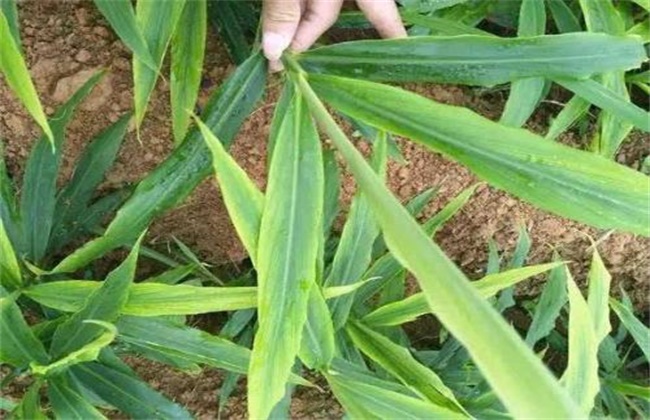
What are the causes of dry tips and yellow leaves in ginger and what are the control measures?
Causes of dry tips and yellow leaves in ginger and control measures
-
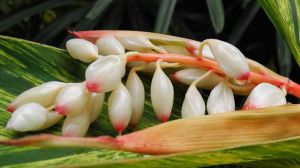
What is the difference between shell ginger and Amomum villosum? A quick guide to tell them apart
Leaves: the former has lanceolate leaves with a petiole about 1-1.5 cm long. The latter has lanceolate leaves in the middle and linear leaves at the top, with nearly no petiole. Flowers: the former has a panicle, white at the bottom and pink at the tip. The latter has a spike, with white petals and a yellow pointed tip in the center. Fruit: the former is ovoid, while the latter is elliptical.
-

Detailed Explanation of Key Points of Ginger Planting and Cultivation Techniques
Ginger Planting and Cultivation Techniques
-
Shell ginger is non-toxic and can suppress cancer, and also has antidepressant, analgesic, antibacterial, sweat-absorbing and skin-whitening effects
The next anti-cancer rising star, shell ginger! Non-toxic yet able to inhibit cancer cells, antidepressant and analgesic, antibacterial and sweat-absorbing, and it can also whiten the skin!
-
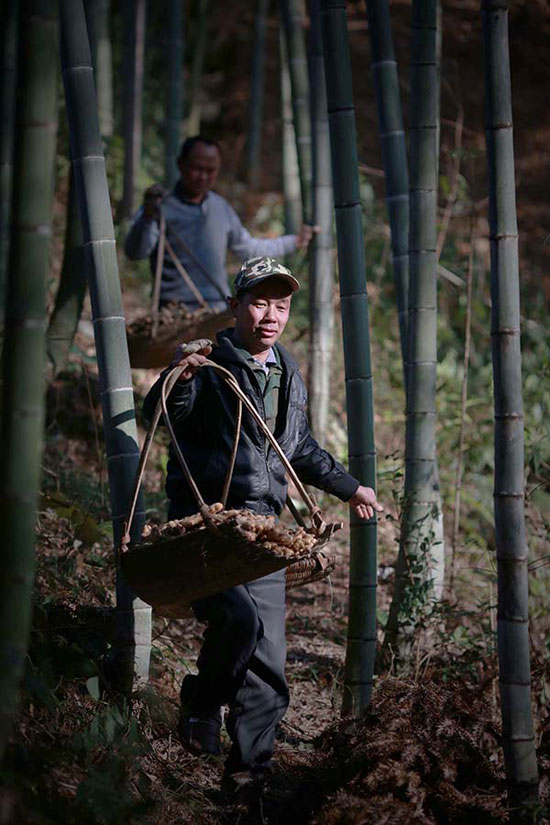
A million jin of ginger unsold, hidden deep in cellars awaiting buyers
A million jin of unsold ginger hidden deep in cellars awaiting good news
-
Detailed Explanation of Key Points for High-Yield Cultivation Techniques of Large Ginger
1. Sowing at the appropriate time. Sow when the ground temperature reaches above 16°C. Generally, for plastic film mulching cultivation combined with direct-sowing agent, sowing is done around Qingming; in the Weifang area, manual sprouting of large ginger is generally done in mid-April, after Qingming and before Guyu. 2. Land preparation and fertilization. Before plowing, apply 4-7 cubic meters of high-quality farmyard manure per 667 sq m, irrigate heavily, deep plow 30cm, then broadcast 50kg of double-effect medium and trace elements per 667 sq m, combined with 100kg of large ginger special fertilizer NPK organic fertilizer (containing 30% organic matter, 20% ammonium humate), and prepare furrows after broadcasting
-
Key Points and Methods for Ginger Storage
1. Storage characteristics: Ginger prefers warmth and moisture and is not tolerant of low temperatures; it is prone to chilling injury below 10°C. Chilled ginger rhizomes rot easily when the temperature rises, and rotting is also easy when the storage temperature is too high. The suitable temperature is about 15°C, and the relative humidity is 65%. Ginger for storage should be harvested when the rhizomes are fully grown and must not be exposed to frost in the field. Generally, it is stored in cellars immediately after harvest and should not be left overnight in the field. It is best not to harvest on sunny days to avoid excessive sun exposure; ginger harvested on rainy days or after rain does not store well. 2. Ginger storage methods: pit burial method and well cellar method: where the soil layer is deep,
-
How to control the ginger skipper? These methods are simple and effective
1. Morphological characteristics Adult: body and wings dark brown, forewings with 5 grayish-white spots, the spot located below the discal cell is larger. The center of the hindwing has one large white spot. Egg hemispherical, flat at the top, with the rim in contact with the leaf surface forming a brim shape, slightly wrinkled, with more than 50 raised fine striations on the side. Larva grass-green, after the 3rd instar two nearly crescent-shaped yellow spots appear on both sides of the dorsal line of the sixth abdominal segment, spiracles white. Pupa elongated spindle-shaped, yellow-green, body covered with white waxy powder. 2. Life habits and occurrence pattern The ginger skipper occurs
-
Processing Methods and Technical Key Points for Honey-Crisp Ginger
This product is a wet-type candied fruit. Although it is mainly purely sweet in flavor, because the product is crisp and has a strong fresh tender ginger flavor, it is a popular candied snack. The processing technology is as follows: 1. Raw material: use the youngest part of fresh young ginger, cut into pieces about the size of a thumb, pink in color; the raw material appears delicate and small and is expensive. 2. Peeling: each piece of young ginger is about 1-2 cm long, and the ginger skin can be removed by manual rubbing. 3. Color protection and hardening measures: soak in 0.1% calcium dichloride and 0.1
-
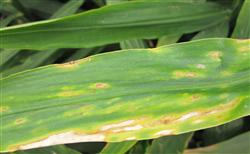
How to prevent and control leaf spot disease in ginger during hot and rainy seasons?
How to prevent and control leaf spot disease in large ginger during hot and rainy seasons? Please give an introduction to the methods. During the hot and rainy season, the occurrence of leaf spot disease in large ginger is on the rise, and prevention work for this disease currently needs to be done well. Ginger spot disease mainly damages leaves. Infected leaves develop yellow-white elliptical or irregular lesions, and in humid conditions scattered small black dots grow on the lesions...
条件筛选