-

Detailed Guide to Pollution-Free Greenhouse Cultivation Techniques and Growing Conditions for Reishi Mushroom
Reishi mushroom has been regarded since ancient times as a symbol of auspiciousness, preciousness, beauty and longevity, and is known as the "immortal herb" and "auspicious herb." Traditional Chinese medicine has long regarded it as a precious Chinese herbal medicine that nourishes and strengthens the body and supports vital energy. Today, with the rapid development of the edible mushroom industry, large-scale artificial cultivation is no longer difficult. 1. Conditions required for growth and development. Reishi mushroom is a wood-rotting fungus. In artificial cultivation, broadleaf tree branch wood, sawdust, cottonseed hulls and corn cobs are used as the main materials, with wheat bran, cornmeal and rice bran added as supplements.
-
Introduction to the Virus-Free Sweet Potato Variety Yushu No. 7
Characteristics: The terminal leaves are purple, the leaf shape is shallowly lobed, the stem is green with purple, the tuber skin is purple, the tuber flesh is white. It is tolerant of poor soil, drought-resistant, and widely adaptable. It has a high starch content, with an average starch content as high as 22.61%. It sprouts quickly, stores well, and has strong growth vigor. The starch content of spring sweet potatoes reaches about 24%, and that of summer sweet potatoes is three percentage points higher than that of Xushu 18. The yields of fresh tubers, dried tubers, and starch are 6.1%, 17%, and 21.4% higher than those of Xushu 18, respectively. It is moderately resistant to stem nematode disease, and virus-free potatoes yield more than 20% more than non-virus-free ones. The yield per mu for spring sweet potatoes is over 3000 kg, and for summer sweet potatoes over 2000 kg.
-
Introduction to the Virus-Free Xushu 18 Sweet Potato Variety
Xushu 18 was developed by the Xuzhou Agricultural Research Institute in 1972 through backcrossing using Xin Dazi as the female parent and Huabei 52-45 as the male parent, selected from seedling progeny, with the original line number 732518. It is an excellent variety suitable for drying, starch processing, and dual use as food and feed. Xushu 18 has red skin and white flesh, with high and stable yields, wide adaptability, and good overall performance. In 1980 it won the First Prize for Science and Technology Progress from the Ministry of Agriculture, and in 1982 it won the First Prize for National Invention. It is the dominant variety in large-scale production in China, accounting for
-
Technical measures for snow and freeze protection of mulberry trees, tea trees and fruit trees
I. Fruit: (1) Citrus: Before freezing, spray an anti-transpirant insulation agent on the tree canopy, and light smoke in the orchard to improve the freeze protection effect. For citrus affected by freezing injury, promptly remove curled, frost-killed leaves and withered shoot tips, bandage branches damaged by snow pressure, prune and shape branches broken by pressure, treat wounds with a wound protectant, promptly spray foliar fertilizer, and strengthen fertilizer and water management. For lightly frozen trees, apply 0.5% urea as a foliar topdressing 2-3 times; for severely frozen trees, it is advisable to apply light fertilizer multiple times in split applications. (2) Loquat: Insulate the tree disk by hilling soil or covering it with rice straw;
-
Pollution-Free Control Methods and Technical Key Points for Edible Mushroom Diseases
In the process of edible mushroom production, as long as management is carried out according to the biological characteristics of the selected mushroom strain, physiological diseases will not occur. When infectious diseases occur, pesticides must be applied in accordance with pollution-free requirements, with prevention as the priority, and never use pesticides casually. Long-stemmed mushrooms and unopened caps are typical symptoms of oxygen deficiency, especially when semi-underground mushroom sheds are used for cultivation. This phenomenon occurs commonly, severely reducing mushroom quality and affecting production efficiency. Solution: strengthen ventilation management. In low-temperature seasons, open the ventilation openings and door between 10 AM and 2 PM.
-
Virus-free Xushu 34 Sweet Potato Slip Variety Introduction
Xushu 34 was developed by the Xuzhou Sweet Potato Research Center through crossbreeding with North China 166 as the female parent and Qunli No. 2 as the male parent. Its original line number is 81-29-34, and it is a high-quality, early-maturing edible variety. Xushu 34 has ochre-red skin and orange-red flesh, a long spindle shape, and good taste whether steamed, boiled, or eaten raw. In many places it has already been finely packaged for supermarkets, and city residents also give it as a gift to relatives and friends. Xushu 34 matures 20~30 days earlier than ordinary sweet potato varieties, allowing early harvest and early market release, filling market gaps, and delivering high economic returns, especially
-
Detailed Explanation of the Code of Practice for Pollution-Free Breeding of Domestic Fish
I. Pollution-Free Management and Cultivation of Broodstock 1. Requirements for the breeding base: no pollution from the three types of waste; the atmospheric environment must comply with the requirements of "GB3095-1996 Ambient Air Quality Standard"; the soil environment must comply with the requirements of "GB15618-1995 Soil Environmental Quality Standard"; and the aquaculture water must comply with the requirements of "NY5051-2001 Pollution-Free Food Freshwater Aquaculture Water Quality Standard". 2. Broodstock ponds should have an area of 5-15 mu and a water depth of 1.5-2.5 m. The ponds should be exposed to the sun and then strictly disinfected with quicklime and other substances before use.
-
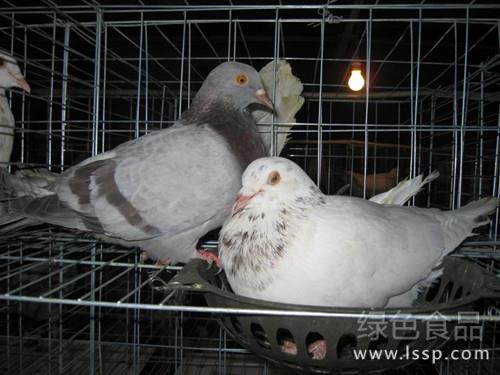
Pollution-free squab farming and management methods make green food more popular with the public
Green food is more popular with the public: pollution-free squab farming and management methods
-
Detailed Guide to Pollution-Free Cultivation Techniques for Lion's Mane Mushroom (Hericium erinaceus)
I. Site Selection. Choose an environment with a sound ecological setting, excellent water quality, no toxic or harmful gases, no various sewage or other pollution sources within 300 meters, and in compliance with NY5010 pollution-free cultivation requirements. II. Cultivation Season. Late September of the current year to early January of the following year. III. Ingredients and Bottling (Bagging) 1. Cultivation substrate formulas. ① Cottonseed hulls 55%, wheat bran, sawdust, and rice bran 10% each, cornmeal 7%, cottonseed cake 5%, superphosphate 2%, gypsum 1%; ② Corncob residue 55%, wheat bran, sawdust
-
Detailed Guide to Pollution-Free Cultivation Techniques for Lion's Mane Mushroom (Hericium erinaceus)
I. Site Selection: Choose an environment with a sound ecological setting, good water quality, no toxic or harmful gases, no various types of sewage or other pollution sources within 300 m around, and in compliance with the NY5010 pollution-free cultivation requirements. II. Cultivation Season: Late October of the current year to early January of the following year. III. Ingredient Mixing and Bottling (Bagging) 1. Cultivation substrate formulas: (1) 55% cottonseed hulls, 10% each of wheat bran, sawdust and rice bran, 7% cornmeal, 5% cottonseed cake, 2% superphosphate, 1% gypsum; (2) 55% corncob residue, 10% each of wheat bran, sawdust and rice bran,
条件筛选