-

Confinement and Pollution-Free Feeding Management of Commercial Meat Donkeys
With the improvement of people's living standards, the demand for animal-based foods has gradually become more diversified and premium, and must also be green. Donkey meat and offal products are very popular. They are high in protein, low in fat, and delicious, and can be cooked into a variety of dishes. Since ancient times in China there has been a saying that "dragon meat in heaven, donkey meat on earth," which shows that people have long recognized donkey products. Donkey meat restaurants can be seen everywhere in some large, medium and small cities, but donkey meat has not yet made it onto ordinary people's dining tables. The reasons: first, resources are too few; second, very few are raised on a large scale;
-
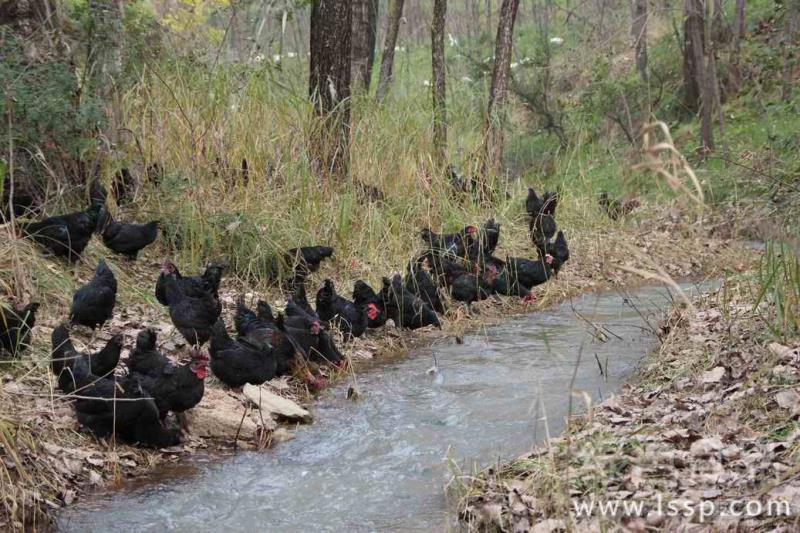
Silkie chickens are not suited to indoor cage-free rearing on wire netting; how can they be raised free-range at scale in woodland?
How to raise Silkie chickens, which are not suited to indoor wire-net rearing, free-range at scale in woodland
-
Detailed Explanation of Key Points for Pollution-Free Management Techniques of Tea Plants
Tea garden soil should be ploughed frequently to facilitate microbial activity, accelerate soil maturation, promote the release of mineral elements, and facilitate root absorption. Depending on the soil structure, carry out shallow ploughing several times a year, with a depth of 5-10 cm; medium ploughing 2-3 times, with a depth of 10-15 cm; deep ploughing once a year or every other year, with a depth of 25-30 cm. Shallow ploughing and medium ploughing can be carried out in combination with weeding and topdressing in each tea season, while deep ploughing is carried out in combination with garden cleaning or applying organic fertilizer. Tea gardens should be given more organic fertilizer to improve soil physical and chemical properties and the capacity for sustained nutrient supply; appropriately stock
-
Key Technical Points for Pollution-Free Tea Plant Cultivation and Management
I. Cultivation and Management of Tea Gardens in the Young Stage 1. Deep plowing to improve soil. Water is an important component of the tea plant organism. Deep plowing to improve the soil can store water and retain moisture, ensuring good root growth and development of tea plants. During deep plowing, do not mix up the topsoil and subsoil; place them separately in the inner side and outer trench. When backfilling, put the topsoil at the bottom of the trench and spread the subsoil on top. The depth of deep plowing must be more than 50 cm. 2. Transplanting. The transplanting time should be determined according to local conditions and varieties, generally from late February to mid-March in early spring, or from mid-October to early November in late autumn and early winter. It is advisable to choose cloudy days
-
Detailed Explanation of Soft-Packaging Quick-Freezing Fresh-Keeping Technology for Oyster Mushrooms
Oyster mushrooms have a tender and crisp texture, making them inconvenient to transport and store. Especially during high-temperature periods and peak harvest seasons, if the processing capacity at the place of origin cannot keep up, exporting becomes difficult, and the problem of "difficulty in selling mushrooms" often arises. Therefore, the problems of oyster mushroom sales, transportation, storage, and processing should be fundamentally solved. There are three main traditional methods for storing oyster mushrooms: First, processing them into salted mushrooms for export and domestic sale. However, from the perspective of domestic sales, due to the high salt content, they need to be soaked repeatedly many times before consumption, which is not only time-consuming and laborious, but they still taste too salty when eaten, and the flavor deteriorates, making it difficult for consumers to
-
How to carry out pollution-free cultivation of lilies? Detailed explanation of technical points
Selecting a pollution-free area for planting requires a good ecological environment, with no industrial "three wastes" or pollution from agriculture, urban domestic life, or medical waste within 3 kilometers around, avoiding main highway lines (more than 100 meters), and no pollution of irrigation water, atmosphere, or soil, meeting the air environment quality standards (GB3095-1996) and irrigation water quality standards (CB5084-92) stipulated by the state. At the same time, in order to reduce pesticide use, choose field soil where Liliaceae crops such as lilies, garlic, and leeks have not been planted in the past 3-5 years, paddy field
-
Key Technical Points for Fertilization in the Production of Pollution-Free Fruit
1. The use of organic fertilizers, commercial organic fertilizers, and microbial fertilizers is encouraged. On the premise that chlorine-containing compound fertilizers and nitrate nitrogen fertilizers are prohibited, chemical fertilizers are permitted to be used according to the following two principles. (1) Chemical fertilizers must be applied in combination with organic fertilizers, and the amount of inorganic nitrogen applied should not exceed the amount of organic nitrogen used. (2) Chemical fertilizers may also be applied in combination with organic fertilizers and compound microbial fertilizers, with the formula being 1000 kg of barnyard manure, 5-10 kg of urea or 20 kg of diammonium phosphate, and 60 kg of compound microbial fertilizer; the final topdressing must be carried out 30 days before charging.
-
Key Points of Pollution-Free High-Yield Garlic Cultivation Techniques
Chengbei in Meijiang District is located in the urban area of Meizhou and is the main vegetable production base of the Meizhou urban area. Garlic is one of the main vegetables cultivated in our district. Chengbei Town is far from industrial and mining areas, and there are no enterprises discharging the "three wastes" nearby. The farmland atmospheric environment is good, the irrigation water quality and soil environmental quality meet the conditions for pollution-free vegetable production, the soil plough layer is deep, the soil is fertile, and the organic matter content is above 1.0%, which is suitable for garlic growth. 1 Land preparation and sowing 1.1 Land preparation The tillage depth is about 20cm. Fine tillage, harrowing level and harrowing firm are required, with no obvious clods, reaching "level, loose, fine
-
Pollution-Free Model High-Yield Cultivation Techniques for Garlic
Laiwu City, Shandong Province has long enjoyed the reputation of being the "home of the three spices." Its ginger, garlic, and other products are sold to many large and medium-sized cities domestically and to international markets, and garlic holds a pivotal and important position. For a long time, due to the irrational use of pesticides, chemical fertilizers, and other inputs, pesticide residues and heavy metal levels in garlic have exceeded standards, becoming a bottleneck for the sustainable development of the garlic industry. To this end, by summarizing the high-yield research, trials, and demonstrations on garlic in recent years, pollution-free model high-yield cultivation techniques for garlic are proposed. 1. Sowing at the appropriate time. September
-
What are the pollution-free production techniques for garlic?
1. Select good garlic varieties. For the winter-spring early-maturing garlic in Yousuo and Dengchuan, the main variety is the "Hongqixing" (Red Seven Stars) from Wenjiang, Sichuan; for the large white garlic in Sanying, the main variety is the "Dabaisuan" (Large White Garlic) from Shandong. 2. Sow at the right time: when planting garlic, dry land is sown from September 10 to 30; paddy fields are sown from October 1-30. 3. Reasonable close planting: the sowing density for winter-spring early-maturing garlic is 110,000 plants/mu, with a sowing rate of 200-230 kg per mu; for Y garlic and Shandong large white garlic, the sowing density is 90,000 plants/mu; the sowing rate is 17
条件筛选