-

Harvesting and Processing Techniques for Pollution-Free Honeysuckle
Honeysuckle is a perennial, semi-evergreen woody vine of the Caprifoliaceae family, Lonicera genus, also known as Erhua, Shuanghua, etc., and is a precious traditional Chinese medicinal herb. Because of its remarkable heat-clearing and detoxifying effects, as well as its role in lowering blood pressure and delaying aging, it is hailed as a traditional Chinese medicine antibiotic and an elixir of immortality. The production and development of honeysuckle have increasingly attracted people's attention. The harvesting and processing of honeysuckle are the last two "procedures" in the production chain, and also the final guarantee of "high yield, high efficiency, quality, and safety." In recent years, the Fengqiu County Agriculture Bureau of Henan Province, in order to improve
-
Key Points of New Techniques for Efficient, Pollution-Free Potato Cultivation
The efficient, pollution-free potato cultivation technique shows the most remarkable results when applied on gentle slopes of red soil hills. Compared with potatoes grown by ordinary methods in the same period, it can make potatoes mature more than 15 days earlier, save 30% of fertilizer, save 2-3 labor units, cut costs by more than 40%, increase yield by 150%-300%, raise the rate of large tubers by 30%-40%, and increase income by more than 700 yuan per 667 sq m. 1. Select good varieties: choose early- and mid-maturing varieties with high quality, high yield and strong resistance; virus-free varieties are even better. Varieties available for selection include
-
Introduction to a free-stone flat peach variety: the flesh separates easily from the stone
The fruit is flat in shape, with a sunken apex and two symmetrical halves; the average single fruit weight is 130.4 grams, and the largest fruit weighs 250 grams. The ground color of the skin is greenish-white, and the fruit surface is covered with 20% red speckles or blush; the skin peels easily. The flesh is white with little red pigment, soft and melting, juicy, sweet in flavor, and aromatic; the soluble solids content is 14%. Free-stone. In the Zhengzhou area of Henan, the fruit ripens on August 4, and the fruit development period is 122 days.
-
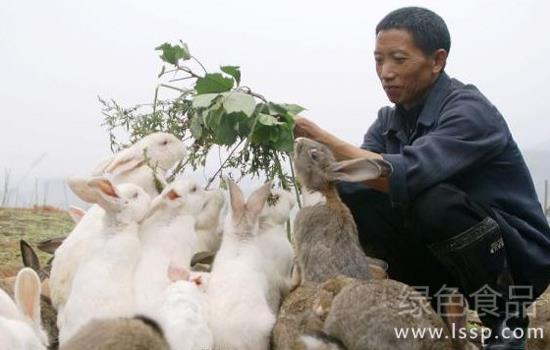
Using Herbs Instead of Drugs to Prevent Disease in Rabbits: Nutritious and Free of Side Effects
Nutritious and Free of Side Effects: Using Herbs Instead of Drugs to Prevent Disease in Rabbits
-
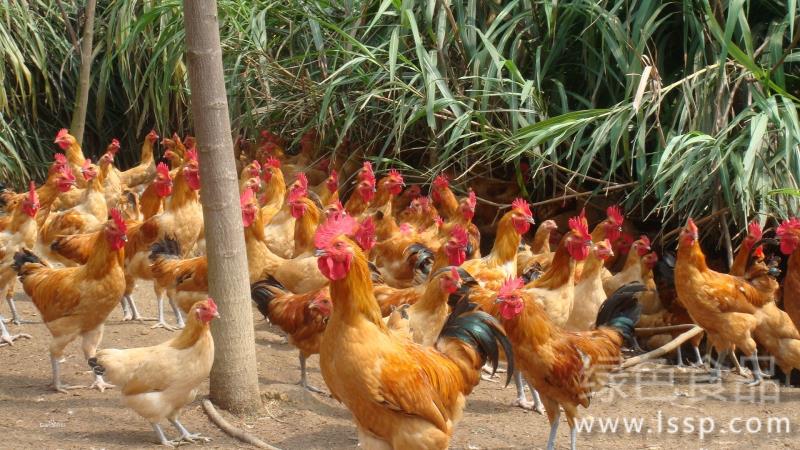
How should free-range chickens be raised and managed during the laying period to ensure the laying rate?
Key points for feeding and management of free-range chickens during the laying period to ensure the laying rate
-
Introduction to Pollution-Free Production Techniques for Jasmine
I. Site Selection Pollution-free jasmine, like organic jasmine, is produced in unpolluted places. Although the requirements are not as strict as those for organic jasmine, its production environment has specific requirements for soil, water sources, atmosphere and ecology. Therefore, the site must be far away from urban areas, residential areas, factories and mines, and main highway routes, and must be a place with fresh air and clean water sources. II. Production Management For pest and disease control, the focus should be on winter protection and pruning to clean the garden. (1) Winter protection From the eleventh to the twelfth lunar month, take advantage of rising temperatures, when pests come out to activity and their resistance is relatively weak, spray 1-2 times with 500-600 times lime sulfur mixture or 300-500 times orchard cleaner to reduce the overwintering pest and disease base.
-
How to prevent and control freeze damage in tea plants? Taking active measures is key
Freeze damage is a major weather-related disaster affecting tea plants. After tea plants suffer freeze damage, it can range from affecting tea yield and quality in mild cases to causing severe leaf drop or even the death of the entire plant in severe cases. Freeze damage to tea plants can be divided by growth season into overwintering-period freeze damage and sprouting-period freeze damage, with the latter having the greatest impact on the yield and quality of that year's spring tea. Overwintering-period freeze damage prevention: during the growing season, strengthen fertilizer and cultivation management, pay attention to pest and disease prevention, implement a combination of harvesting and nurturing, and promote vigorous growth of tea plants so as to accumulate more organic matter and improve resistance to low temperatures. Autumn and winter
-
Technical key points for restoring tea production after snow disaster and freezing damage to tea plants
This year, some tea regions across the country experienced severe weather such as heavy snow and low-temperature freezing that had not occurred in decades, causing tea branches to break, leaves to discolor and dry up, and branches to die, resulting in varying degrees of snow disaster and freezing damage. In order to restore tea production as quickly as possible and reduce the economic losses of tea farmers, the following technical key points are proposed according to the disaster conditions. 1. Pruning 1. Mild freezing damage (only leaves damaged): do not prune or lightly prune as appropriate. 2. Moderate freezing damage (production branches damaged) and severe freezing damage (framework branches damaged): prune when the boundary between the frozen-dead part and the healthy part is clear,
-
What to Do About Freeze Damage to Tea Plants? Detailed Remedial Measures
From February 15 to 18, we investigated the freeze damage to tea plants in Tangshi and Pengshi in Zixing, the Fruit and Tea Research Institute, and the Huatang Tea Plantation in Chenzhou. The survey found that tea gardens with good fertilization and cultivation had a thick layer of green leaves on the tea plants and strong tree vigor, and suffered relatively mild damage; the opposite was true for the rest. The degree of damage also differed among varieties. Among them, the early-growing varieties Fuyun No. 6, Fuding Dahao, and Baihaozao suffered heavier damage, while the mid-to-late-growing Bixiangzao, Zhuyeqi, Maoxie, and population varieties suffered lighter damage. Overall, tea plants at all survey points suffered freeze damage, with the more severely affected
-
Key Techniques for Pollution-Free Cultivation of Edible Lilies
Lilies belong to the Liliaceae family. Their flowers are ornamental, and the fresh bulbs are a vegetable with high nutritional value and great medicinal value. Growing lilies is highly profitable. The pollution-free cultivation techniques for edible lilies are introduced below: (1) Scientifically select the site and insist on crop rotation. Although lilies are widely adaptable and can be grown in many types of soil, it is best to choose plots with high terrain, smooth drainage, loose soil and fertile soil. Plots whose previous crop was pepper, eggplant or similar crops should not be chosen. Continuous cropping and repeated cropping on the same land are most taboo. At the same time, crop rotation must be carried out to help build soil fertility
条件筛选