-

What are the propagation methods for the yellow-flowered red-centered four-season chrysanthemum?
The yellow-flowered red-centered four-season chrysanthemum is a newly bred chrysanthemum variety with stable traits, strong resistance and good adaptability. It has short internodes, a dwarf, non-lodging habit, large flowers, a long flowering period and bright flower colors. As soon as it appeared, it won praise from industry insiders for its uniqueness and beauty. At present, this flower is in the stage of propagation expansion and can be propagated vigorously. Its propagation method is the same as that of other chrysanthemums. Simply cut it into cuttings of 2 leaves per segment, dip them in rooting hormone solution, insert them into a seedbed (sandy soil is preferable), cover with a sunshade net, spray water on the leaves twice a day, and in 10 days they will
-
How to manage greenhouse apricots? Master these four technical points
1. Fertilizer and water management. Apply base fertilizer every autumn. The base fertilizer is mainly organic fertilizer such as livestock manure, compost, and cake fertilizer, appropriately mixed with some nitrogen, phosphorus, and potassium fertilizers. After covering with plastic film, no more topdressing is applied; after fruit set and during the hard-core stage, spray once with 0.3% urea plus 0.2% compound micronutrient fertilizer and 0.3% monopotassium phosphate. Install drip irrigation pipes in the greenhouse and water reasonably according to soil moisture. Do not water too much, so as to avoid excessive growth of new shoots and cause physiological fruit drop. 2. Training and pruning. For "Y"-shaped training, mainly retain lateral branches (main branch branching angle about 70 degrees
-

How are the market conditions for the four major staple grains in 2019
How are the market conditions for the four major staple grains in 2019
-
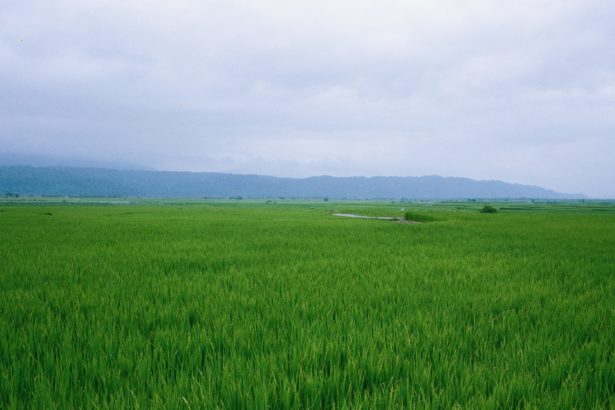
Rice multicultural practice: Four key elements for local sake brewing need breakthroughs
Li Jianwei / Heart of Sake 03: Let local sake brewing become a practice of rice multiculturalism! Four key elements need breakthroughs
-
What are some practical tips for extracting honey by spinning the combs in the four seasons?
The main economic benefit of beekeeping comes from extracting honey by spinning the combs. As the seasons change through the year, the method of spinning honey also differs. Taking the Yangtze River basin as an example, the basic principle of spinning honey is: in spring be early, in summer be frequent, in autumn be steady, in winter stop. 1 In spring be early. After the beginning of spring, the queen bee begins to lay eggs, the worker bees go out to forage, and their enthusiasm for rearing the young rises day by day; especially the Chinese bee (Apis cerana), when the temperature turns warm but still cold, flies about searching and collects scattered nectar. They generally produce their first batch of mature honey around the end of March,
-
Control recommendations for the fourth generation of white-backed planthopper in rice issued, please carry out timely prevention and control
For the pesticide, use 40% chlorpyrifos (Xinnongbao, Saiben) 100 ml/mu plus 25% buprofezin (Puhsiling) 50 g/mu plus 5% jinggangmycin 200 ml/mu (or 30% Aimiao 15 ml/mu), mix with 30 kg of water for fine spraying.
-
How to harvest garlic scapes? Remember these four tips
In recent years, many scape farmers have changed the old cultivation method of growing green garlic and digging up green garlic for market into the cultivation method of harvesting garlic scapes and digging up garlic bulbs for market. Among them, many farmers, because they do not know how to harvest garlic scapes scientifically, either end up with poor-quality garlic scapes and low yields, or with small garlic bulbs and heavy yield reductions, and cannot achieve the best results in increasing production and income. To ensure harvesting high-quality, high-yield garlic scapes while also getting a bumper harvest of garlic bulbs, I will introduce to everyone the four "secrets" of scientifically harvesting garlic scapes. 1. Choose the right harvest time when the "scape tip" curves nearly a full circle. Garlic scapes must be harvested at the right time. Harvesting too early will
-
How to store lotus root? Four practical methods shared
1. Sand storage method: Choose a spot with high terrain, sheltered from wind and rain, spread a layer of fine sand on the ground. The fine sand should have a moisture level such that it forms a ball when squeezed by hand and crumbles when released. Dig drainage ditches around the perimeter. Place a layer of lotus root, then a layer of fine sand, alternating sand and lotus root in this way, stacking 5~6 layers, and cover the top with wet sand about 10 cm thick. This method generally allows storage for about 60 days. Alternatively, you can build a burial pit indoors enclosed by bricks or wooden boards, spread a 5 cm thick layer of wet sand in the pit, arrange the dug-up lotus roots with mud in order, then stack layer by layer, one layer of lotus root and one layer of wet sand, stacking 5~6 layers, and on top
-
Key Techniques for Four-Season Multi-Cutting Cultivation of Stem Garlic
Stem garlic was introduced from Europe and is a perennial crop of the genus Allium in the lily family. Necklace garlic is sown from seed like Welsh onion. Its stems, leaves and scapes resemble those of common garlic, but it is larger and more robust than common garlic, with strong adaptability; it can withstand high temperatures of 40°C and low temperatures of -15°C, and can be sown in spring and autumn in most parts of our country, remaining evergreen all year round. For four-season multi-cutting cultivation, it can be sown from seed like Welsh onion and the seedlings harvested for market, with 1 cutting harvested 60-80 days after sowing, yielding about 2500 kg per mu. If harvesting garlic scapes, seedlings can be raised in summer and autumn, and after 30 days transplanted at a row spacing of 20 cm x 8 cm; scapes bolt in May of the second year after transplanting, with more than 10 tillers per plant, and every tiller can bolt; scapes can be harvested 4-6 times a year, with continuous growth for 5-8 years, during which excess tillers can be pulled out along with their roots for market; the usual yield is about 1500 kg of garlic scapes per mu and more than 5000 kg of stems and leaves.
-
Key Technical Points for Spring Broodstock Conditioning of the Four Major Chinese Carps
Spring is an important period for the maturation of broodstock gonads. From the beginning of spring to spawning, a large amount of nutrients in the broodstock's body is diverted to gonad development, so broodstock conditioning should be intensified in spring to meet the needs of gonad development, promote timely maturation of broodstock and ensure smooth spawning. The conditioning techniques are: 1. Divide ponds early. Adjusting stocking density and species combination is the primary condition for good broodstock conditioning. The pond area for broodstock division should preferably be 2000-2600 sq m. Before dividing the ponds, first drain the pond water, remove wild trash fish, snails, mussels and harmful organisms, and at the same time remove part of the sludge
条件筛选