-

Fish Farming: Suitable Dosages of Medication for Several Fish Species
The dosage must not be too high, otherwise it may cause phytotoxicity to the cultured species. In particular, fish such as freshwater pomfret (piaractus brachypomus) and mandarin fish are sensitive to certain medications, and improper use can easily cause death. 1. Freshwater pomfret. Freshwater pomfret is most sensitive to organophosphorus pesticides. Therefore, the use of medications such as trichlorfon and dichlorvos is prohibited. 2. Mandarin fish. Mandarin fish is relatively sensitive to medications such as trichlorfon and copper chloride. When the concentration of trichlorfon is above 0.2 ml/L, or the concentration of copper chloride is above 0.7 mg/L, it can cause poisoning and death in mandarin fish. Therefore, it is necessary to master
-
A Comprehensive Analysis of Key Points for Drug Use in Fish Farming
In recent years, China's aquaculture industry has developed rapidly, and the degree of intensification in aquaculture has also been increasing quickly. At the same time, the aquaculture environment has been continuously deteriorating, causing a decline in the immunity and disease resistance of cultured species, while the incidence of disease has increased significantly. Moreover, due to factors such as mutations in pathogenic bacteria, new diseases and difficult-to-treat diseases have frequently emerged. At present, these diseases are mainly treated with medication. This article discusses the development, classification, factors affecting drug action, and problems existing in the use of fishery drugs in China. I. The Development of Fishery Drugs
-
How to prevent and treat common diseases in ayu (sweetfish) farming?
I. Vibriosis 1. Pathogen: mainly Vibrio anguillarum. 2. Symptoms: depending on the species of Vibrio infecting the fish, it can be roughly divided into three types: yellow-liver type, pointed-intestine type and ulcerative type. Sick fish swim weakly, have darkened body color, protruding eyeballs and skin hemorrhages that in severe cases extend deep into the muscle layer; there is congestion and then ulceration on the inner surface of the operculum, the base of the fins and the tip of the snout; the anus is red and swollen; the gills are pale; the liver of sick fish is enlarged, in some cases entirely faded to a yellowish-earth color, in others partially faded and congested; blister-like structures filled with bloody fluid appear in the liver of sick fish; the gallbladder is enlarged, and the
-
What kind of fish is the red drum? Breed characteristics and farming techniques
Breed name: red drum English name: redfish Common names: redfish, red croaker, spotted tail fish, channel bass Scientific name: Sciaenops ocellatus Biological characteristics (1) Morphological characteristics The red drum is spindle-shaped, laterally compressed, with a slightly raised back that is highest at the origin of the dorsal fin. The head is medium-sized, the mouth cleft is relatively large and terminal, and the teeth are small, closely arranged and fairly sharp. There are two pairs of nostrils, the rear pair oval
-
Practical Tips for Cleverly Using Garlic in Fish Farming
I. Garlic Can Be Used as a Feed Additive for Fish (1) Fresh garlic. Take fresh garlic and make it into garlic paste, then mix it directly into the bait for feeding, or take 1%-5% fresh garlic and add it to the fish compound feed, crush it into powder with a grinder, mix evenly, and use directly. After peeling the garlic, grind it with an equal amount of cool boiled water into a slurry and filter it, then mix 3% of the filtrate into the feed to prevent feed mold.
-
What Kind of Fish Is the Brook Trout? A Guide to Its Characteristics and Farming
Morphological characteristics: The brook trout, also known as the American brook trout, is brightly colored and the smallest in size among all salmonid fish, generally weighing no more than 2 kg (the highest record is 8 kg). The color range of the brook trout usually varies from olive green to dark brown. Its back has many olive-colored worm-like markings, its sides have olive-colored round spots, and the lower part of both sides of the body also has some red dots, and each red dot is set within a blue circle, making it very beautiful. It is the most beautifully colored of all salmonid fish
-
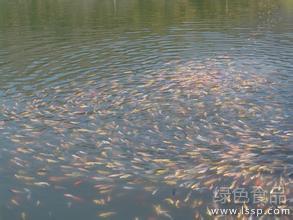
What should be noted when cultivating fish fingerlings in summer? Good-quality fingerlings are the foundation of successful fish farming
Good-quality fingerlings are the foundation of successful fish farming: precautions for cultivating fish fingerlings in summer
-
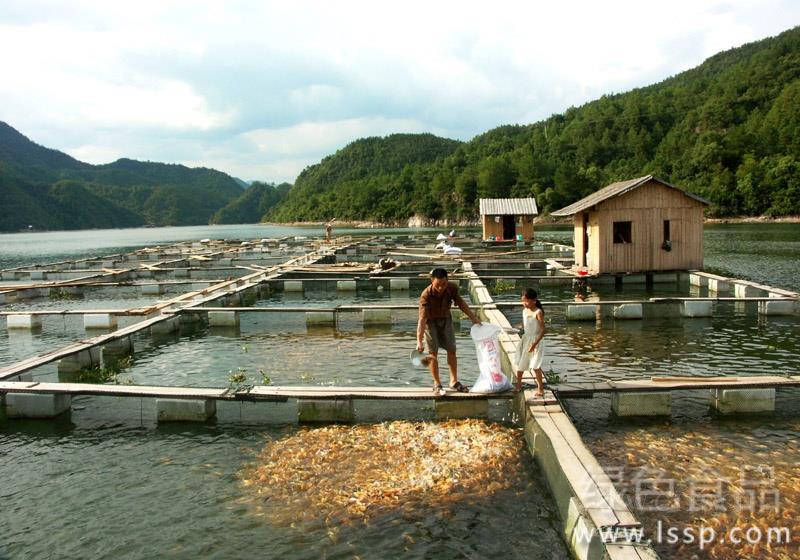
Cage fish farming in the dog days: humid and muggy conditions make skin rot likely, how to prevent it?
In the dog days, humid and muggy weather makes fish skin prone to rotting; how to prevent skin rot in cage fish farming
-
Six fish feed formulas, useful reference for scientific fish farming
1. Suitable for tilapia in flowing water and cage culture: grass meal 20%, fish meal 30%, soybean cake 20%, corn gluten meal 20%, rice bran 20%, wheat bran 10%, corn flour 5.5%, bone meal 1%, salt and vitamins together 0.5%. 2. Suitable for grass carp: sweet potato vine meal 45%, soybean cake 13%, rice bran 15%, wheat bran 12%, fish meal 3%, corn flour 10%, bone meal 1.5%, salt 0.5%. 3. Suitable for bighead carp, silver carp and grass carp: rice straw
-
Mott dwarf elephant grass is suitable as forage for fish farming
Mott dwarf elephant grass is a grass-family forage introduced from the United States a few years ago. This grass is perennial, with a plant height of 0.8-1.4 m, short and numerous nodes, a large amount of leaves per plant, and strong tillering and regrowth ability. It is relatively cold-tolerant; in winter the aboveground part turns yellow and withers, while the underground part survives. It sprouts in spring and begins to grow when the temperature is around 12°C. It prefers to grow in places with deep, fertile and moist soil. This forage is high-yielding and highly nutritious. Under good water and fertilizer conditions, it can produce 15,000-20,000 kg of fresh grass per mu, and its leaf amount accounts for 8
条件筛选