-
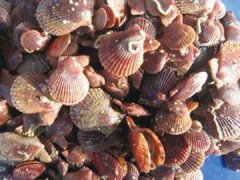
New Trends, Prospects and Difficulties in the Development of Shellfish Aquaculture
Nowadays, we are paying more and more attention to the development of agriculture, and among it, the farming of seafood is also relatively important. So do you know how the prospects for shellfish farming look? What kinds of difficulties arise in farming? People in Taiwan, China love eating shellfish, and each year, besides eating more than 80,000 metric tons of domestic
-

Experience Sharing on Integrated Rice and Crayfish Farming
With the continuous development of China's aquaculture industry, crayfish farming is now very common. There are many methods for farming crayfish in China, and different farmers adopt different methods, so farmers can exchange and learn from one another. Crayfish
-
What is a suitable stocking density for pond catfish? With farming methods
Abstract Farming preparation: Plant some aquatic plants around the pond, and disinfect the pond with quicklime before stocking. Stocking density: Stock 20,000-30,000 fry per mu. Feed: field snails, river mussels, fly maggots, fish and shrimp, bloodworms, earthworms, etc. Daily management: Change the water about every
-
Key Points and Precautions for High-Density Fish Farming
Abstract High-density cage fish farming adapts to a very wide range of waters. It can be set up in lakes, reservoirs, and rivers; as long as the water depth is greater than the height of the cage, farming can be carried out. During this period, 60-80 common carp fingerlings with a body length of 13-20 cm can be stocked per cubic meter. The rearing period is 2
-
Detailed Explanation of Key Points of Off-Season Crayfish Farming Technology
Abstract Farming pond: Choose a pond facing the sun and sheltered from the wind, dig several strip-shaped trenches of the same size in the pond, clean the pond bottom, filter the water and fill it, then plant water hyacinth and other aquatic plants, and finally install a microporous aeration pipe in the strip-shaped trenches. Shed frame: Two layers of thick plastic film need to be covered on the built shed frame. Stocking fry: Fry can be stocked in mid-to-late November, with about 50 kg of semi-commercial shrimp stocked per mu. Feeding: Feed once a day, and make sure the dissolved oxygen content in the water is sufficient.
-
When is the most suitable time to farm crayfish?
Summary: The crayfish farming time can be determined according to the size of the shrimp fry, and shrimp fry can be stocked three times throughout the year. First stocking: carried out from late March to early April, overwintering fry can be stocked, with a stocking rate of about 4,000 tails per mu. Second stocking: carried out from late May to early June
-
A Detailed Explanation of the Key Points of Australian Redclaw Crayfish Farming Technology
Summary Pond conditions: The pond water quality must be fresh and rich in dissolved oxygen. Shrimp fry stocking: Before stocking, the pond must be dried and disinfected, and pests such as catfish and snakes must be thoroughly removed from the pond. Feed feeding: Feed small trash fish, river snails, shrimp compound feed, and so on. Daily management
-
What conditions are required for puffer fish farming?
Summary Pond: A pond with sufficient water source, no water pollution and little variation in water temperature should be chosen for raising puffer fish. Stocking of fingerlings: Choose puffer fish fingerlings that are robust, free of disease and similar in size; the fingerlings must be disinfected before stocking. Domestication and feeding:
-
A Detailed Guide to Arapaima Farming Methods and Key Technical Points
Abstract Fish tank requirements: Arapaima grows quickly, so a fish tank with a length of 4.5 m, a width of 1.5 m and a height of 1.5 m should be chosen, and the top must be secured against escape. Water quality requirements: It prefers weakly acidic water, and the suitable water temperature is around 24°C-29°C. Feed requirements: For animal feed
-
How is it that the per-mu yield of a fish pond can reach over a thousand jin?
Summary The per-mu yield of fish farming in ponds is generally around 1000 jin, and with high yields it can reach around 4000 jin. Different fish species and rearing methods will affect the yield. Pond fish farming generally adopts a polyculture model, and the stocking density of fish is determined according to the size of the fish species, but it should be noted that before stocking, they must be soaked and disinfected in a 4% salt water solution for about 10-15 minutes.
条件筛选