-
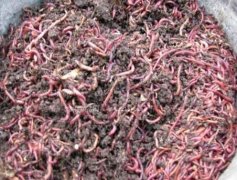
Key Management Techniques for Raising Earthworms in Open Fields in Winter
Earthworm farming now brings high economic returns, which has led many people to raise earthworms, so what are the key management points for earthworms, do you know? 1. Daily management should be done carefully, including checking temperature and humidity, egg laying and hatching, feeding conditions, pest intrusion and abnormal phenomena
-

Detailed Explanation of Field Management Techniques for Corydalis yanhusuo
Field Management Techniques for Corydalis yanhusuo
-

Cultivation Techniques and Key Field Management Points for Bistort
Cultivation Techniques for Bistort
-

How to carry out field management of Polygonatum? Detailed explanation of the technical key points
(1) Intertillage and weeding: After emergence, weeding should be carried out frequently, especially during the seedling stage of sown fields, where timely weeding is even more necessary to prevent large weeds from overwhelming the seedlings and affecting growth. (2) Thinning and final thinning: When the seedlings are 5-8 cm tall, remove the overly dense small seedlings; before withering in autumn or after emergence the following year, carry out final thinning at a plant spacing of 8-10 cm. Take the thinned seedlings to a different location for transplanting. (3) Drought prevention and drainage: Polygonatum prefers moist soil. In dry weather, water promptly to keep the soil moist; in the rainy season, ensure good drainage to avoid water accumulation in the field and prevent root
-
Three key techniques for field management of autumn potatoes
Doing a good job in autumn and winter field management is the key technique for obtaining a high yield of autumn potatoes, and the specific measures are as follows: 1. Timely intertillage and weeding, and topdressing according to the seedlings: because autumn has short sunshine, which is suitable for tuber growth, the plants set tubers early and are not prone to excessive vegetative growth, so management should focus on promoting growth. When 60-70% of the potatoes have emerged, apply 2.5-3 kg of urea per mu, mixed with 1600-2000 kg of water and fertilizer, by hole application; when they grow to 30-40 cm, apply 500 kg of plant ash per mu, mixed with 40-50
-
Detailed Cultivation Techniques and Field Management Points for Pinellia ternata
Pinellia ternata is a medicinal herb harvested year-round. If high-yield, multi-crop cultivation techniques are adopted, 3 plantings and 3 harvests per year can be achieved. The cultivation techniques are as follows: 1. Land selection and preparation: For cultivating Pinellia ternata, loose and fertile soil is best. During land preparation, apply 3000-5000 kg of farmyard manure, 25-30 kg of phosphate fertilizer, and 25-30 kg of urea per mu, then plow deep and harrow fine. 2. Sowing method: Usually tuber propagation is used, allowing 3 plantings and 3 harvests per year, namely planting in April and harvesting in July, planting in July and harvesting in October, planting in October
-
Detailed Explanation of Key Field Management Techniques for Asarum
Shading: If the cultivation ground has no natural forest shade, remove the mulch before emergence, then immediately build a shade shed, 80-100cm high, covered with wormwood grass, sorghum stalk blinds or nylon netting. Topdressing: Asarum likes fertilizer. On the basis of applying sufficient base fertilizer, apply topdressing 2 times per year, the 1st time in early to mid-May, the 2nd time in mid to late July, that is, mix well decomposed pig manure (5kg/sq m) and superphosphate (100g/sq m), then open furrows between the rows and apply it. Cultivation and weeding 3-4 times per year. During cultivation
-
Key Field Fertilization Management Techniques for Schisandra chinensis Cultivation
Schisandra chinensis is a medicinal plant with relatively high economic value. Currently, the Schisandra chinensis sold on the market is mainly wild, with very little cultivated artificially. At the same time, the market demand for Schisandra chinensis is very large, and the price is relatively stable. Collecting wild Schisandra chinensis alone is far from enough to meet market demand, so artificial cultivation of Schisandra chinensis is being developed in many regions. Cultivating Schisandra chinensis is different from general field crops, and there are relatively strict requirements for fertilizer use. After transplanting and surviving, the soil for Schisandra chinensis should be kept moist. During drought, irrigation should be done in time. Every year before freezing
-

Detailed Explanation of the Key Field Management Techniques for Anemarrhena asphodeloides
Field Management Techniques for Anemarrhena asphodeloides
-
Key Technical Points for Field Management of Soybeans in the Mid-to-Late Growth Stages
I. Management During the Flowering and Podding Stage During the flowering and podding stage, the main management tasks are to strive for more flowers, early flowers, uniform flowers, increased flowers, and increased pods, and to prevent flower and pod drop. Management should be based on observing the plants, combining preservation and control; for high-yield fields, control should be the main approach, avoiding premature canopy closure and shading, so that maximum leaf area is reached at the end of flowering. Specific measures: continue hoeing weeds before canopy closure, and apply irrigation and fertilizer as appropriate based on plant condition; at the early flowering stage, fertilizer should be applied to weak plants, but not to vigorous plants to prevent excessive vegetative growth. Applying phosphate fertilizer during the flowering and podding stage has an obvious effect; during this period, soybean leaf area reaches its maximum, water consumption increases, and both transpiration intensity and water demand
条件筛选