-
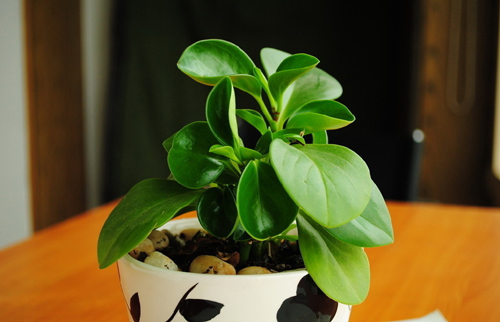
How to Grow and Care for Peperomia verschaffeltii (Red-Edged Peperomia)
Peperomia verschaffeltii, also called pepper elder, belongs to the genus Peperomia in the family Piperaceae and is a perennial herb. It is native to the West Indies, Panama and northern South America. It prefers a warm, humid, semi-shaded environment. The optimum growing temperature is around 25°C, and it must not drop below 10°C. It does not tolerate high temperatures, requires relatively high air humidity, and dislikes direct sunlight.
-

What are the control methods for scale insects on privet hedges?
In recent years, with the widespread use of golden privet (Ligustrum sinense 'Variegatum') and small-leaf privet (Ligustrum quihoui) in urban landscaping, pests and diseases on privet have become a major problem in garden maintenance and management. The scale insect occurring on Ligustrum landscaping plants is mainly the white wax scale (Ericerus pela). It has been reported that comstock mealybug (Pseudococcus comstocki) has occurred on privet hedges in Hebei. The identification characteristics and control measures of the white wax scale are described below: Distribution and damage. The white wax scale Ericerus pela (Chavannes) belongs to the order Homoptera, family Coccidae. It is widely distributed in China. It damages
-
Detailed Explanation of Knowledge About Third-Grade Improved Varieties of Kernel Apricots
1. Yiwofeng Yiwofeng, also known as Cibian and Xiaolongwangmao, is one of the main cultivars in Hebei. The fruit is oval, slightly more rounded than Longwangmao, with a single fruit weight of 8.5-11.0 grams and a maximum of 15 grams. The skin is yellow, and when fully ripe it splits along the suture, freestone. Single kernel weight is 1.6-1.9 grams, and the kernel yield rate is 18.5%-20.5%. Kernel weight is 0.52-0.62 grams, kernel extraction rate is 38.2%, the kernel flesh is milky white, and the taste is sweet and fragrant. Extremely high-yielding, but not resistant to late frost. 2. Sanganqi (provisional name) Sanganqi is from He
-
How to grow golden-edged oval-leaf privet? Detailed explanation of cultivation and management measures
The scientific name of golden-leaf privet is golden-edged oval-leaf privet. It likes light and tolerates slight shade, prefers warmth and humidity, is suitable for slightly alkaline soil, is slightly cold-resistant, and has strong resistance to air pollution. In urban and rural greening, it is often used for hedges, and at present, cuttings are commonly used for expanded cultivation. 1. Cutting preparation and cuttings: When pruning, select robust current-year, semi-lignified branches with obvious golden edges (for spring cuttings, the middle and upper parts of the previous autumn shoots can be selected), and cut them into cuttings. The cuttings should be 5-10 cm long and have 2-3 nodes, with a flat cut at the top and a slanted cut at the bottom. For individual larger leaves, cut off another 1/
-
Goji berry hedge around the garden also brings extra income, double benefit from planting
Building a garden is easy, but guarding it is hard, and a full perimeter fence takes up space; is there a tree that can both enclose the garden and increase income? Yes. That is the cold-hardy large-fruited goji berry. Through the author's observation, it has the following advantages: 1. Easy to plant and highly resistant. It overwinters without freeze damage at 45°33' N latitude, and is drought-tolerant and poor-soil-tolerant. Seeding, cuttings, and division all readily produce new plants, and apart from occasional aphids, no other pests or diseases have been seen. 2. Fast growth and results in the same year. In the year of planting, goji berry can reach a height of 1.5 m to 2 m, initially providing protection. On vigorous leaf axils
-
Detailed Explanation of the Characteristics and Usage of Cutting-Edge Multi-Vitamin Products for Pigs
This product is designed based on the characteristics of current intensive feeding and management conditions, the high reproductive rates and rapid growth rates of modern pig farming, the production needs at different stages, the interactions among vitamins and the latest research on their effects on body metabolism. It is formulated using highly stable raw material monomers and a highly uniform production process. Characteristics: 1. Promotes the maturation of immune function in young pigs; 2. Accelerates the growth of fattening pigs and improves physiological and biochemical processes; 3. Effectively improves the production performance of breeding pigs. Main ingredients: per kg contains Category
-
How to prevent and control Streptococcus suis? Knowledge Q&A Part 3
Q: Can humans be infected with Streptococcus suis disease, and how can it be prevented? A: Humans can indeed be infected with pathogenic Streptococcus suis. Streptococcus suis type 2 can cause meningitis, septicemia, endocarditis, and even death in humans. Looking at the routes of human infection with Streptococcus suis disease, a fact of great warning significance is that all infected patients had contact with sick pigs or dead pigs, and most patients had wounds on their hands or other body parts. It is not the case that anyone who slaughters or washes pork will become infected with Streptococcus suis and develop the disease. This
-
Thirteen Questions on Disease Prevention and Control in Raccoon Dogs: A Q&A on Disease Prevention and Control Knowledge for Raccoon Dog Farming
1. What causes large numbers of raccoon dogs to have diarrhea? How can it be prevented and treated? Answer: When diarrhea occurs in a large number of raccoon dogs in a breeding group, the first thing to consider is the feed: Has the feed become moldy or spoiled? Has the animal feed spoiled? Have the grain feeds been stored too long? Is the salt content too high? Has the grain feed been insufficiently cooked or processed? All of the above situations can cause diarrhea in large numbers of raccoon dogs. Prevention and treatment require addressing the above problems, and at the same time feeding gentamicin, norfloxacin, chloramphenicol, oxytetracycline, sulfonamides and other drugs all have a certain therapeutic
-
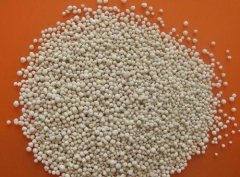
A Detailed Explanation of the Types, Functions, Advantages and Disadvantages of Chemical Fertilizers
Are chemical fertilizers good to use? Nowadays chemical fertilizers are no longer very popular, and everyone is talking about organic fertilizers, so what advantages do chemical fertilizers still have? Chemical fertilizers are a source of pollution: applying large amounts of fertilizer to farmland inevitably causes a great impact. Chemical fertilizers are usually a
-
How to grow golden-edged winter daphne? A detailed guide to home cultivation techniques
1. Potting soil: The pot size should be moderate, and the plant should be shallow-planted in loose, slightly acidic soil containing humus. The potting soil ratio is garden soil : leaf mold : sand = 4:4:2. After mixing the soil, it is best to sterilize it by exposing it to the sun. 2. Repotting: Daphne is generally repotted once every 2 years, and repotting is done in early spring before the buds sprout. After removing the daphne from its pot
条件筛选