-
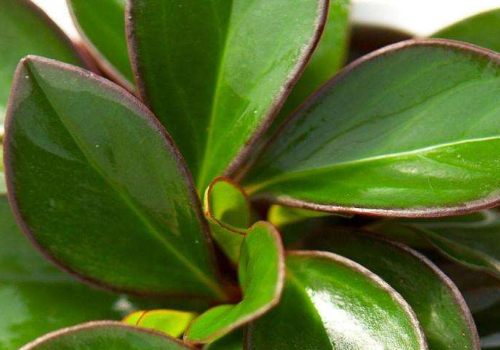
Can Peperomia tetragona 'Purple Edge' be grown in water? A detailed guide to hydroponic methods
The main ornamental value of Peperomia tetragona 'Purple Edge' lies in its leaves, so people often overlook its flowers. Can Peperomia tetragona 'Purple Edge' be grown in water? How to do it: Peperomia tetragona 'Purple Edge' can be grown in water. Peperomia tetragona 'Purple Edge' prefers a warm, humid, semi-shaded growing environment
-
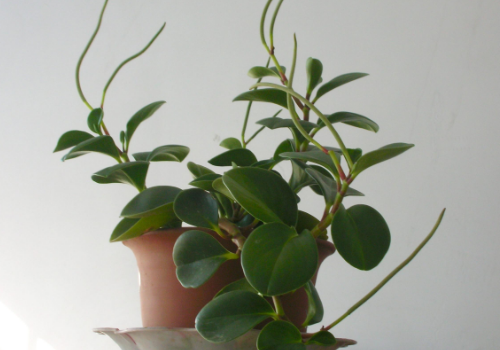
How to care for the purple-edged peperomia and pruning tips for when it grows tall
Besides being ornamental, the purple-edged peperomia (Peperomia) also has certain medicinal properties. How do you care for the purple-edged peperomia? How do you prune it when it grows tall: How to care for the purple-edged peperomia: the water the purple-edged peperomia needs. The purple-edged peperomia likes a humid environment. May to September is the growing season, and during the growing season it needs more watering.
-
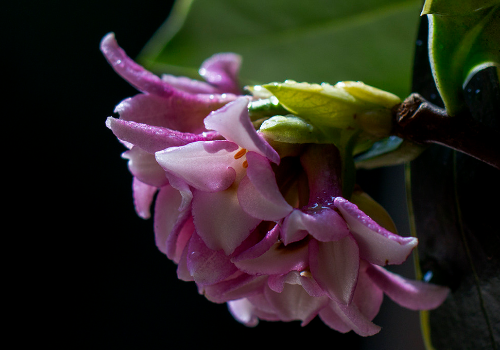
Can Golden-Edged Daphne be grown hydroponically? A detailed guide to hydroponic methods
Golden-Edged Daphne (Daphne odora 'Aureomarginata'), a well-known traditional flowering plant in China, has always been deeply loved by people. Can Golden-Edged Daphne be grown hydroponically? How to grow it hydroponically: Can Golden-Edged Daphne be grown hydroponically: Although hydroponics is a very popular potting method nowadays, it is not only simple to do but also attractive and clean. Golden-Edged Daphne can also be grown and cared for hydroponically
-

What are the latest rice breeding technologies? A full analysis of the world's cutting-edge methods
Research on salt-tolerant rice breeding The aims of this research are: 1. To enable new salt-tolerant rice to adapt to cultivation in saline-alkali land. 2. To make full use of seawater irrigation when freshwater is scarce. Abroad, there have been reports of salt-tolerant crops such as tomato, melon and barley. Salt-tolerant rice bred by the University of Sussex in the UK can grow vigorously in the field, but the complexity of regulating salt content in the field must be recognized. Research on genetic engineering of salt-tolerant rice is quite active in the UK. Researchers insert genes from salt-tolerant rice into rice,
-
Variety Characteristics and Ornamental Value of the Golden-edged Tulip Tree
Golden-edged Tulip Tree Liriodendron 'Aureomarginatum', Magnoliaceae, Liriodendron. Introduction source: the Netherlands. Deciduous large tree, height can reach over 20 m, a horticultural variety of the North American tulip tree (Liriodendron tulipifera). Spring leaves have golden-yellow margins, gradually turning green by mid-June; flowers pale yellow. Flowering in June, flower shape like a tulip. Sun-loving, not tolerant of waterlogging, suitable for planting in deep soil. Generally grown as a street tree or as a specimen tree.
-
Jasmine Harvesting Knowledge: A Detailed Guide to Harvest Time and Methods
The flowering period of jasmine varies depending on the climate conditions of the region. Generally, only when the monthly average temperature is above 20°C and the daily temperature is above 30°C will a vigorous harvest period form. During the flowering season of the year, jasmine forms 3-4 waves of "flower flushes" in a wave-like pattern. Each "flower flush" has about 7 peak production days, called "big water." The periods before or after the "big water" are called "small water." During a flower flush, the daily output difference between big water and small water is 5-10 times, and the interval between "flower flushes" is about one month.
-
What knowledge and techniques are involved in harvesting honey in autumn?
Beekeeping requires scientific honey harvesting to achieve a higher yield. The honey harvesting methods are described below: 1. Timing of honey extraction. Generally, honey can only be taken out when more than 1/2 of the honeycomb is capped. This is because before capping, the honey is not yet mature, and its moisture content has not yet been reduced to a suitable level. If honey is extracted at this time, it easily ferments and turns sour, and cannot be stored for long. The best time to extract honey is 3 to 4 days before the end of the honey flow period. Remove all the honeycombs in the supers that are mostly capped and move them to the honey extraction room for a single extraction.
-
How to treat scale insects on boxwood hedges? Try these clever tips
In recent years, scale insects have become fairly common in landscaping, with boxwood hedges suffering the most severe damage. Through years of exploration and experimentation, the author has mastered the following technical points: (1) Before spring bud break, spray 3 to 5 degrees Baume lime sulfur mixture or 3 to 5% diesel emulsion to eliminate overwintering nymphs. (2) When female scale insects are carrying eggs and their body weight increases sharply, before egg laying, use a high-pressure water hose to wash the insects off the branches, then supplement with chemical protection. (3) Before chemical control during the hatching period, give the hedge a heavy pruning, which helps
-
Detailed Explanation of Breeding Techniques and Processing Methods for the Gold-edged Ground Beetle
The gold-edged ground beetle is an excellent variety, with fast reproduction and growth, relatively simple rearing methods, low artificial breeding costs, and good sales returns. 1. Preparation of rearing site and clay jars. After old rural houses are cleaned and disinfected, any flat place that can provide shade and shelter from rain is suitable for placing clay jars to rear gold-edged ground beetles. Clay jars generally have an outer diameter of 49 cm and a height of 58 cm. Level the ground, place a water basin, place the clay jar on the water basin, then place 3-4 layers of bricks inside the clay jar (leaving gaps) to absorb water and regulate humidity, then
-
Encyclopedia Knowledge Introduction to Himalayan Yew Seedlings
Latin name: Taxus wallichiana Zucc. Chinese name: Himalayan yew Latin family name: Taxaceae Chinese family name: Yew family Latin genus name: Enpcontent Chinese genus name: Yew genus National Class I key protected wild plant (approved by the State Council on August 4, 1999). Taxus wallichiana, also known as the Himalayan yew, is one of China's 4 species and 1 variety of yew, and is a tree species endemic to Tibet. The other 3 species and 1 variety are: Yunnan yew
条件筛选