How to Grow and Care for Peperomia verschaffeltii (Red-Edged Peperomia)
Peperomia verschaffeltii, also called pepper elder, belongs to the genus Peperomia in the family Piperaceae and is a perennial herb. It is native to the West Indies, Panama and northern South America. It prefers a warm, humid, semi-shaded environment. The optimum growing temperature is around 25°C, and it must not drop below 10°C. It does not tolerate high temperatures, requires relatively high air humidity, and dislikes direct sunlight. It likes loose, fertile, well-drained moist soil.
Water: It likes moisture. During the growing period from May to September, water it more. In hot weather, spray or sprinkle water on the leaves to maintain relatively high air humidity and keep the leaf patterns clear and the foliage emerald green.
Fertilizer: Apply fertilizer once a month until winter.
Soil: It requires loose, fertile, well-drained soil, which can be mixed from river sand, loam and leaf mold.
Temperature: It likes warmth. The optimum growing temperature is around 25°C, and the wintering temperature should not be lower than 10°C.
Light: It dislikes direct sunlight and is best grown in semi-shade.
Propagation: By division and leaf cuttings. Divide in spring and autumn. Take leaf cuttings from May to June, using whole-leaf cuttings; the cutting leaf should have about 1 cm of petiole and be inserted to 1/3 of the leaf. Use river sand and similar as the substrate. Roots form in 15 days at 20-25°C. Be careful to keep the substrate moist and maintain a certain level of air humidity.
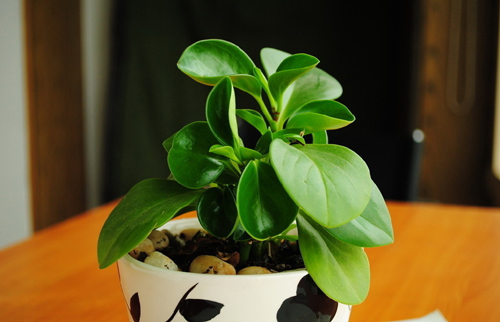
How to grow Peperomia verschaffeltii: growing methods and care tips
Peperomia verschaffeltii is native to the West Indies, Panama and northern South America. It is an indoor ornamental plant, and not many plant lovers may know it. Some gardeners also want to know how to grow Peperomia verschaffeltii. This article introduces the growing methods and care tips for Peperomia verschaffeltii.
Growth habits of Peperomia verschaffeltii
Peperomia verschaffeltii prefers a warm, humid, semi-shaded environment. The optimum growing temperature is around 25°C, and it must not drop below 10°C. It does not tolerate high temperatures, requires relatively high air humidity, and dislikes direct sunlight. It likes loose, fertile, well-drained moist soil.
Growing methods for Peperomia verschaffeltii
Water: It likes moisture. During the growing period from May to September, water it more. In hot weather, spray or sprinkle water on the leaves to maintain relatively high air humidity and keep the leaf patterns clear and the foliage emerald green.
Fertilizer: Apply fertilizer once a month until winter.
Soil: It requires loose, fertile, well-drained soil, which can be mixed from river sand, loam and leaf mold.
Temperature: It likes warmth. The optimum growing temperature is around 25°C, and the wintering temperature should not be lower than 10°C.
Light: It dislikes direct sunlight and is best grown in semi-shade.
Propagation: By division and leaf cuttings. Divide in spring and autumn. Take leaf cuttings from May to June, using whole-leaf cuttings; the cutting leaf should have about 1 cm of petiole and be inserted to 1/3 of the leaf. Use river sand and similar as the substrate. Roots form in 15 days at 20-25°C. Be careful to keep the substrate moist and maintain a certain level of air humidity.
The above is an introduction to the growing methods and care tips for Peperomia verschaffeltii. By following the methods above, Peperomia verschaffeltii will surely grow up healthily.
How to grow Peperomia verschaffeltii in pots: growing methods and care tips
Peperomia verschaffeltii is a very small and lovely plant. There are many varieties of Peperomia verschaffeltii, and the differences among them mainly come from variations in leaf patterns. So identifying them is very easy. Their growing methods also share strong similarities, so mastering one growing technique means mastering how to grow the entire group of plants.
How to grow Peperomia verschaffeltii in pots
It prefers a warm, humid, semi-shaded environment. The optimum growing temperature is around 25°C, and it must not drop below 10°C. It does not tolerate high temperatures. It requires relatively high air humidity and dislikes direct sunlight. It likes loose, fertile, well-drained moist soil.
Growing methods and care tips for Peperomia verschaffeltii
1. Water needs of Peperomia verschaffeltii
Peperomia verschaffeltii likes a humid environment. May to September is the growing period, and during this period it should be watered more. In hot weather, spray or sprinkle water on the leaves to maintain relatively high air humidity and keep the leaf patterns clear and the foliage emerald green.
2. Fertilizer needs of Peperomia verschaffeltii
Apply fertilizer once a month until winter.
3. Soil needs of Peperomia verschaffeltii
It requires loose, fertile, well-drained soil, which can be mixed from river sand, loam and leaf mold.
4. Temperature needs of Peperomia verschaffeltii
It likes warmth. The optimum growing temperature is around 25°C, and the wintering temperature should not be lower than 10°C.
5. Light needs of Peperomia verschaffeltii
It dislikes direct sunlight and is best grown in semi-shade. In summer, pay attention to shading and place it somewhere it will not be hit by direct sunlight, where it can receive diffused light.
Varieties of Peperomia verschaffeltii
1. Watermelon peperomia
Also called watermelon skin, native to Brazil. Leaves grow from the roots, and the plant height is about 20-30 cm. The leaves emerge from near the substrate and are obovate. The leaves are thick and glossy, semi-leathery to the touch. The upper leaf surface is green, while the underside is red. On the green upper surface there are silvery-white banded markings, very much like watermelon skin. Hence it is called watermelon peperomia.
2. Peperomia caperata
Also called four-angled peperomia. It grows as a small clump, with heart-shaped, much-wrinkled leaves. The underside of the leaves is grayish-green, and the upper surface is dark brownish-green; on closer look, the leaves have a velvety sheen. When it blooms, it produces a spadix. The flower stalk is very short, and the plant height is only 20 cm.
3. Peperomia obtusifolia variegata
Also called variegated peperomia and cream-striped peperomia, native to Brazil. It is a trailing herb with tea-brown, fleshy stems. The leaves are broadly ovate, green, with yellow variegation.
4. Peperomia clusiifolia
Native to the West Indies. It has an upright growth habit and a height of 20-30 cm. It grows slowly. The leaves are long obovate, thick, fleshy and stiff, with entire or irregularly shallow-lobed margins. The leaf color is deep green and glossy, with red margins.
5. Peperomia rotundifolia
Native to Venezuela. It is an upright plant, about 30 cm tall. The single leaves are alternate, elliptical or obovate. The leaf tip is bluntly rounded, and the leaf base gradually narrows, finally becoming wedge-shaped. The leaf surface is thick and stiff, smooth and glossy. Both the stem and petiole are fleshy, thick and round. The petiole is relatively short, and rooting is easy. The internodes are relatively short, and roots also form very easily at the internodes.
6. Peperomia orba
Similar to Peperomia rotundifolia, differing only in leaf color. Its leaves are deep green but are scattered with irregular patches ranging from light green to creamy yellow in varying sizes; or on leaves that are mainly yellow-green, deep green patches or spots are scattered.
Uses of Peperomia verschaffeltii
1. Decorative use
Because of its short stature, Peperomia verschaffeltii is mostly used as a potted decorative plant. Thanks to its bright gloss and natural green color, it is welcomed and loved by many plant lovers.
Peperomia verschaffeltii is often grown in white plastic pots or white porcelain pots. The boundary between white and green is separated, but when viewed as a whole it becomes even more harmonious and beautiful.
People often place Peperomia verschaffeltii on coffee tables, display cabinets, curio shelves and office desks, where it looks fresh, natural and very beautiful. Or they let its branches trail and hang down to form a long waterfall, hanging it in front of indoor windows, in bathrooms or on railings, which is very fresh and refreshing.
2. Purifying use
Peperomia verschaffeltii has a certain purifying effect on harmful gases such as formaldehyde, xylene and secondhand smoke.
3. Landscaping use
Because of its attractive plant form, Peperomia verschaffeltii is also often used in landscaping, for example in flower borders, flower beds and flower strips.
4. Traditional Chinese medicine use
Dispels wind and dampness, relieves cough and phlegm, invigorates blood and relieves pain.
Internally, it is used for dysmenorrhea, rheumatic muscle and bone pain, whooping cough, asthma, pulmonary abscess, pulmonary tuberculosis, bronchitis, and childhood malnutrition, etc.
Externally, it is used to treat bruises, fractures, etc.
Besides its lovable appearance, Peperomia verschaffeltii is also well liked for its uses. In addition to the ornamental, purifying and landscaping functions common to plants, it also has a certain medicinal value and can be effective for some minor everyday ailments.