A Detailed Explanation of the Types, Functions, Advantages and Disadvantages of Chemical Fertilizers
Are chemical fertilizers good to use? Nowadays chemical fertilizers are no longer very popular, and everyone is talking about organic fertilizers, so what advantages do chemical fertilizers still have?
Chemical fertilizers are a source of pollution: applying large amounts of fertilizer to farmland inevitably causes a great impact. Chemical fertilizers are usually some kind of salts or compounds; besides the essential elements for plant nutrition, they also contain accompanying components. Individually or together, directly or indirectly, they may constitute a polluting impact on the soil and the environment; of course, so-called organic fertilizers are no exception:
1. All nitrogen fertilizers are sources of pollution.
2. The potassium fertilizers imported now are almost all refined potassium chloride, but chlorine is a source of pollution.
3. Imported phosphate rock is selected after strict testing, and the superphosphate made from it basically does not constitute a source of pollution.
4. All trace-element fertilizers are dangerous sources of pollution.
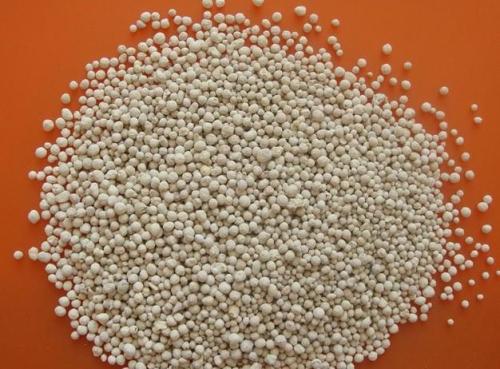
Chemical Fertilizers and Modern Agriculture
Modern agriculture requires high yield per unit area and good product quality. To achieve this, the physical conditions of the farmland and the nutrient supply must fully meet the needs of the crops. Physical conditions depend on cultivation, while nutrient supply depends on soil fertility, fertilization and irrigation, but the nutrient supply in the soil cannot necessarily fully meet the growth needs of the crops. In general soils, the supply capacity of nitrogen, phosphorus and potassium is usually insufficient, and in particular almost all cultivated land is deficient in nitrogen; some problem soils may also lack one or more trace elements. The replenishment of these nutrients can usually only be truly achieved by applying chemical fertilizers, because the nutrients of plants such as nitrogen, phosphorus and potassium are all chemical elements, and chemical elements cannot be manufactured. Without chemical fertilizers, modern agriculture cannot be achieved, and modern agriculture inevitably requires the application of chemical fertilizers; to date, the largest single category of chemical industry products in the world is still chemical fertilizers. In recent centuries, the improvement of nutrition and health has truly been due to chemical fertilizers; chemical fertilizers have made possible the production of large quantities of high-quality food, enabling the general extension of human lifespan. The credit of chemical fertilizers is truly great, but being called "chemical fertilizers" is their original sin: they receive no reward for their merits and are still much criticized. People think that natural organic fertilizers would be better, but in fact, whether chemical fertilizers or organic fertilizers, the positive or negative effects that their contained nutrients such as nitrogen, phosphorus and potassium can produce are the same.
III. Pollution of the Environment by Fertilizer Application
1. Nitrogen fertilizers:
Ammonium nitrogen fertilizers and organic fertilizers in the soil initially supply crops for absorption in the form of ammonium ions, while part of the ammonia is simultaneously used by nitrifying bacteria as an energy source and oxidized into nitrate. The nitrate that is not absorbed and used by crops may be leached and pollute groundwater. The nitrate lost from the soil inevitably carries away calcium, magnesium and other ions, causing soil acidification. Part of the nitrate may be used by bacteria for respiration, which is the so-called denitrification. Some of it is only reduced to the level of N2o and escapes into the atmosphere, causing pollution of the atmosphere.
2. Potassium fertilizers:
Large amounts of potassium chloride are used now. The dissociation degree of potassium in the soil is very low, but when chloride ions are to be removed, they inevitably carry calcium, magnesium and other ions away with them; therefore, applying potassium chloride inevitably causes additional acidification of the soil. (Soil acidification has been continuously proceeding in nature since ancient times. Acids come from carbonic acid and nitric acid, such as laterization; acids come from organic matter, such as podzolization.)
3. Trace-element fertilizers:
Iron, manganese, zinc, copper, molybdenum and the like are heavy metals, and improper use of heavy metal salts will cause accumulation. Trace-element fertilizers are all serious sources of pollution. For example, sugar beet needs more boron; if a large amount of borax is applied to accommodate sugar beet, it will cause an excess of boron and make the soil unsuitable for growing cereals. Therefore, the application of trace-element fertilizers must be strictly controlled.
IV. Pollution of the Environment by Chemical Fertilizers and Its Prevention and Control
Applying fertilizer is an unavoidable "necessary evil" of modern agriculture, and this puts us in a dilemma. As the saying goes, "You want the horse to be well grown, yet you want the horse not to eat grass" - this is impossible. Crops need fertilizer to grow well, but fertilizer is also a source of pollution; therefore, the only feasible way in applying fertilizer is to reduce the relative impact to a minimum. Heavy use of fertilizer can increase crop yields, and usually the quality also improves, but during the crop growth period, the nutrients that are not absorbed and used by the crops will cause serious impact on the soil and the environment. Therefore, the ideal principle of fertilization is: make all the fertilizer applied be absorbed and used by the crops, and all fertilization measures should be directed toward this basic principle. To achieve this, the approaches currently adopted are roughly:
1. Improve the physical and chemical properties of fertilizers
2. Restrict the application rate of fertilizers
3. Improve the application methods of fertilizers
4. Apply lime to adjust the soil reaction
Here, nitrogen fertilizer is taken as an example for explanation:
Urea is currently the most commonly used nitrogen fertilizer. Urea is easily soluble in water, and in the soil it is quickly hydrolyzed into ammonia, and the ammonia is then quickly oxidized into nitric acid. To slow down these reactions, urea is often made into large granules, coated with sulfur, and nitrification inhibitors are added. Basically, this kind of change in physical and chemical properties is equivalent to continuously applying small amounts of urea, with the aim of making all the fertilizer applied be absorbed and used by the crops, but when the application rate is too high, there will always be a lot of nutrients left over, and the more that is applied, the greater the impact on the environment; therefore, another measure is to restrict the application rate. In Germany, if 30 tons of fertilizer are applied per hectare in the first year, less must be used in the second year, and in the third year it is no longer permitted; also, after the autumn harvest, application is not permitted either, mainly to prevent nitrate from seeping into groundwater. In Taiwan, China, rice paddies use large granules of urea buried deep in the soil, and this application method can reduce the application rate and increase the absorption and utilization rate. In fact, all the above methods are directed toward the ideal principle of making all fertilizer be absorbed and used by the crops. Finally, after long-term fertilizer application, the soil will gradually become acidic, so it is best to measure the soil reaction at intervals and add an appropriate amount of agricultural lime to adjust the soil reaction.
What must be kept in mind is that fertilizers containing heavy metal trace elements will accumulate in the soil, and the pollution they cause is very difficult to eliminate. Although techniques such as organic fertilizers, lime, or adding phosphate to form salts can control their activity so that they do not reach the level of harming crop growth, the most fundamental way is still to carefully use the smallest amount of fertilizer possible.