-

One graphic to understand how agricultural reform releases dividends
Chart: Agricultural reform releases dividends. Compiled by Xinhua News Agency reporter Qu Zhendong
-
Do a good overall plan for farming; it will be better to divide it into zones.
Since the beginning of this year, affected by overcapacity and weak consumer demand, the national hog industry has been in a trough. Some companies with abundant capital, such as Wens and New Hope, have begun to make moves and plan a transformation, finding the "feng shui treasure land" of Northeast China for their ideal community-based, regional hog full industry chain.
-
Protecting Farmers' Interests Is the Prerequisite for Releasing the Dividends of Land Reform
Xi Jinping chaired the seventh meeting of the Central Leading Group for Comprehensively Deepening Reform on the 2nd. The meeting reviewed the "Opinions on the Pilot Work of Rural Land Expropriation, Entry of Collective Operational Construction Land into the Market, and Reform of the Homestead System." The meeting pointed out that the public ownership of land must be upheld
-
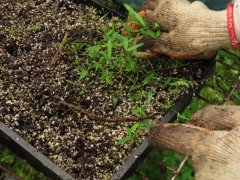
How to protect the rare native plant Taiwan trident maple? Dividing and planting Taiwan trident maple, weeding and care
Taiwan trident maple, do you know this plant? Currently, the number of this plant is not large. For this reason, to cultivate this rare native plant, there are dedicated people who plant it. Dividing and planting On this day everyone gathered in the large greenhouse, and at the start they opened two large bags
-
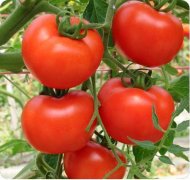
How many types of tomato fruit cracking are there? Remedies for fruit cracking in large and small tomatoes
Tomato fruit cracking: how to remedy it? Do you want to know? If so, then let's take a look together! The phenomenon of tomato fruit cracking can be divided into four types: radial cracking, concentric cracking, compound radial and concentric cracking, and irregular side cracking. A. Choose varieties
-
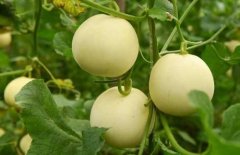
What Are the Growing Regions of Muskmelons? A Full Guide to Variety Classification and Selection Tips
Muskmelons can be roughly divided into three types: the netted muskmelon, which of course has a netted rind, with flesh that can be green, white or orange; the Hami melon, oval in shape, improved from the original Hami melon of Xinjiang, elongated oval in appearance with orange flesh, and its biggest difference from the muskmelon
-
A Detailed Explanation of the Material Properties and Grade Classification of American Douglas Fir
Douglas fir is a relatively common construction timber, enjoying high recognition around the world, especially in North America. Because Douglas fir is very hard and has strong wear resistance, it is particularly suitable for use in supports, bridge components, wooden houses, commercial buildings and other places.
-
How to Propagate Aloe by Division: A Detailed Guide to the Technique
Aloe propagation methods are divided into division propagation and cutting propagation, so how do you propagate aloe by division? What is the technique? 1. How to propagate aloe by division. Aloe division propagation is generally carried out in spring, autumn and winter each year. Dig up the small offsets that have tillered out beside the aloe plant together with their roots and plant them out. After planting is complete, water appropriately.
-
A Detailed Guide to Sapling Planting Methods and Key Technical Points
Summary Saplings are divided into seedling saplings, grafted saplings, transplanted saplings, etc., and different types have different growth habits. Propagation of saplings: grafting, cuttings, and root cuttings can be used for propagation. Planting methods for saplings: first dig the planting holes well, leaving appropriate growing space, generally around 30 cm, and after planting, follow the principle of "three burials, two treads, one lift of the sapling." Summer planting precautions: be sure to water in time, drain waterlogged areas, fertilize, and control pests and diseases, etc.
-
Vegetable Planting Times by Type: Heat-Loving, Cold-Loving and Cold-Hardy Classification
Summary Vegetables that can be planted year-round: scallions, bean sprouts, garlic, bok choy, etc. Can be planted in January: lettuce, rapeseed greens, etc. Can be planted in February: cilantro, lettuce, etc. Can be planted in March: spinach, radish, etc. Can be planted in April: napa cabbage, cowpea, etc. Can be planted in May: pumpkin, bitter melon, etc. Can be planted in June:
条件筛选