-

High-yield cultivation technique for three successive crops intercropped in jujube orchards
The jujube tree (Ziziphus jujuba) has relatively strong growth adaptability and is a tree species that prefers warmth and light. When the spring temperature reaches 13-15°C, it begins to sprout branches; when the monthly average temperature is above 17°C, flower buds begin to differentiate; when it is above 2O°C, it flowers; the suitable temperature for fruit ripening is 18-22°C; when the temperature drops to 15°C, it begins to shed leaves. Because of its characteristics of late sprouting, early leaf fall, and little shading, it is suitable for intercropping with grain, cotton, and vegetables, and the economic benefits are very considerable. The following introduces the high-yield technique for interplanting three successive crops in one year in a jujube orchard. 1. Key points of jujube cultivation techniques
-
Intercropping insect-resistant cotton with potatoes: both crops can achieve high yields
In recent years, the model of intercropping potatoes with insect-resistant cotton has been welcomed by the people. According to surveys, this model not only enables cotton to achieve high yields (lint yield of 90-100 kg per mu), but also "freely" yields an extra 1500-2000 kg of potatoes per mu. The key cultivation techniques are as follows. I. Potatoes ① Seed selection and sprouting. It is advisable to choose early-maturing, short-stalked, high-yielding virus-free varieties, such as Holland No. 7, Jinyin No. 8, etc., using 80-90 kg of seed potatoes per mu. In mid-February, cut the seed potatoes into pieces (each kg cut into 40-50 pieces) and use a sunny cold frame or greenhouse
-
New disease-resistant, high-yield rice variety launched by Bayer CropScience
On May 14, 2008, Bayer CropScience announced the launch in India of ArizeRDhani, the world's first hybrid rice variety resistant to bacterial leaf blight. Compared with conventional varieties, this new variety can increase yields by 20%-30% and provides the crop with strong protection against the highly destructive bacterial leaf blight. "Rice is a staple food in many developing countries and emerging markets. Although global demand for this crop continues to grow, the occurrence of diseases can greatly affect harvests and threaten food supply.
-
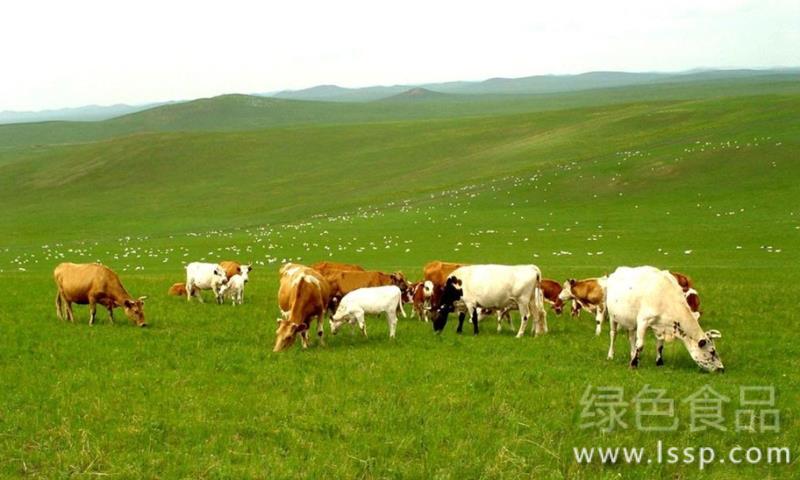
Autumn temperatures fluctuate greatly; when crops are harvested, do not let cattle and sheep eat five kinds of forage
Autumn temperatures fluctuate greatly; when crops are harvested, do not let cattle and sheep eat five kinds of forage
-
Occurrence Patterns and Control Methods of Viral Diseases in Solanaceous Crops
In the southern Guangxi region, the winter climate is warm with no obvious frost, making it a great place for growing winter vegetables to be shipped from the south to the north. Therefore, after harvesting the late rice, farmers grow winter vegetables to supply the market after the Spring Festival, achieving relatively high economic returns and writing a new chapter of "the plan for the year lies in autumn and winter." This has become another way for local farmers to get rich and move toward a moderately prosperous life. Among the many vegetable varieties grown, solanaceous vegetables (tomato, pepper, eggplant) are favored by local farmers for their unique planting advantages. According to statistics, the perennial planting area is around 80,000 mu, and the planting area is predicted to keep rising year by year.
-
Forecast of the Occurrence of Diseases and Pests in Shanghai's Two Crops of Wheat and Barley and Their Control Methods
Based on the occurrence base of diseases and pests in the two crops of wheat and barley in each district (county), and in combination with analysis of weather conditions, the occurrence trend of diseases and pests in the two crops of wheat and barley in this city this year is expected to be moderate. Among them, wheat scab will occur moderately, with severe occurrence in some areas; the small brown planthopper will occur severely, with outbreaks in some areas; wheat aphids will occur moderately, wheat powdery mildew and barley scab will occur relatively lightly, and armyworms will occur lightly. In order to effectively control the damage of diseases and pests and secure a bumper harvest of summer-ripening crops, all districts (counties) are requested to conscientiously carry out disease and pest control work for summer-ripening crops in accordance with their own production conditions. I. Analysis of Occurrence Trends
-
What issues should be paid attention to in the management of single-season rice and other field crops
In the past week, the weather has continued to be hot with strong sunlight, field evaporation has been very high, and some rainfed fields have already experienced water shortage and drought. In the management of single-season rice and other field crops, attention should be paid to the following issues: 1. Spraying for disease and pest control should be done in the morning and evening, and sufficient water should be used. At present, it is the suitable period for controlling the fourth (2) generation leaf roller and rice planthopper of single-season rice. When selecting appropriate pesticides for control, the spraying time should preferably be before 8 a.m. or after 5 p.m., avoiding the high-temperature and strong-sunlight period as much as possible, and sufficient water should be used
-

Analysis of the Characteristics of Legume Vegetables and Their Pesticide Residue Situation
Do you like eating legumes? Do you know whether they have pesticide residues? Inspections have found that the pesticide residue failure rate of legume vegetables such as green beans, peas and common beans is as high as 63%. Among the pesticide residues detected were chlorothalonil and acetamiprid
-
Cultivation method for growing Pinellia ternata in three crops a year
The Chinese medicinal herb Pinellia ternata can be grown in three crops a year. Planted in April, harvested in July; planted in July, harvested in October; planted in October, harvested in April of the following year. Three crops of Pinellia ternata can bring in more than 5,000 yuan per mu. Site selection and land preparation: For planting Pinellia ternata, loose and fertile soil is best. In combination with land preparation, apply 3,000-5,000 kg of farmyard manure, 25-30 kg of superphosphate, and 1,000 kg of plant ash per mu; ammonium bicarbonate must not be applied. After deep ploughing and fine harrowing, make beds 1.3 m wide and 17 cm high, with ditches 30 cm wide. In the ditches, intercropping can be done with
-
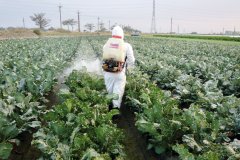
What causes plant pests and diseases? Tracing the origins of IPM crop production management techniques
IPM is not about setting absolute methods, but about finding the most optimized approach. Let's take a look together below. Cruciferous crops in their growth pattern often develop serious pests and diseases only near harvest time. Taking broccoli as an example, the head is covered by outer leaves, and pests easily hide within, leading to poor control
条件筛选