-

Prevention and Control Methods and Technical Key Points for Pig Cold Diarrhea
The root cause of pig "cold diarrhea" disease has now been confirmed to be infection of pigs with transmissible gastroenteritis and epidemic diarrhea, and pigs are prone to this disease when the weather turns cold. Once a pig contracts this disease, in addition to severe diarrhea and pig death (mortality of suckling pigs can reach as high as 100%), it also seriously affects pig growth and increases the culling rate of pigs. In order to effectively control the occurrence of this disease, the pathological characteristics and prevention and control measures of the disease are introduced as follows: 1. Pathological characteristics: Porcine transmissible gastroenteritis and porcine epidemic diarrhea
-
Prevent Fish from Catching Cold When Stocking Fish in Autumn
Autumn is the golden season for stocking large numbers of silver carp, grass carp, black carp, bighead carp and other fish species into reservoirs. But many fish farmers have found that, often within 2 to 7 days after stocking, sick and dead fish are seen swimming on the reservoir surface. These sick fish lose their skin luster, their body surface mucus increases, and in severe cases they become paralyzed, rigid and die. The above symptoms are typical of a "cold," mainly caused by drastic changes in water temperature, in which the nerve endings in the fish skin are strongly stimulated and the internal organs' activities become disordered, with a mortality rate as high as 20% to 60%. Fish species are transported from the fish pond to
-
How to Prevent Cold-Induced Diarrhea in Pigs When the Weather Turns Cold? A Detailed Explanation of Prevention and Treatment Points
Every year during the sanjiu cold period, because temperatures are low in rural outdoor pig pens, the pigs' bodies are hit by strong cold air, and on top of that they eat and drink cold water and cold feed, so cold pathogens strike straight into the stomach and intestines. This often causes some pigs to move weakly, with cold-dampness sinking downward and clear and turbid not being separated, resulting in cold intestinal diarrhea. This disease occurs most often during the sijiu to wujiu cold periods. The reasons are, first, that this is the coldest weather of the year; second, that the Spring Festival has arrived, and every household often feeds pigs the meat broth water left from washing and rinsing, which leads to more cases of cold-induced diarrhea in pigs. The folk treatment method is: first strengthen cold protection and warmth retention in the pig pen, then fry white wheat flour until it turns yellow-brown, add warm water and mix into a thin paste
-
Prevention Methods for Pig Urate Deposition Disease in Cold Weather
Pig urate deposition disease is a metabolic disease caused by pigs eating protein-rich concentrated feed, and it mostly occurs in winter and early spring. Clinical symptoms mostly occur in nursing piglets and growing pigs that are physically strong, well developed, and have a vigorous appetite. The most acute form often shows no symptoms at all before sudden death. Most cases take an acute course, with sudden onset, reduced or lost appetite, and body temperature initially rising by about 0.5 degrees Celsius, then quickly returning to normal or falling below normal. Most affected pigs are lame in the hind legs, while some are lame in the front legs, gradually progressing to swollen joints
-
Detailed Explanation of Mushroom Cylinder Cultivation Technology in Cold Greenhouses (Part 1)
I. Sowing Time: In the Xinbin area, from March 20 to April 10, preferably completed before Qingming Festival. When the temperature inside the greenhouse reaches above 5°C, cylinder production and cultivation can begin. II. Ingredient Mixing and Sterilization. Formula 1: Broadleaf sawdust 87%, wheat bran 8%, rice bran 8%, cornmeal 3%, gypsum 1%, with a moisture content of 58%-62%. Formula 2: Broadleaf sawdust 50 kg, wheat bran 10 kg, gypsum 1 kg, with a moisture content of 58%-62%. 1. Mixing: The mixed material should be sterilized promptly and must not be left for more than 2-3 hours, to avoid the growth of contaminant bacteria that could result in incomplete sterilization.
-
Diagnosis and Treatment Methods for Cold Medicine Poisoning in Rabbits
In October 2005, 120 young rabbits raised by Liu in Fangzheng County, Heilongjiang Province, developed symptoms similar to the common cold, including runny noses and sneezing, in most of them due to the influence of a cold wave. The rabbit owner ground up "Ganmaotong" (a human medication produced by Zhengzhou Kangli Pharmaceutical Co., Ltd.) at a dose of 1 tablet per 2 young rabbits and mixed it into the feed. The rabbits were fed at 9 AM, and by 10 PM, 55% of the young rabbits showed abnormalities; by the next morning, 7 had died. The owner then came to my clinic for diagnosis and treatment, during which 8 more died successively. After a systematic examination, the diagnosis was "Ganmaotong" poisoning. Because
-
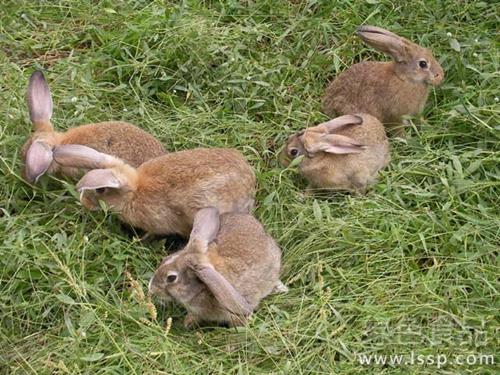
How to prevent and treat cold, pneumonia, diarrhea, mange and constipation in domestic rabbits in winter
Prevention and treatment of common diseases of domestic rabbits in winter: cold, pneumonia, diarrhea, mange and constipation
-
Detailed Introduction to Cold-Hardy Varieties of Red-Fruited Privet
Red-fruited privet belongs to the genus Ligustrum in the family Oleaceae. It is distributed in the high-cold region at 1500 m in the Luoxiao Mountains. It is an evergreen shrub or small tree, 5-7 m tall, with purple-red young branches and pedicels, and elliptical leaves 6-8 cm long and 3-4 cm wide, light purple-red. Terminal panicles are 6-8 cm long. The fruit is long-elliptical, a false berry of drupe-like form, with one seed. The flowering period is May, and the fruiting period is August; the branches are laden with red fruits that persist until October without falling. This variety has strong adaptability, grows quickly, has a high sprouting rate, tolerates pruning, and can withstand low temperatures of minus 20-22°C
-
Key management points for cold-frame peaches in the Beijing-Tianjin region around the Spring Festival
1. Frame-covering period. Because cold-frame peaches have no cold-protection facilities and rely solely on sunlight for warming and the frame film for insulation, the day-night temperature difference is large. The frame-covering period should preferably be around February 20, so that the flowering period is March 25-31 and the peach ripening period is early June, 10-15 days earlier than open-field peaches. For heated cold-frame peach sheds, install 1 heater per 350-450 sq m at the center of the cold frame, burning wood or coal; the gas is discharged outside the frame through the chimney in the middle of the stove, and the air is preheated through the stove's interlayer and then
-
Apricot kernel cultivar Weixuan No. 1 is suitable for cultivation in cold regions
Weixuan No. 1 apricot kernel was bred by the Forestry Bureau of Weichang County and approved by the Hebei Provincial Forest Tree Improved Variety Approval Committee in 2007. 1. Cultivar characteristics. The tree has a relatively strong central leader, an open tree posture, and a natural round-headed tree shape. The branches have strong sprouting ability, and fruiting is mainly on short fruit spurs, though axillary flower buds can also bear fruit. Generally, it flowers and bears fruit 3 years after planting; a 5-year-old tree produces 25 kg of fruit per tree and 7.5 kg of kernels per tree, and enters full bearing period at 7-8 years. The fruit averages 13.6 g in weight (when the skin is green), is broadly ovate, with a greenish-yellow ground color and red on the sunny side.
条件筛选