-

Qidali Tomato Variety Profile: Extremely Cold-Tolerant Tomato Seeds
Qidali is an indeterminate large red tomato variety. Qidali tomatoes are planted in spring and autumn. For transplanting seedlings, about 2000-2200 plants are needed, with row spacing of 70 cm and plant spacing of 40 cm, single fruit weight of 220 grams, about 2200 plants per mu, 4 fruits per truss
-
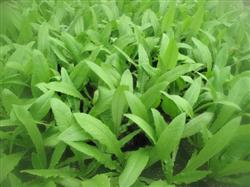
Management advice for spring potatoes after late-spring cold damage
1. Variety selection. Leaf lettuce is grown mainly for its leaves, which are eaten mostly raw, hence it is also called lettuce. The leaves are deeply lobed and wrinkled; it is highly adaptable and easy to cultivate. Good varieties include Guangzhou Dongshan lettuce (soft-tail lettuce), glass lettuce, Lettuce King, and American Great Quick Growth, etc. 2. Seedling raising. Leaf...
-

How to take cold-proof and freeze-proof measures for winter vegetable planting
How to take cold-proof and freeze-proof measures when growing vegetables in winter
-

Five practical methods to protect wheat seedlings from freezing and cold
When the severe winter comes, doing a good job of protecting overwintering crops such as wheat from the winter cold and taking preventive measures is an important guarantee for obtaining a bumper harvest. According to different field plots, the following five methods can be used to prevent freezing and protect seedlings. First, spreading grass to protect seedlings. Some varieties with strong spring habit are sown relatively late, emerge sparsely, and have fewer tillers. For such field plots, cover them with crop straw such as wheat straw and rice straw to keep them warm, promote tiller growth, prevent freezing and strengthen seedlings, so that the wheat seedlings can safely overwinter. Second, applying fertilizer and water to the roots. For field plots where wheat seedlings have shallow roots and few tillers
-
Detailed Explanation of Key Points for Japanese Cold Onion Cultivation Techniques
Japanese cold onion is a highly cold-resistant superior onion variety successfully selected and bred from Japanese cold onion by the Special Excellent Melon and Vegetable Research Institute of Heze Prefecture, Shandong Province. This variety has characteristics such as short leaves, heavy wax bloom, long and firm white stalks, early maturity, high cold resistance, and fast growth speed. Generally, seedlings are raised within 10 days before and after the Beginning of Autumn, cultivated in October, marketed in spring, and do not need protection in winter. Seedling raising: The suitable time for seedling raising is from July 20 to August 20. Select fertile sandy soil with high and dry terrain that is not prone to water accumulation for the seedbed, prepare the land and make beds, with a bed width of 1.5
-
How to Prevent Cold Damage in Rice? Detailed Explanation of Fertilization Measures
Fertilization case: In 2006, in rice-growing areas such as Shangzhi City, Heilongjiang Province, during the early stage of rice growth, some rice seedlings encountered low-temperature weather below 17°C, and rice cold damage problems of varying degrees occurred. In the rice-growing areas of Ningxia and Zhangjiakou, Hebei in the northwest region, in autumn during the late stage of rice growth, just at the grain-filling stage, the temperature suddenly dropped below 20°C, causing rice to suffer cold damage, which was very unfavorable for grain filling, and the seed-setting rate decreased by 10-20%, with severe cases decreasing by more than 50%. Expert comments: In northern rice-growing areas, in order to defend against the cold damage problems brought to rice production by low-temperature weather
-
A Detailed Explanation of the Effects of Low-Temperature Cold Damage on Rice and Defensive Measures
Rice cold damage refers to the disaster in which rice is affected by low temperatures below the minimum critical temperature for growth, resulting in the inability of rice to grow and develop normally and thus causing reduced yields. Depending on the period of damage, it can be divided into delayed-type cold damage, sterility-type cold damage, and mixed-type cold damage. I. Types and Characteristics of Rice Cold Damage 1. Delayed-type cold damage: During the vegetative growth period of rice, and sometimes also during the reproductive growth period, the plant is harmed by relatively low temperatures over a longer period, which weakens the physiological activity of the rice plant, delays its development, postpones heading and flowering, and prevents full grain filling and
-
Key Points for Rice Cultivation Management During Spring Cold Waves
I. Characteristics of Cold Wave Disasters Due to the invasion of cold air, when the temperature drops sharply by more than 10°C within 24 hours, and the minimum temperature within that day is below 5°C, it is called a cold wave. In the middle and lower reaches of the Yangtze River, when strong cold air moves southward and causes the temperature to drop by more than 10°C within 48 hours, it is also called a cold wave. Cold waves generally occur in spring and autumn, with spring being the most common, and spring cold waves mostly occur from March to May. Cold waves mainly cause seed rot, seedling rot and dead seedlings during the rice seedling stage. II. Rice Cultivation Manage
-
Demonstration and promotion of high-quality, high-yield rice for cold regions carried out in Heilongjiang
The National Agricultural Science and Technology Leap Program project "Integration and Demonstration of New High-Quality, High-Yield Rice Varieties for Cold Regions and Vegetative Matter Cultivation Technology" was officially launched on March 2 in Heilongjiang Province. The project is undertaken by the Heilongjiang Academy of Agricultural Sciences and Heilongjiang Bayi Agricultural University, and it is the first time that Heilongjiang Province's rice planting industry has been included in the National Leap Program. The project adopts three new high-quality, high-yield rice varieties of different maturity periods - Songjing No. 9, Longdao No. 5, and Longjing No. 14 - which were approved and promoted by the Heilongjiang Academy of Agricultural Sciences in the past two years and have passed national super rice acceptance, as well as vegetative matter pot seedling
-
Detailed Explanation of the Principles and Key Technologies of the Three-Super Cultivation of Rice in Cold Regions
The Three-Super cultivation technology for rice in cold regions addresses the growth-limiting factors currently present in high-yield rice cultivation in cold regions, such as a short growth period, excessive basic seedlings, excessive consumption of growth, poor light-receiving posture of the plant type, and decline of late-stage growth. Taking the "ridge-edge rice cultivation effect" as a model, it takes creating the largest super-high-yield population with the fewest basic seedlings as its basic approach, and takes "extending and expanding the nutritional time and space, releasing production potential, and strengthening the dual canopy (plant canopy and root canopy) performance" as its basic principle. It adopts standard high-quality super rice, uses single (double) seed positioning with ultra-early, ultra-low-rate sowing
条件筛选