-

Are Wannianqing (Chinese evergreen) and holly the same plant? Are their symbolic meanings the same?
In the realm of plant culture, both Chinese evergreen (Wannianqing) and holly carry certain symbolic meanings, yet the meanings they bear are not entirely the same. Chinese evergreen, because of its evergreen nature throughout the four seasons, is often regarded as a symbol of eternity, longevity and good fortune. Its enduring emerald leaves seem to speak of the endless continuity of life, conveying
-

How to plant Chinese holly? The latest planting techniques and methods tutorial
Chinese holly (Ilex cornuta) is an evergreen tree of the genus Ilex in the family Aquifoliaceae, also known as cat's thorn, tiger's thorn, etc. It is produced in the Yangtze River basin of China, parts of the Qinling Mountains and areas to the south, grows very slowly, and is mostly found scattered on hillsides, in valleys, and in mixed woods or thickets by streams. In Qingdao and Ji
-
How to propagate Chinese holly? A detailed guide to the latest propagation methods
Chinese holly (Ilex cornuta) is also known as cat's thorn and bird's roost; it belongs to the genus Ilex and can be used as a holly tree. Its branches and leaves are dense and its form is unusual, making it an excellent foliage and fruit-viewing tree species, often used for Christmas decorations in the West. It is also a tonic and strengthening herb in traditional Chinese medicine, so how should it be propagated?
-
What are the latest points to note when planting Chinese holly?
Chinese holly is also called cat's thorn and tiger thorn. It is an excellent ornamental fruit tree, also known as the Christmas tree. In China, Chinese holly is mainly distributed in Jiangsu, Shanghai, Hunan, Hubei, Guizhou and other places. How much do you know about Chinese holly? Do you know what needs to be noted when planting Chinese holly?
-
Latest Prices for Chinese Holly Seeds and a Detailed Guide to Growing Them
Chinese holly is an excellent ornamental tree species, also known as cat's thorn, tiger thorn, eight-horn thorn, etc. It is an evergreen shrub or small tree of the genus Ilex in the family Aquifoliaceae, with peculiar leaf shapes, bright green and glossy, evergreen all year round, covered with red berries after autumn, not withering through winter, gorgeous and lovely, often used in European and American countries for
-
How much does a jin of Chinese holly seeds cost, and how should they be planted?
Chinese holly, also known as tiger thorn, is a plant in the genus Ilex of the family Aquifoliaceae. Its leaves are uniquely shaped, hard and glossy, and remain evergreen through winter; after winter sets in, its red berries pile up in abundance, bright and lovely, making it an important foliage and berry ornamental tree species, often used in European and American countries as a Christmas decoration. Chinese holly seed
-
How to Plant Chinese Holly Seeds? Detailed Planting Methods and Steps
Chinese holly (Ilex cornuta) is an evergreen shrub or small tree in the genus Ilex of the family Aquifoliaceae. It is an excellent foliage and fruit ornamental tree species, with uniquely shaped leaves, and red fruits hanging all over the branches after autumn. The fruits contain seeds, which can be planted. So, how to plant Chinese holly seeds? 1. Soil. Chinese holly grows at an altitude of
-
-
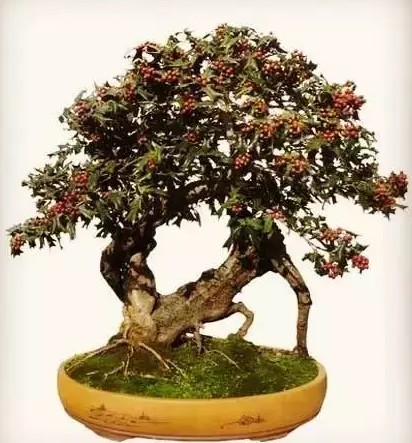
A Detailed Guide to Shaping Methods and Techniques for Chinese Holly Bonsai
Chinese holly, also known as cat's thorn and Chinese holly wintergreen, is an evergreen small tree or shrub of the genus Ilex in the family Aquifoliaceae. The bark is grayish-white and smooth, and the small branches are densely grown and spreading. The leaves are simple and alternate, elliptical-oblong, leathery, with 5 hard spiny teeth, glossy on the surface, and dark green. The flowers are yellow-green and grow in the leaf axils. The drupe is spherical and bright red
-
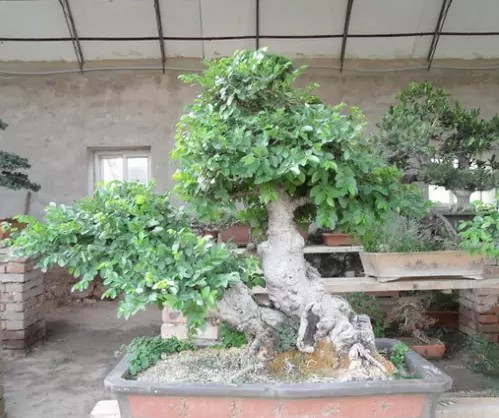
How to cultivate Chinese holly (Ilex cornuta) bonsai? A detailed guide to the method
The wood of the Chinese holly is soft and flexible, and can be used as a substitute for boxwood (Buxus) wood to make various utensils and carved items. Farmers use it as a nose ring for plowing oxen. It should have been a common and commonly used plant in the Yellow River basin during the era of the Classic of Poetry (Shijing). The bark and leaves can be used medicinally, having the effect of nourishing yin and clearing heat. The seed is known pharmaceutically as "Shidagonglaozi" (Mahonia seed), and is used in traditional Chinese medicine to tonify the liver and kidneys
条件筛选