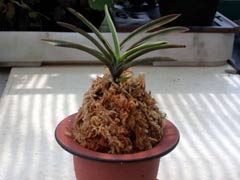
Ornamental Characteristics and Care Management Methods of Chinese Holly Bonsai
Chinese holly bonsai is a traditional stump bonsai made from the plant Chinese holly (Ilex cornuta) of the Aquifoliaceae family. Chinese holly, also known as cat's thorn, bird's perch, and mouse thorn, is an evergreen shrub or small tree with elegant old branches. Its leaves stay green all year round, and in autumn and winter it is loaded with red berries, making it excellent for both foliage and fruit viewing, and it has long been loved by bonsai enthusiasts. The leaves of Chinese holly are thick, leathery, and glossy, with sharp hard spines along the edges, giving it a distinctive form and high recognizability. It produces small yellow-green flowers in spring, and the fruit gradually turns red in autumn, with a long fruiting period that can be enjoyed until winter. Common styles include the straight-trunk style, slanting-trunk style, double-trunk style, and exposed-root style. Small bonsai are delicate and elegant, while large bonsai are vigorous and antique, and since it tolerates pruning and is easy to wire, once formed it has a strong flavor of an old tree in the wild. In terms of care, Chinese holly prefers a warm and humid climate; it tolerates sunlight and is also fairly shade-tolerant, so it is best placed in a spot with ample light and good ventilation. The potting soil is best as a loose, fertile, well-drained slightly acidic sandy loam. During the growing season, keep the potting soil moist but avoid waterlogging, and fertilize with light applications given frequently. In daily care, also pay attention to pinching and removing buds, and prune promptly to prevent branches from growing overly long and ruining the plant's shape, and repot and change the soil once every two to three years to benefit root growth. Common problems with Chinese holly bonsai mainly include leaf spot disease as well as pests such as scale insects and red spider mites. When discovered, promptly cut off the affected branches and leaves and spray pesticide for control. If leaves turn yellow and drop, it is mostly related to soil that is too alkaline, overwatering, or a stuffy, poorly ventilated environment, and management methods need to be adjusted according to the cause. Overall, as long as the environment is suitable and management is proper, Chinese holly bonsai can maintain its ornamental effect of lush branches and leaves and branches full of red berries all year round.